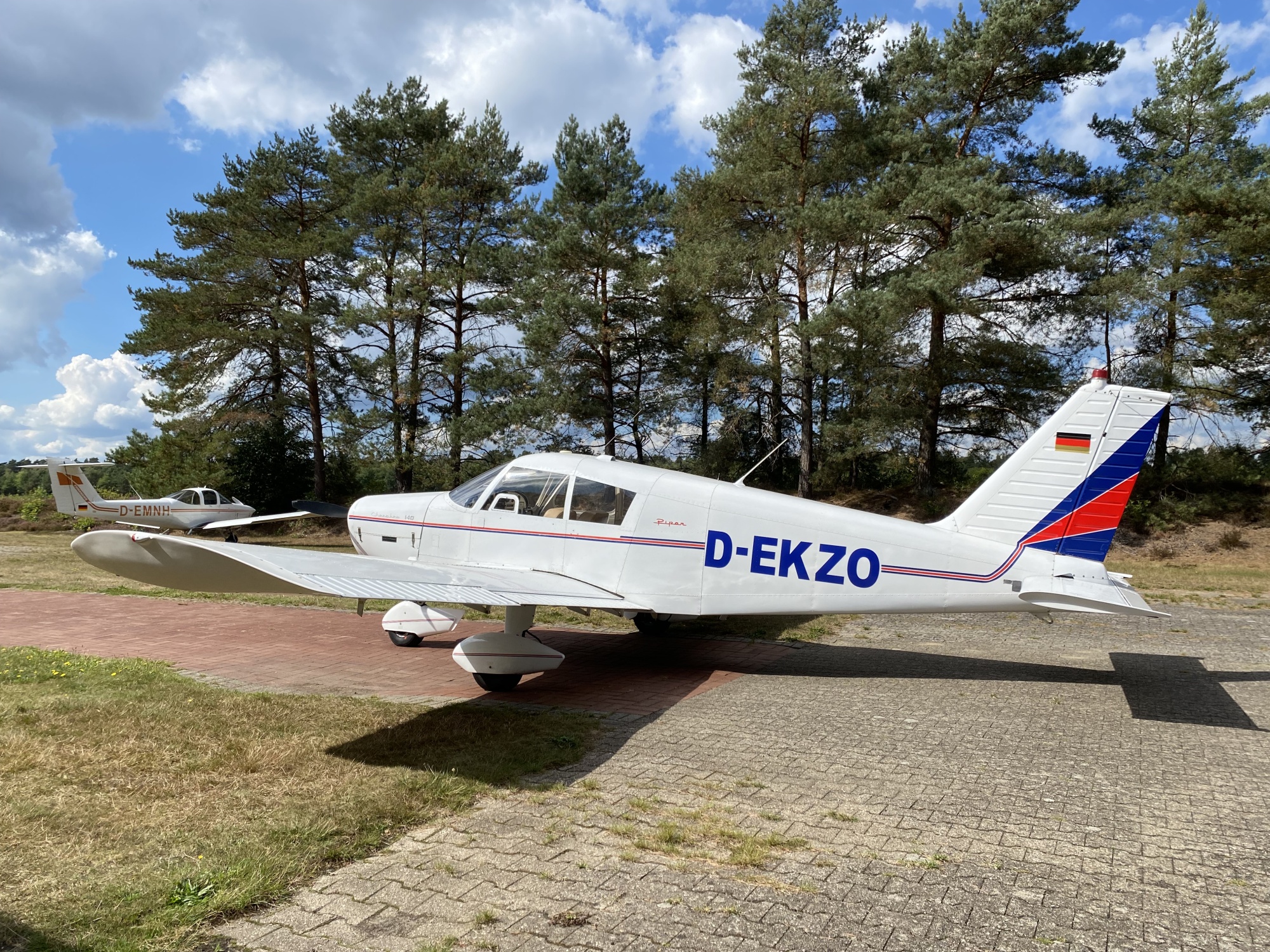
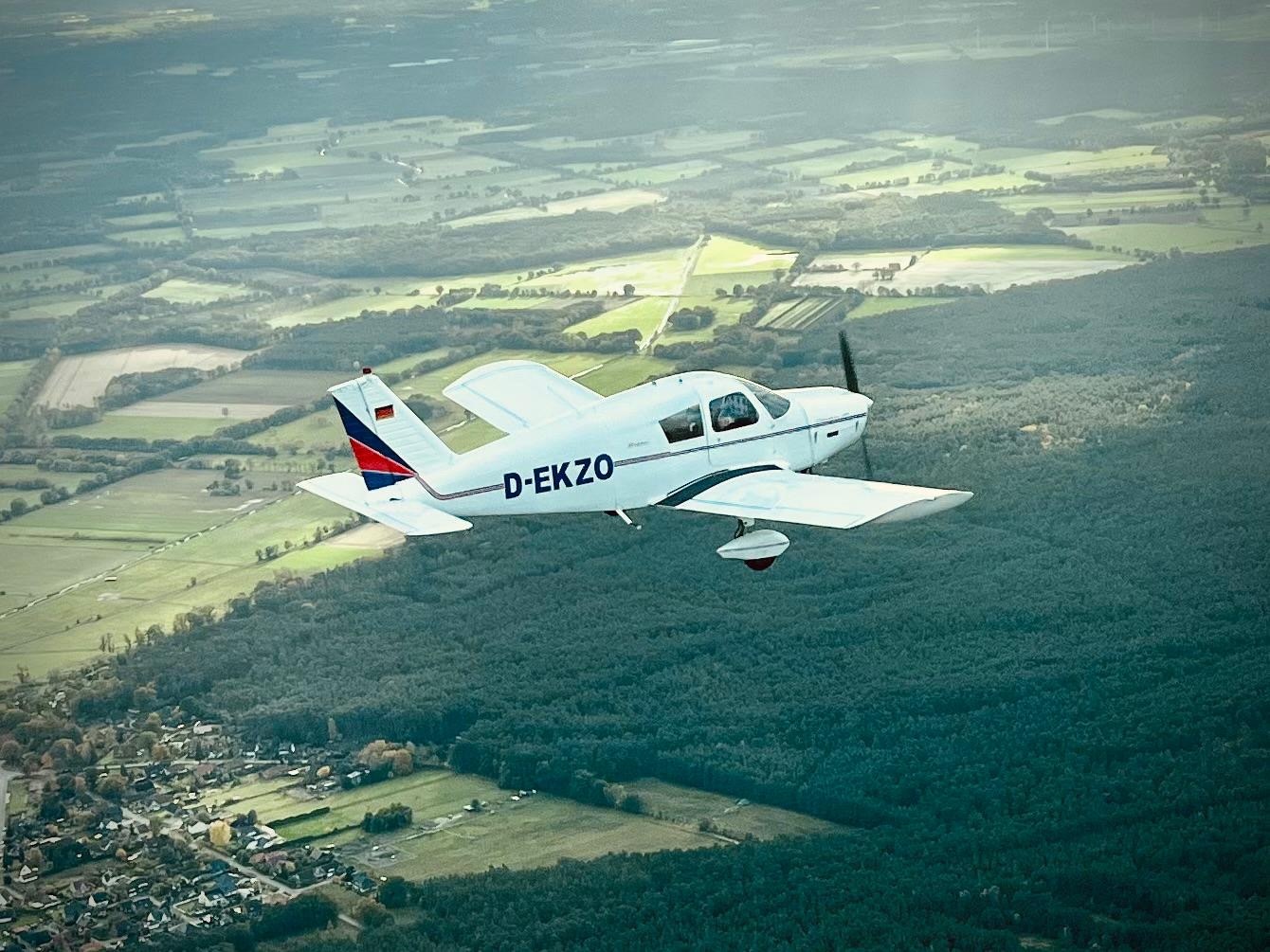
Another 1966 Cherokee 140 - first own plane
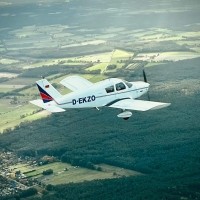
Sayin` hello.
My 140 is a 2/3 co-own and based on northern Germany.
It´s well maintained - in general - but has a high time engine 2400h / 52years SMOH, which makes me a bit wary as a newbie. It does however have excellent compression on all cylinders and is equipped with engine monitor (CHT to be kept below 400),
I also got my own boroscope an Aliexpress which I am going to use every 50h on spark plug service time according to Mike Bush´ instructions on systematic borescoping.
Also it has a Garmin 430, an STEC autopilot. I fly with Skydeamon on ipad mini.
Original sixpak is misplaced and I
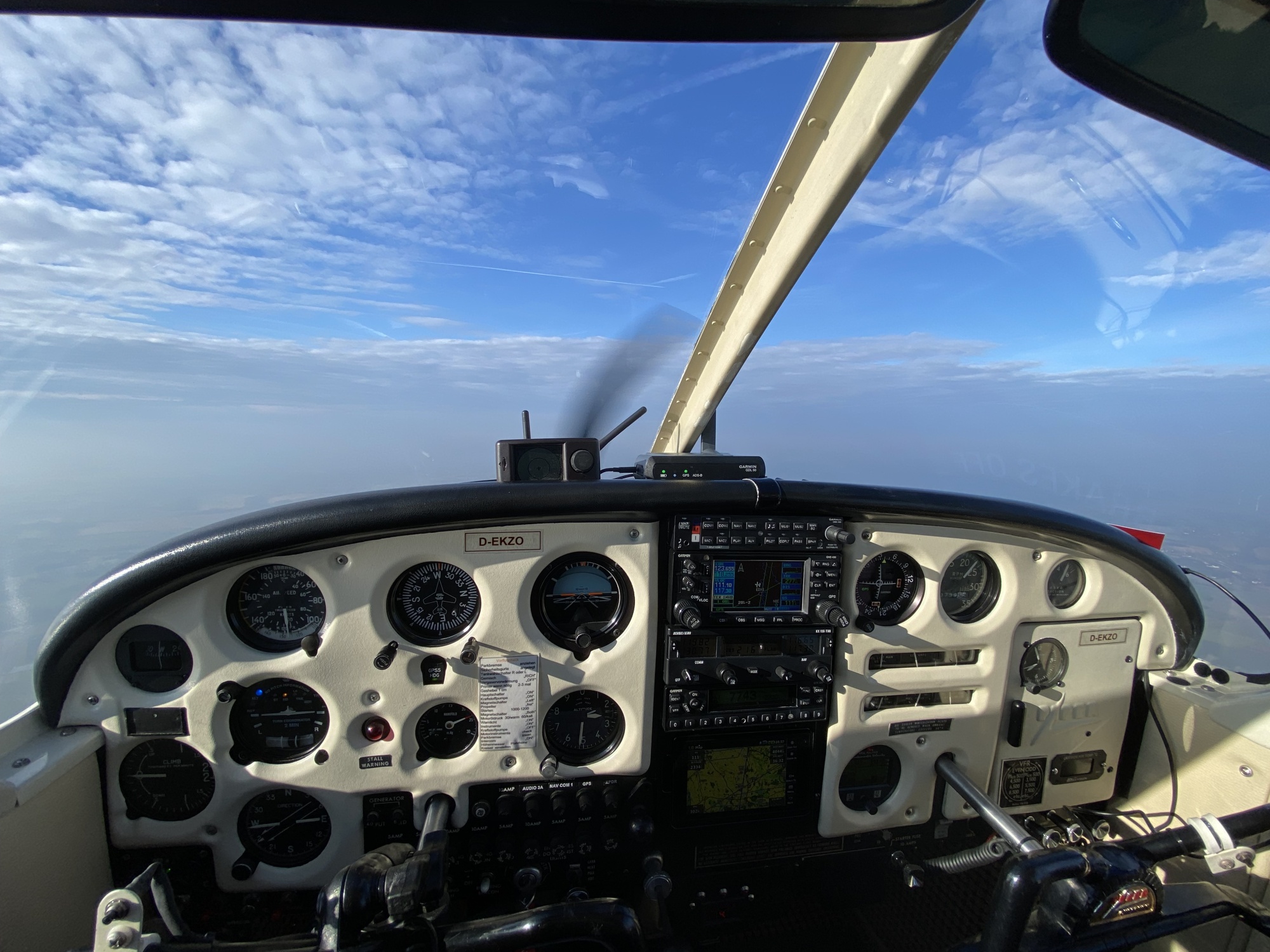
got used to missing toe breaks and overhead trim handle in the meantime.
Hope this forum in interactive. I also contributed with a detailed cure on the „fluctuating ammeter“ issue. („Maintenance“ category)
Regards
Joe
Joachim „Joe“ Hofmann
Celle, Germany EDVC
PPL EASA&FAA SEP/L NVFR
PA28-140 Cherokee D-EKZO
Comments
Wow Joe fun, Nice to see your old bird flying especially over in Europe. Are you using Auto gas or avgas?
How do you trim pitch without a handle on the crank? If I'm reading you correct
Carl
50yrs A/P IA DAL A/C inspector. 172N Rotax IRMT 912/914
Hi Carl, no you misunderstand me.
I was trying to say that got used to accept some of the „anomalies“ of this old lady through practice in the meantime.
These were an unsual six pack configuration, trimming overhead (of course with the handle), and the missing toe breaks without the chance for differential break, i.e. to maneuver tight turns on the ground.
I used fly Mooney before on a share basis with electric trim, so I had to „readjust“ :-)
I have an STC for my 140 to use auto gas with max. 1% Ethylen, and in fact I use it to 80-90% „Shell V-Power Racing“ this is our premium super auto gas with 100 octane, leadless and guaranteed max. 0.5% Ethylen. It´s like 20% cheaper here, our club has a fuel station for our Rotax light aircraft (600kg), so its convenient, don ´t have to use canisters. Have a good experience with it, keeps the oil clean. Spark plugs and valves look good on inspection.
On hot summer days, - or other airports - I use AvGas100LL for detonation margin and as precaution for vapor lock.
I do not use other Mogas or UL-type gasolines, only my trusted Shell V-Power or regular Avgas.
Whats your take and experience on the fuel issue?
And about the handle, can you give a hint how to actually get it off? I would like to change the night light bulb.
Thanks
Joe
Joachim „Joe“ Hofmann
Celle, Germany EDVC
PPL EASA&FAA SEP/L NVFR
PA28-140 Cherokee D-EKZO
HI JOe,
As far as the trim handle Piper and Cessna used a lot of early automotive style attachments. Basically just consists of a little spring clip that you might be able to grab with a ice pick or a special door handle removal tool you can usually find at an automotive store. See the picture attached This is probably what you have on there.
It sounds like you have an excellent handle on using automotive fuel in the aircraft. You definitely have all the right procedures especially for higher temperature days. It's not unusual for a lot of owners to use avgas in one tank and auto gas in the other tank. But you've got operational procedures down very well.
I had 90 horsepower 1966 Alon Air Coupe for 20 years And had the auto gas STC. I never used auto gas. The only drawback I find is that if you're having issues with engine operation auto gas sometimes add some unique troubleshooting areas that need to be considered. Not to mention that if you have any kind of leakage at all it just stinks in the cabin. LOL Is it legal yes is it safe yes. I personally like the stability of avgas in a fuel tank. My present airplane is a 172N with high compression engine so I cannot use it in my aircraft if I wanted to anyway. Here in the US we also have winter and summer blends which also has the effect of changing vapor pressure and density on the fuel. Hence my statement on troubleshooting. Some aircraft and engine combinations are well suited but others sometimes have unique issues.
The reason I was asking about fuel is I was cued by the Total time on the engine. Interesting.. thanks Carl
50yrs A/P IA DAL A/C inspector. 172N Rotax IRMT 912/914
Hi Carl, thanks a lot for the clarifying handle picture!
Joachim „Joe“ Hofmann
Celle, Germany EDVC
PPL EASA&FAA SEP/L NVFR
PA28-140 Cherokee D-EKZO
JJ, You're welcome. When in doubt Google it out.! Carl
50yrs A/P IA DAL A/C inspector. 172N Rotax IRMT 912/914
Gutten Tag Joe! Welcome to Piper owners!
Thank you for sharing your "new" aircraft. If the airframe is sound and free of corrosion issues, you have a good platform for future upgrades or alterations while enjoying low cost flying adventures.
The high engine time is definitely something to keep a close eye on. If it is truly 52 years since major and only 2400 hours total time, it sounds like it was not flown too often. As you know, the best thing for the engine is frequent operation, if possible. If you have not already considered it, regular oil analysis will add to your knowledge about how the engine is wearing. In the meantime, I would check future overhaul options now if you plan to keep the aircraft a long time.
In what part of Germany are you based? I have done work in Bad Kreutznach, and was in Esslingen Germany for Sonnenfinsternis 1999!
Regards,
Mike
Sweet lookin bird! I have the 140 as well love it!