By Joel A. Turpin, ATP CFII FAA Master Pilot
The Day Mats Carenback Saved My Flying Career
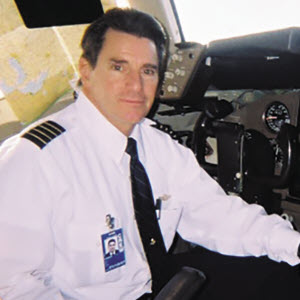
During the fall of 1976, I was a pilot for Skyway Airlines based at Fort Leonard Wood, Missouri. Skyway had a fleet of four radial-engine, tailwheel, nine-passenger Beech 18s, two 15-passenger turboprop Beech 99s, four single-engine airplanes, and one DC-3. At that time, I was a 26-year-old captain, company check airman, and chief pilot for the Beech 18, Beech 99, and our single-engine fleet, all of which were operated under FAR Part 135.
The DC-3 was operated under FAR Part 121, and since I had not been checked out as captain on that airplane, and was not type rated in it, we used a more experienced pilot for chief of the 121 operation. His name was Don Wilson. Don was in his late fifties and a former B-47 pilot in the Strategic Air Command. He was certainly not a candidate for a future with a major airline.
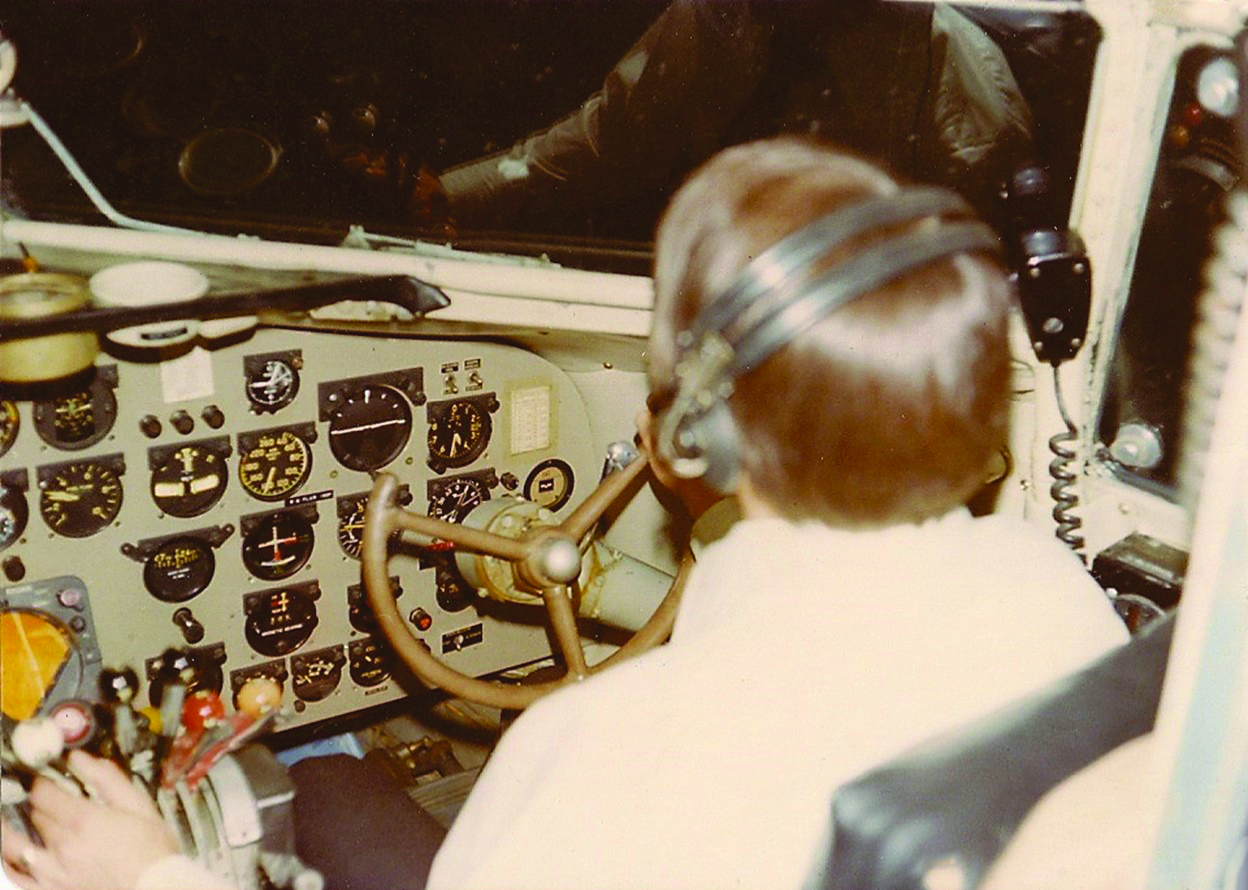
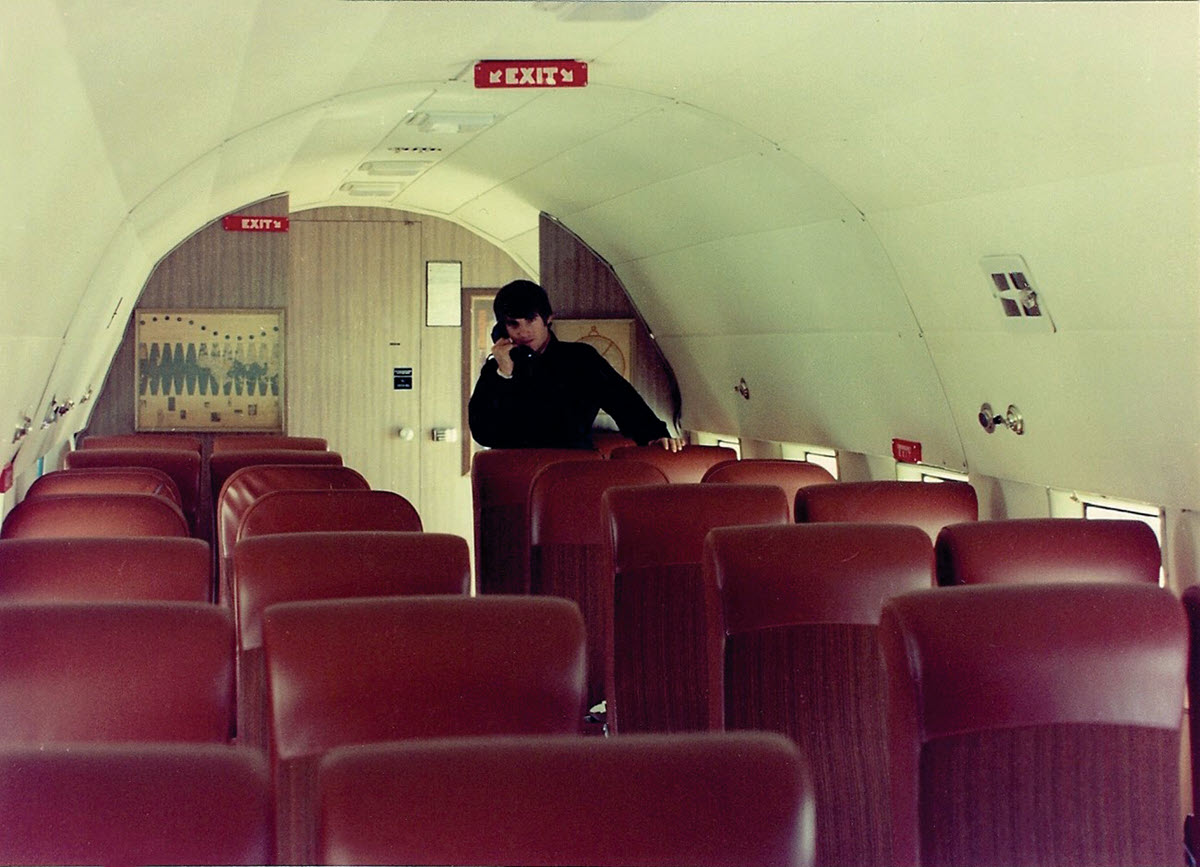
Skyway needed a new DC-3 copilot and I was next in line for the upgrade. On October 14, 1976, I took my first training flight as copilot with Don Wilson, our only DC-3 instructor. The airplane had just arrived at our maintenance base on the Rolla National Airport near Vichy, Missouri, from a long charter flight prior to our training flight. This fact will play a significant role in future events as the airplane landed with a lavatory full of blue fluid. The toilet in our lavatory did not have that flapper valve present on all modern airplanes that keeps the fluid and other unmentionables from splashing out and onto the floor. With me in the right seat and my instructor in the captain’s seat, we prepared to depart.
However, another Skyway pilot wanted to go with us as an observer since he was hoping to upgrade as a DC-3 copilot in the near future. He was a Swedish pilot named Mats Carenback (RIP).
Basic Flight Maneuvers?
We departed our maintenance base on the Rolla National Airport and climbed up to 6,500 feet to perform basic flight maneuvers. One of those maneuvers was slow flight. With Mats kneeling between us, my instructor told me to configure for slow flight, but gave no word on what airspeed constituted slow flight. I got down to 60 knots indicated air speed and asked my instructor if that was slow enough. Don told me to slow down just a little more, which I did. Without warning, the airplane stalled and all hell broke loose!
The DC-3 does not have a wing spar. The wings are attached to the center section just outboard of the engines by 328 machine bolts spaced just inches apart. Because of this arrangement, our DC-3 was only stressed for a negative .75 Gs. Another problem with the DC-3 was that because it was designed in the 1930s, the wing leading edges did not have that twist all modern airplanes have that bends the outboard leading edges downward so that the wing tips would not stall before the inboard part. And the DC-3 had a huge 95-foot wingspan. All of these would play a part in what happened next.
The big DC-3 stalled and, because the right-wing tip stalled before the left one, that 95-foot-long lever arm caused the airplane to immediately roll to the right and invert! Since neither Don nor I had any aerobatic training, the only thing we knew to do was to pull the airplane through in a split S maneuver. This caused the airspeed to reach a red line of 192 knots while pulling about 2.5 positive Gs. After the bungled slow flight maneuver, we landed back at our maintenance base and were forced to have a come to Jesus meeting about the inverted airplane with the company director of maintenance.
Consequences
Captain Don Wilson sheepishly admitted to Jack Hill, our maintenance director, what we had done and that we may have pulled some negative Gs. Upon hearing this, Jack exploded in a fit of anger which included throwing the wrench he was holding across the hangar floor. That done, he commenced on us with the fact that because we may have exceeded the negative .75 G limit, he now had to pull both wings off by removing all 656 machine bolts and have their attach points X-rayed. This was a procedure that would take our DC-3 out of service for at least a month.
He also told us to consider ourselves fired from our jobs and to leave the premises immediately. Getting fired from Skyway meant I would never fly for United Airlines, a dream I had cherished since I was 10 years old. But just as the roof was caving in, Mats Carenback, who had left the scene when the wrench was sent skittering across the hangar floor, reappeared with some startling new information.
He had gone back to the rear of the cabin where the lavatory was located and very astutely checked for any spilled fluid which would have been proof we had pulled negative Gs while inverted. However, Mats saw that all of the blue water had stayed in the toilet thus proving that we had, indeed, maintained positive G forces throughout the bungled inverted flight and split S maneuver. Once presented with this evidence, Jack Hill turned and walked away in a huff. But Mats, who unfortunately has recently flown west (died November 24, 2022 at the age of 69), had saved our jobs, and my future in the flying profession.
Mats and I would meet again as pilots for United Airlines when we were both based at O’Hare. While we never flew together at United, we did have many encounters in flight operations. Those meetings allowed us to relive our glory days as pilots for Skyway Airlines where we flew as a crew on scheduled passenger flights, as well as all night mail flights in the Beech 18 and Beech 99.
Upon learning of his passing, it became painfully obvious to me that I had never thanked Mats for his brilliant idea to use the blue water in the DC-3’s toilet as evidence that we had not exceeded the negative G limit, thus preserving my career as a professional pilot.