I was hired by United Airlines on June 9, 1986, as a Boeing 727 Flight Engineer. Being a flight engineer was a rite of passage for all airline pilots in that era. But on January 12, 1990, my days of sitting “side saddle” finally ended. That was the day I was awarded a copilot bid on the 737-200.
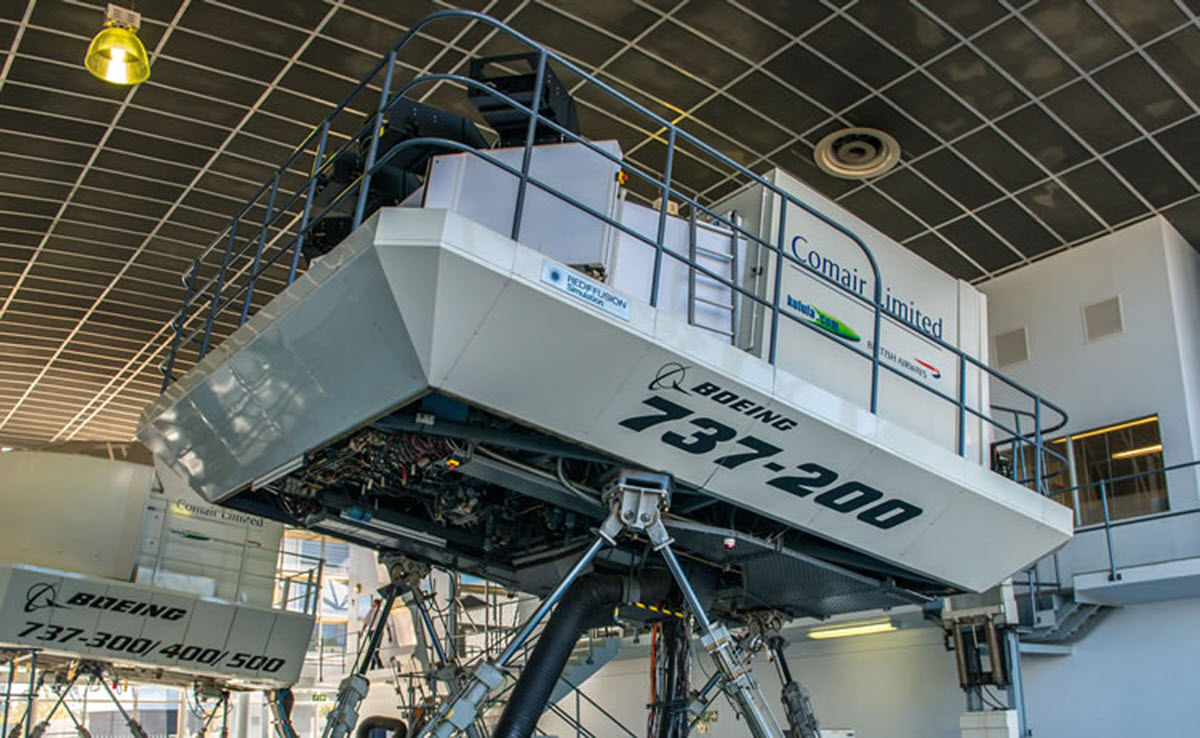
I started school at United’s Flight Training Center in Denver, Colorado, on February 9, 1990. Training began with several periods of basic instrument flying in the simulator, as most of us upgrading from engineer to copilot had not flown in several years.
February 27, 1990, was the final day of the instrument refresher course. While flying the simulator, an incident occurred that could have caused the deaths of me and about 10 other pilots who were also flying simulators.
So, how does one die while flying a simulator? The answer can be found in the “coffin corner” of the aerodynamic envelope of high wing airplanes. I know this sounds strange, but as a courtroom lawyer would say, relevancy can be proven!
The Coffin Corner
Sometime in the mid-1990s, a high wing turboprop commuter airliner crashed while flying in icing conditions. The airplane dove straight into the ground in a perfectly vertical dive from which the pilots were unable to recover. The NTSB suspected there was ice on the leading edge of the horizontal stabilizer at the time of the accident and that the stabilizer might have stalled. This phenomenon is officially known as a “tailplane stall,” and although rare, it had been the cause of some previous accidents.
The mystery the NTSB had to solve was this; airplanes flew every day with iced up stabilizers and didn’t crash, while others, on rare occasion, did. However, there was a common thread. Most, but not all, tailplane stalls had occurred on high wing airplanes flying in mixed icing conditions. This latest accident led investigators to theorize that the flaps had somehow caused the stabilizer to stall.
Armed with this theory, NASA and the Airline Pilots Association (ALPA) decided to conduct a flight test to investigate whether full flaps on a high wing airplane could cause a stabilizer contaminated with mixed ice to stall. In addition, they wanted to further explore the pitch over phenomenon associated with a stalled stabilizer.
Two pilots from the ALPA went to NASA’s Glenn Research facility at Cleveland, Ohio, and met with the officials charged with the investigation. NASA owned a Twin Otter research aircraft that would be used for the flight test. Since the Twin Otter had a high wing, it would replicate the accident airplane perfectly.
It was quickly decided that in the interest of safety, the test flight would not be flown in actual IFR, icing conditions. Rather, the engineers at NASA attached a strip of material to the leading edge of the left horizontal stabilizer that would simulate the shape of a substantial amount of mixed ice. In addition, the Otter was rigged with cameras and data collection instruments to record the event.
The crew consisted of two NASA pilots, a scientist, an engineer and the two ALPA safety officers, one of whom would pilot the Twin Otter. They took off, climbed to 6,000 feet and set up for a simulated instrument approach. Descending with partial flaps, the Otter’s flight characteristics were perfectly normal. However, when the flaps were lowered to full down, the stabilizer stalled and a mysterious aerodynamic genie escaped from its bottle.
The Twin Otter immediately and violently pitched straight down! Unlike the deceased commuter pilots, the Twin Otter crew was expecting a pitch down, but not one so violent or so vertical. Fortunately, they knew what had caused the loss of control and immediately raised the flaps, which allowed them to regain control and pull out of the dive. However, the pilots still needed 170 pounds of up elevator force and a lot of altitude to coerce the Otter out of its dive.
Investigating the phenomenon of the tailplane stall had been more than dramatic. It had almost been fatal. Although there had been accidents blamed on a stalled stabilizer, no one had ever survived to report what they had experienced due to the low altitude normally associated with the use of full flaps.
The Twin Otter experiment had fully exposed the aerodynamic genie’s secret – a stalled stabilizer results in an instantaneous and uncontrollable vertical dive. As a side note, the NASA crew could possibly be the only pilots ever to experience a complete tailplane stall and live to tell about it.
Anatomy of a Tailplane Stall
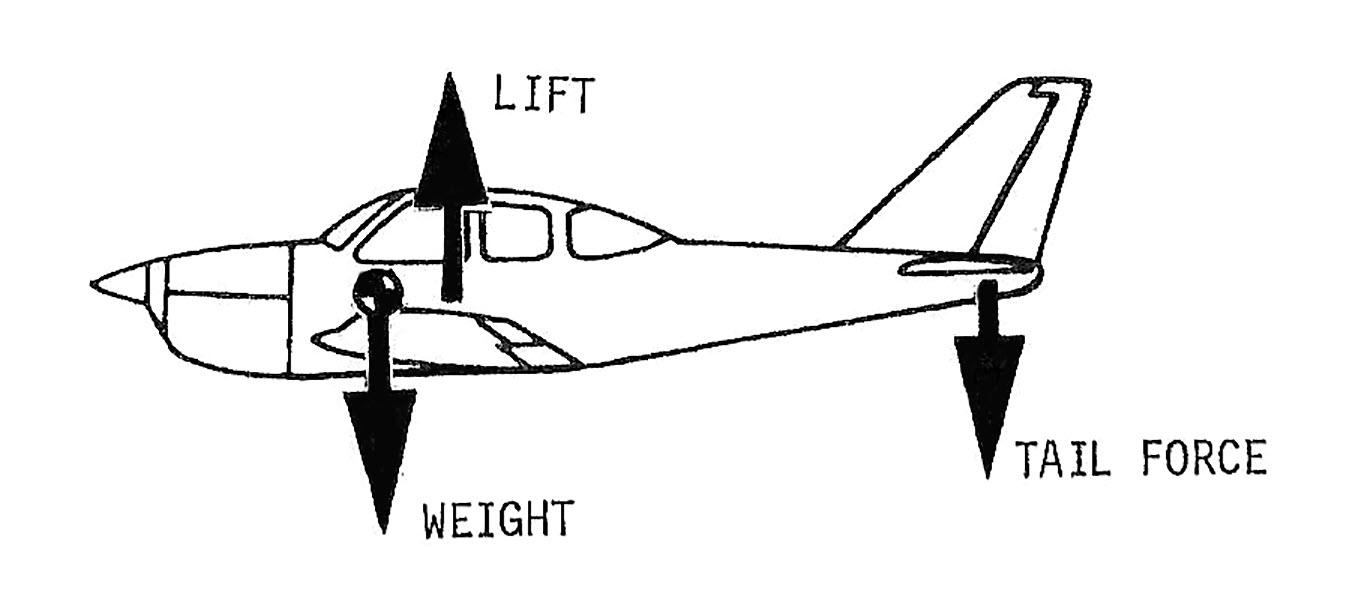
To understand the tailplane stall requires a brief review of aerodynamics. The center of lift, which is the point on top of the wing where maximum lift is produced, is normally associated with the thickest part of the wing. The center of gravity is always forward of the center of lift. Because of this arrangement, there exists a lever arm between the two that is constantly trying to pitch the nose downward in flight. The pivot point (or point of rotation) is the airplane’s center of gravity. This nose down pitching moment is counteracted in flight by the horizontal stabilizer which makes lift downward resulting in an uneasy state of equilibrium.
The opposing forces on an airplane exerted by the wing and stabilizer in level flight are similar to a playground seesaw that has two kids of equal weight on each end. As long as both kids stay put, equilibrium exists. A tailplane stall is the equivalent of one kid suddenly jumping off his end of the seesaw, causing the other end to crash to the ground.
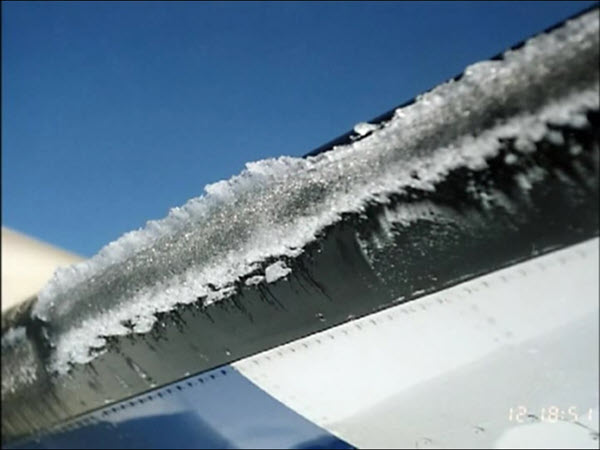
The NASA experiment confirmed that lowering full flaps on certain high wing airplanes causes the air blowing downward off the flap trailing edge to strike the leading edge of the stabilizer from above. This alters the relationship between the leading edge of the stabilizer and the relative wind, causing a dramatic increase in angle of attack.
Now rewind to February 27, 1990. At 6 p.m., I climbed into the right seat of the 737 simulator. At about the same time, a Federal Express Cessna 208A Caravan, N820FE, departed Aspen, Colorado, with a load of freight and mail bound for Denver’s Stapleton Airport.
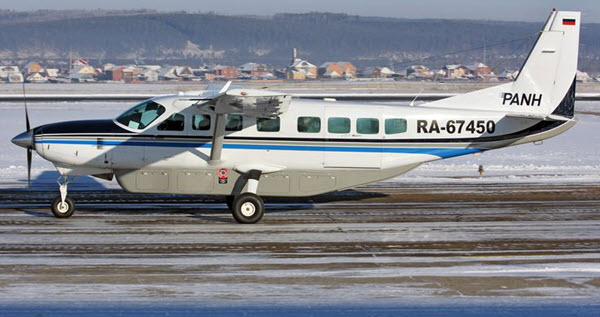
The Caravan’s pilot was a Denver police officer who flew freight for a FedEx part time. His name was Bill Head. Bill was a very courageous guy! Flying single pilot, in a single engine airplane, at night, in IFR, icing conditions over the Rocky Mountains was about as gutsy as you can get. In fact, it is just slightly less dangerous than getting shot at while flying combat in the military!
As the Caravan was eastbound and descending over the front range of the Rocky Mountains, the Denver weather was as follows: 800 scattered, 1,000 overcast, four miles visibility with light snow and light freezing drizzle, temperature 28, dew point 25, wind 350 at 10 knots and, of course, dark. Naturally, there were SIGMETS out for moderate to severe icing.
The old Stapleton airport, which closed in 1995, had three parallel runways landing to the north. Runways 35 left and right were used by commercial airliners, while the shorter runway 36 was used by small freighters and commuters. The localizer for runway 36 passed directly above the United Airlines Flight Training Center.
While I was sweating in the 737 simulator over virtual instrument approaches, Bill Head was sweating ice accumulating on his Caravan while being vectored for a real instrument approach. However, his Caravan was certified for flight in icing conditions. It was equipped with deicer boots for the leading edges of the wing, wing struts, stabilizer and the vertical tail. It also had electric propeller deicers and a heated windshield.
All of this equipment would normally have mitigated any ice accumulation, but two things conspired against the Cessna’s pilot. First, the FAA allows operators of the massive turboprop Caravan to fly it single pilot in IFR conditions. The second thing was an incredible meteorological event.
That night in the Denver area, between 7,000 and 9,000 feet, icing conditions existed that were officially described as “extreme.” Extreme icing was beyond the certification limits of Bill’s Cessna Caravan, as it is for every airplane, regardless of size. It is also one step above “severe” icing. In my 51+ years as a pilot, this is the only time I have ever heard the term “extreme icing.”
While being vectored by Denver Approach Control, the Caravan was leveled off temporarily at 9,000 feet where it encountered the extreme icing conditions. Mixed ice started accumulating at a rate that completely overwhelmed the Cessna’s deicer boots.
The pilot had been maneuvering with partial flaps and had undoubtedly activated the boots several times prior to intercepting the localizer. Unfortunately, he was too busy flying single pilot at night to notice that ice was accumulating on his wings and tail at a rate beyond what his deicer boots could handle. With over an inch of mixed ice on his wings and stabilizer, Bill Head intercepted the runway 36 localizer and started inbound on what should have been a routine instrument approach. Three miles from touchdown, he reached for the flap handle…
At 8 p.m., we had completed the first two hours of a four-hour block of simulator training. It was time for a break and a cup of coffee. As we sauntered into the break room, one of the simulator technicians said that there were dozens of flashing red lights out in the darkness some 1,000 feet south of the simulator building. Thinking it was a house fire, we all stepped outside for a look, but no flames were visible. We gazed at the flashing lights for a few more minutes, then lost interest and wandered back to the simulator bay. Never in our wildest dreams could we have known how close we had come to being a part of that emergency.
At 10 p.m., our instructor pushed the “motion off” switch and our 737 simulator began to sink down onto its resting pads. After surviving four hours of holding patterns, instrument approaches and engine failures, we drifted back into the breakroom. After debriefing with our instructor, we once again stepped outside for a look at the hubbub across the street. As we gazed at the flashing red lights through the rain and snow, a simulator technician told us that the emergency across the street was not a house fire. It was a plane crash!
The Caravan’s pilot had placed his hand on the flap handle, moved it to “Full Extend” and signed his death warrant. The flaps went to full down, releasing the aerodynamic genie from its bottle.
The stabilizer stalled and the Caravan instantly pitched straight down into a vertical dive from 1,000 feet. It crashed about 900 feet south of United’s training center. The crash left behind a four-foot-wide by three-foot deep hole in the ground where it had impacted. Sadly, the courageous Bill Head was killed instantly.
The whole incident was of little consequence to me until many years later when I was discussing the accident with a friend. That’s when a random thought crossed my mind about the pilot’s timing when selecting full flaps. Had he waited just a few more seconds, the Caravan would have come through the roof of the simulator building. If that had happened, I could have died in a plane crash, while flying a simulator!
Postscript for Low Wing Pilots
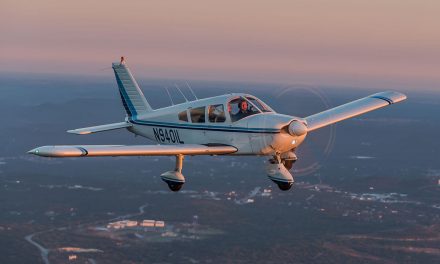
While this story appears to be an indictment of the aerodynamic envelope of high wing airplanes, pilots flying Pipers may not be immune to tailplane stalls. Many years ago, I was flying the Cherokee Six for a commuter airline when I got caught on top of an overcast at 2 a.m. while on an approach to an airport where the tower was closed. There were no reports of icing, but the OAT was -5 Centigrade in the clear air prior to penetrating the clouds on the VOR approach I was flying.
Suspecting that I might pick up ice, I elected to fly the approach and land with an extra 15 knots of airspeed and zero flaps, even though I was flying a low wing airplane. The runway was 5,000 feet long and dry, so stopping would not be a factor.
Upon breaking out of the 500-foot ceiling, I was carrying an inch or more of mixed ice on the leading edges of the wings and stabilator. But the airplane was flying so well that after crossing the threshold, I yanked on full flaps to help dissipate the extra airspeed. When I did, the control wheel immediately began a rapid fore and aft oscillation indicating that a tailplane stall was imminent. I quickly raised the flaps which stopped the control wheel oscillations. The rest of the landing was uneventful.
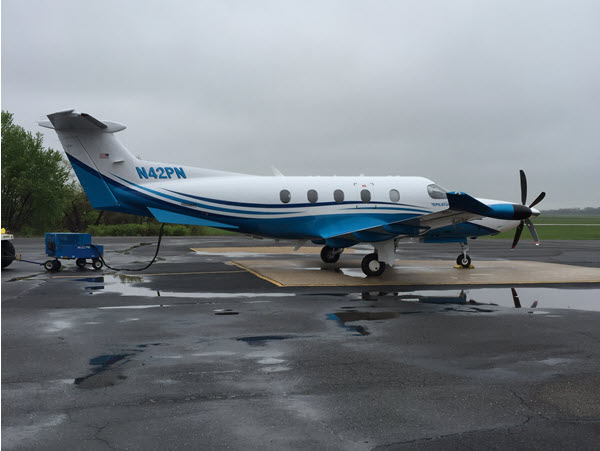
More recently, when I checked out in the Pilatus PC-12NG, I noticed in the POH that tailplane stalls are addressed, even though the Pilatus is a low wing airplane with a very high T-tail. The procedure for the PC-12 to avoid a tailplane stall when landing with ice adhering to the airframe is to use no more than 15 degrees of flaps, where 40 degrees was the normal setting. In addition, if the deicer boots are inoperative, a landing must be made with zero flaps. Even with its low wings and high T-tail, the Pilatus PC-12 can fall victim to a tailplane stall.
How Full Flaps Can Cause a Tailplane Stall on Some Low Wing Airplanes
On most airplanes, the use of full flaps for landing causes a reduced angle of attack for the wing which increases the angle of attack of the stabilizer. On certain airplanes, such as the Pilatus, if the stabilizer has a significant amount of ice on the leading edge, full flaps can cause it to stall, even though the airflow from the flaps does not strike the stabilizer from above.
This, along with my incident flying the Cherokee Six, indicates that full flaps can be the catalyst for a tailplane stall regardless of wing configuration. With this in mind, a landing with any amount of ice on the wings and stabilizer should be made at a higher than normal approach speed and (considering runway length) the lowest degree of flaps, with zero being optimum.