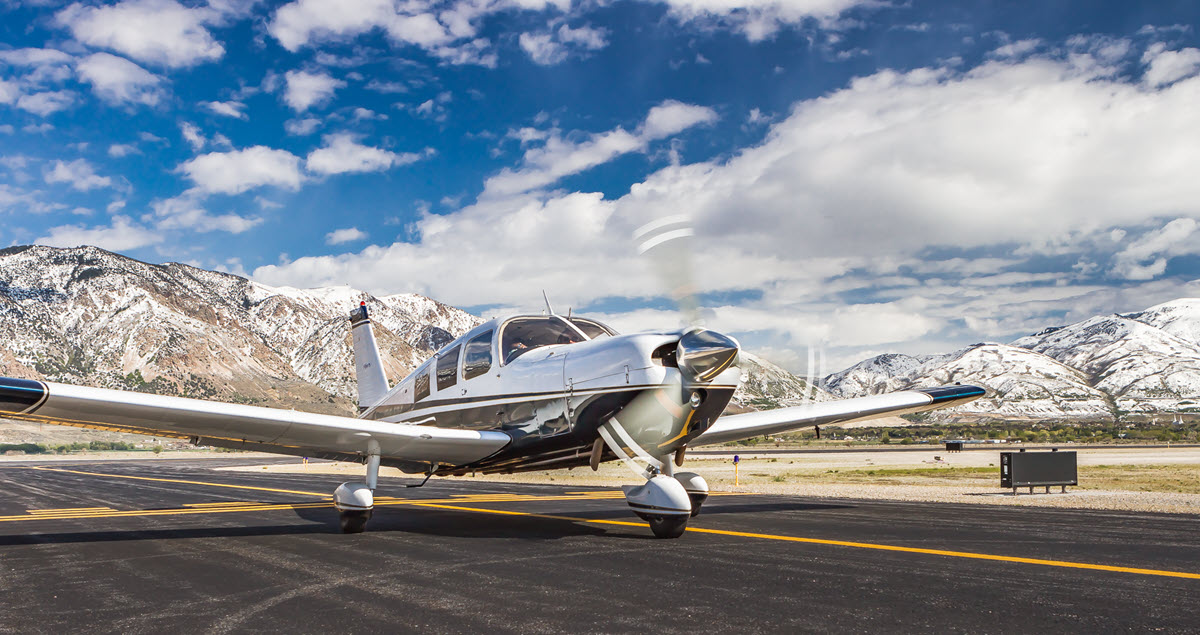
Photos provided courtesy of CB Aviation – Ogden, Utah
Back in 1965, when Piper stretched and powered-up the basic Cherokee design to create the Cherokee Six, the company couldn’t possibly have imagined how successful the airplane would become. Certainly, a 20-year run is considered an excellent sales life for any airplane, and the Cherokee Six (by any other name) made it through three full decades.
A while back, we took a look at the top-of-the-line, turbocharged, retractable follow-on to the Cherokee Six design, the Turbo Saratoga HP. At the opposite end of the spectrum, however, is the original 1965/1966 Cherokee Six.
The Cherokee Six was designed primarily as a hauler to compete with the Cessna 205/206. Cessna discovered a ready market for a flying station wagon in 1963, and Piper jumped in for its share two years later. With a fuselage four feet longer and seven inches wider than the standard PA-28 Cherokee, the Six offered comparatively cavernous cabin space and an unusually good useful load.
Accordingly, the airplane could be stripped down to cargo configuration in just a few minutes. The test machine I flew was outfitted with all seven seats in place, however, in a 2/3/2 pattern. Admittedly, the center set of seats would be chummy for three across, as the real intent of the seven-seat option was to have kids occupy at least two of them.
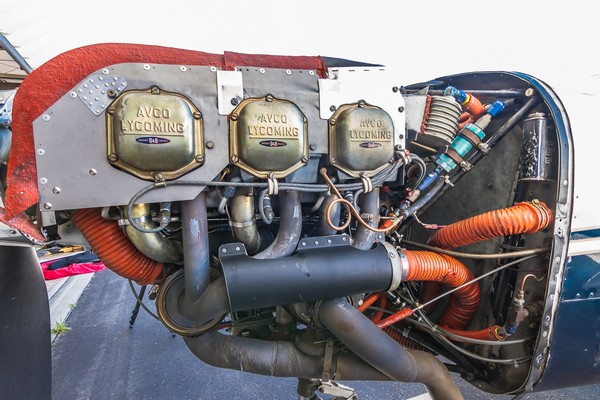
Two engine choices were offered on the original Six. The first was fitted with a 260-hp, carbureted 0-540-E4B5 Lycoming; the less thirsty of the two, more efficient and with a slightly greater useful load. The second was with a 300-hp, injected version of the same engine, an IO-540-K1A5, which burns more fuel but provides better performance in the process. Both engines are rated for 2,000 hours between majors, though the injected 300-hp mill costs significantly more to overhaul or replace with a remanufactured engine.
The price differential between the two airplanes in 1966 was about 10 percent, and that gap remained until the 260 was discontinued in 1979. Still, the 260 was a popular model in the beginning, accounting for perhaps 30 percent of total Cherokee Six sales. The consensus among operators is that the 260 may be the better machine for private owners because of its overall low operating costs. The 300 is preferred by charter and commuter fliers for its extra power and slight performance advantage.
Certainly one of the primary attractions of the Six has always been its excellent useful load. The first Sixes, both 260s and 300s, were certified for a max gross weight of 3,400 pounds, but the 260 has an empty weight about 70 to 100 pounds less, so that much more weight allowance is available for payload or fuel. Even with a full load of avionics, you can plan on lifting 1,600 pounds of fuel, people and baggage with a 260. Top all four tanks – that’s right, four tanks – with 84 gallons of fuel and payload is only reduced to 1,096 pounds, enough for six full-size people and 76 pounds of baggage.
Incidentally, there are two baggage areas; one 22-cubic-foot compartment behind the rear seats and another eight-cubic-foot storage area between the engine firewall and cabin, sometimes referred to as the “frunk” (front trunk). The latter is a good sound-buffer and an efficient use of the nose extension necessary to balance the CG. Here at last, said buyers back in the mid-60s, was an airplane that allowed you to fill all the seats, top all the tanks, load some baggage and fly away.
Alternately, you could use the Cherokee Six as a freight hauler with all the seats removed except the pilot’s. Total cabin size is 48 inches tall and wide by 13 feet long. Having delivered a dozen or more Sixes across country (and even an ocean a few times), including one single-seat PA-32-300 a few years ago, I can tell you the room is impressive, and it’s hard to exceed the weight limit unless your cargo is very dense. Generally speaking, if you can get it inside the airplane, you can probably fly with it – as long as you make sure you have plenty of runway ahead and no obstacles, that is.
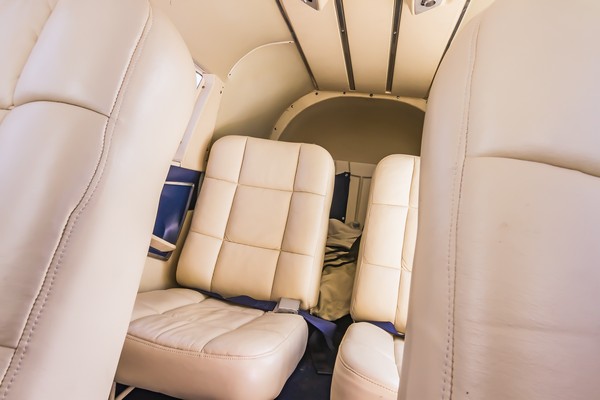
In the all-passenger mode, filling the seats is facilitated by the aft cabin door that opens directly into the third row. Rear passengers can climb into their seats without having to wriggle down a narrow middle aisle. Piper also offered an aft baggage door adjacent to the rear cabin entryway.
The combination of the two aft doors opens up a large cavity in the left rear of the airplane, wide enough to let the Cherokee Six swallow two litters (in air ambulance configuration), a coffin or even, as Piper advertised several years ago, a piano.
Be aware, however, that the Six can be loaded outside its CG envelope, both forward and aft. You have to work at it, and the airplane won’t bite until it’s far out of limits, but be especially wary of a super-aft CG. It’s sometimes possible to control a forward CG on landing by judicious use of flaps, but an aft CG can be just plain deadly.
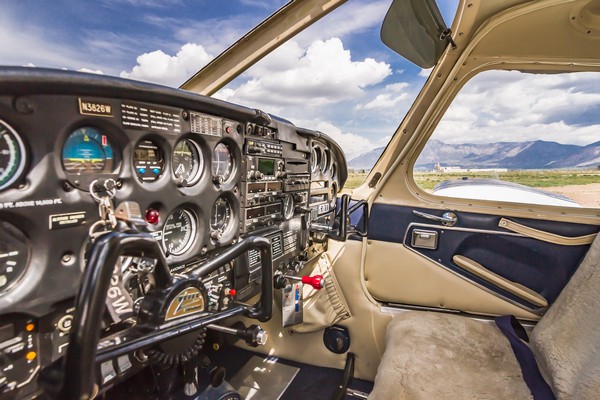
The front four or five folks enter through a wide door at right front over the wing. If there are only two center passengers, they can fold down the center third seat into an armrest.
Predictably, the front two seats are the roomiest, with plenty of elbow, shoulder, head and leg room. In all, the Cherokee Six is perhaps one of the more comfortable ways for six people to travel in a single-engine, general aviation airplane.
As you might imagine, requiring 260-hp to push 3,400 pounds of airplane through the sky results in something of a struggle. Power-to-weight ratio is 13.1, and combined with the drag from three wheels left hanging in the wind, the Six 260 isn’t a particularly quick mode of travel.
Push everything to the wall at 7,000 feet, and the airplane will manage about 140 knots and burn 14.5 gph in the process. Perhaps for this very reason, Cherokee Six pilots try not to be in too big of a hurry. If you’re willing to settle for 130 knots, you can do it on 13 gph. In automotive terms, that’s about 11.5 mpg – not great, but as good as the luxury cars of the mid-60s era.
Despite the speed, topping the tanks with 84 gallons of fuel provides the Cherokee Six 260 with good endurance. At a burn rate of 13 gph, the airplane can linger aloft for six hours plus and cover almost 750 nm in the process.
You may have to do quite a bit of tank switching to keep the airplane in lateral trim, however. The main, 25-gallon wing tanks are mounted inboard, but each tip tank holds 17 gallons or 102 pounds of petrol, and it’s located at the end of a 13-foot wing, creating a long moment arm. Burning fuel from either tip tank rather quickly destroys any semblance of lateral trim and creates a heavy wing.
Fuel mismanagement is responsible for engine failures in Cherokee Sixes twice as often as in most other single-engine airplanes and, in fact, it’s perhaps the most common accident source in the Six. Pilots with experience in the airplane rarely burn more than a half-hour at a time from a tip tank before switching to the opposite side.
One Six pilot I know says fuel management isn’t really that much of a problem. He uses what he calls “a super-simple system” that goes like this: Take off on the left main, switch to the right tip for 45 minutes, go back to the left main for an hour, cross to the right main for another hour, to the left tip for a half-hour, to the right main for another half-hour and to the left tip for a half-hour. Super simple? This will get you 4.5 hours down the road and leave about 18 gallons for reserve – worth an hour-and-a-half at 55-percent power.
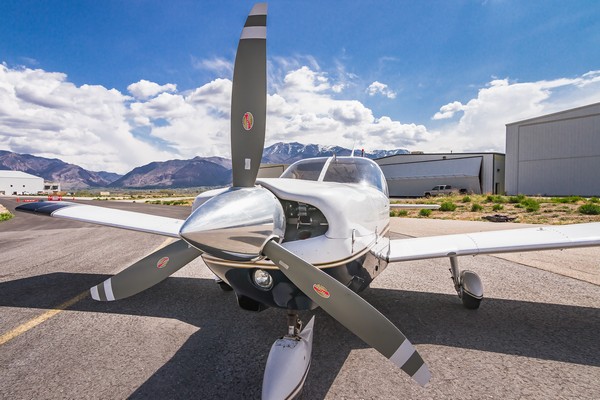
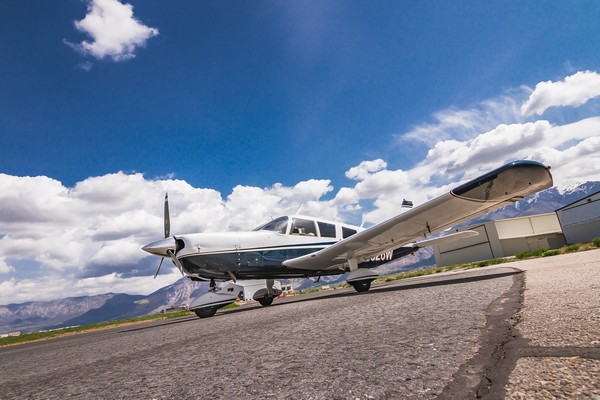
Flight characteristics are pretty much what you’d expect from a flying panel truck. The Cherokee Six wasn’t designed as an exciting airplane to fly, and sure enough, it isn’t. Roll rate is heavy and leisurely at best, pitch response is better but still ponderous, and the rudder is hard. On the other hand, stability of the big Six in rough air is excellent, especially when heavily loaded.
Turbulence produces more wallows than jolts, making the sky seem smoother than it would in other airplanes. Stalls are in the Cherokee tradition; a gentle, hobby-horse bucking up and down while the airplane mushes downhill.
The Six isn’t a particularly adept high-altitude airplane; it seems happiest at 8,000 feet and below. Perhaps for that very reason, Piper created (and then discontinued) the Turbo Saratoga, a follow-on to the original airplane but with an AiResearch turbo out front.
The 260 has a service ceiling of only 12,800 feet when fully loaded, compared to 16,250 feet in the 300-hp model. This may not be a critical consideration if you do all your flying along the East Coast, but it’s certainly something to think about if you live in Denver or fly many of your hours in the Mountain West.
Pilot and passenger environment in flight is good. The engine is far out in front of the cabin, so noise level is lower than some other airplanes. Perhaps for the same reason, vibration is minimal. Generally speaking, the Six is smooth and quiet at all power settings. Visibility is fair, though normal cruise demands a comparatively high angle of attack that leaves the nose well above the horizon.
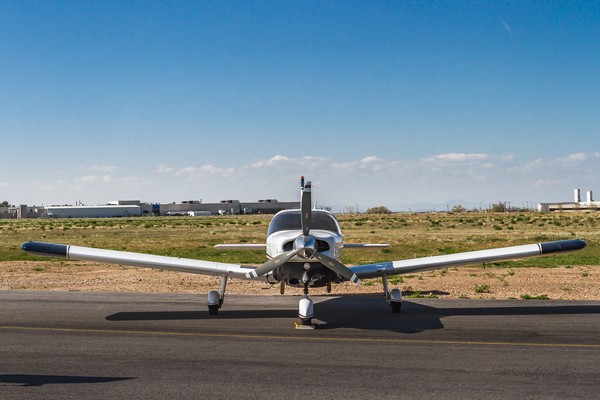
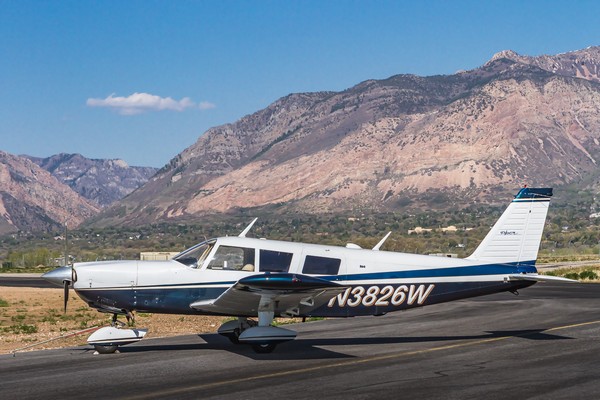
Fly the Six like a twin in the landing configuration, and you’ll be rewarded with smooth touchdowns. While it is possible to ground a Cherokee Six power-off with a full load, the more intelligent method is to hold some power into the round out; then, ease it off just as you would in a Seneca.
Maintenance on the Six isn’t cheap, though the airplane does benefit from a fairly reliable engine and a reasonably strong, fixed gear. The four-tank fuel system has been a constant source of trouble. The selector had a problem with rusty check valves in the model’s early years. Fuel tank sealant eventually breaks down, causing slow or not-so-slow leaks and may even be ingested into the fuel supply, with potentially serious consequences.
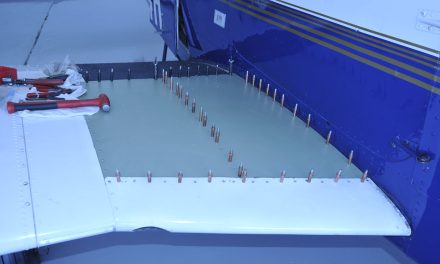
Upper wing skins on some older Cherokee Sixes have been known to crack under the repeated stress of lifting heavy loads – another expensive problem to correct.
Whatever your choices of engine or year, you’ll be hard-pressed to find a better machine for the money, capable of lifting six/seven people or one pilot plus 1,000 pounds of cargo. Cessna fans no doubt will favor the high-wing 206 which carries slightly more weight, but Cherokee Sixes of whatever power have carved out a permanent niche for themselves among airplanes that must work hard to earn their keep.