
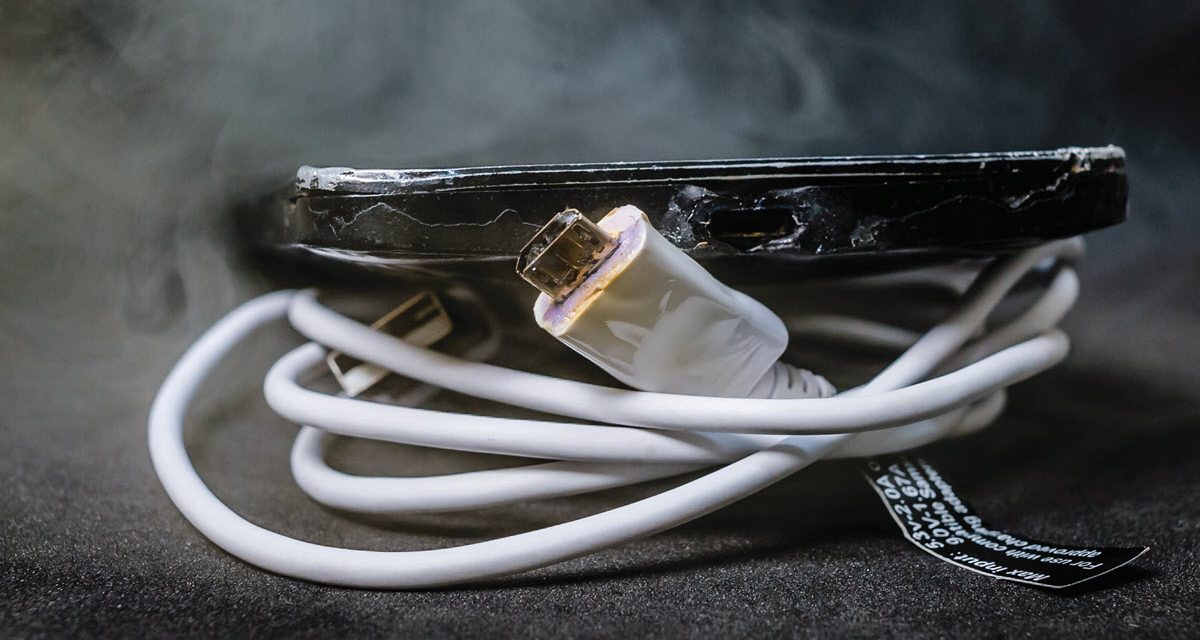
A Small Device with Big Consequences
By Carl Ziegler, A&P/IA
Recently, during a guys’ weekend get-together, I noticed something odd about my son, Chris’s, cell phone. The case looked like it had expanded. Richard, our resident IT expert and my other son, took one look and immediately said the lithium battery inside was starting to fail and swell.
At the time, I didn’t think much of it.
Fast forward a few days, and I started seeing multiple reports about lithium-ion batteries, especially power banks, causing smoke and fire incidents on aircraft. That got my attention. What seemed like a minor curiosity suddenly became something a lot more relevant to those of us flying light aircraft.
We’ve all gotten used to bringing more electronics into the cockpit. Tablets, backup phones, power banks, portable Wi-Fi units, it adds up quickly. But with that convenience comes a risk that many general aviation pilots may be underestimating.
Know Your Risks
Lithium-ion batteries are everywhere. Power banks, spare phone batteries, tablets, e-cigarettes — you name it. While we don’t often hear about incidents in general aviation, that doesn’t necessarily mean they aren’t happening. Unlike commercial operations, reporting in GA is limited, and that can skew our perception of the risk.
The FAA logged 97 lithium-ion battery incidents involving smoke, fire, or extreme heat in 2025, with a large percentage occurring on passenger aircraft.
Commercial aircraft at least have fire suppression systems in their baggage compartments. A typical Cessna … not so much.
Now imagine you’re cruising along at 5,000 feet and you smell smoke. You glance back and see it coming from the baggage area behind the seats. If that fire is coming from a battery, things can escalate quickly.
Why Lithium Batteries Are Different
Lithium-ion battery fires aren’t your typical electrical fire. When these batteries fail, they can enter what’s called thermal runaway, a chain reaction that generates intense heat, smoke, and sometimes flames. Once it starts, it’s very difficult to stop.
And here’s a key point: Using the wrong method to fight the fire can make things worse.
Do not use water! Water reacts with lithium and makes the fire worse.
Most of us carry a standard dry chemical (ABC) fire extinguisher, which can be used, but it is not designed to stop the reaction inside the battery. Specialized extinguishers designed for lithium fires (Class D or lithium-specific units) are more effective but rarely found in light aircraft.
Prevention Starts Before You Fly
The best way to deal with a cockpit fire is to avoid having one in the first place.
Here are a few practical steps you can take:
1. Inspect Your Devices
If a battery looks swollen, damaged, or overheats easily, don’t bring it on board. That phone I mentioned earlier? That’s exactly how problems start.
2. Be Selective About What You Carry
Doyou really need three spare batteries and two power banks for a short flight? Limit what you bring to what you actually need.
3. Stick with Quality Equipment
Cheaper, off-brand batteries may save money upfront but can increase risk. Higher-quality OEM batteries tend to have better safety controls.
4. Protect Against Short Circuits
Loose batteries rolling around in a flight bag can short out if terminals contact metal objects. Use protective cases or covers.
5. Keep Batteries Accessible
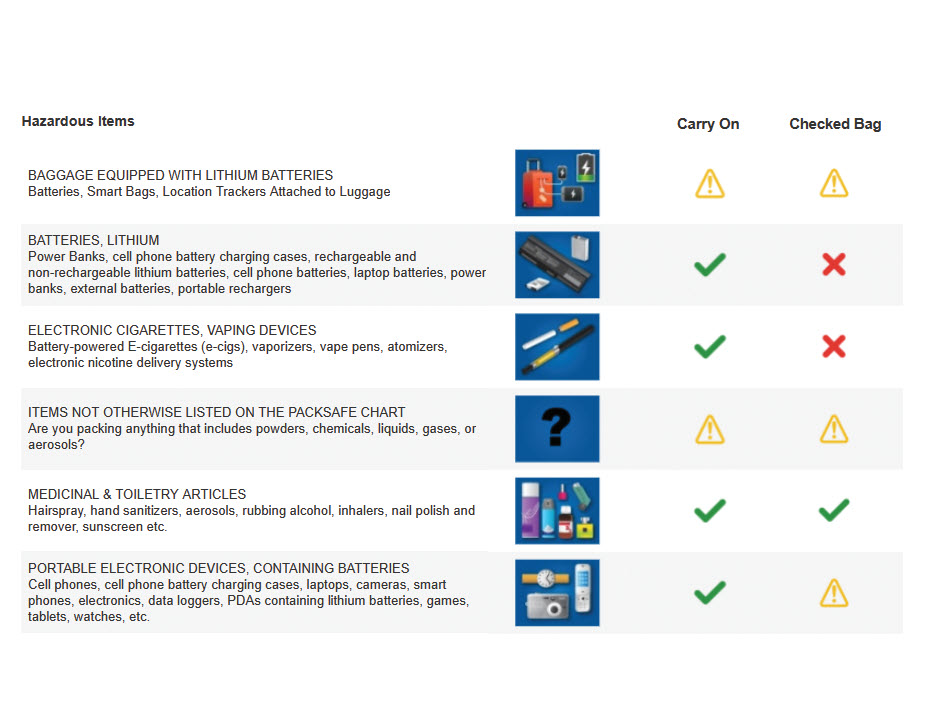
This is a big one. Airlines require lithium batteries to be in the cabin and within reach for good reason. If something starts to smoke, you need to get to it immediately. If it’s buried in the baggage compartment, your options become very limited.
Storage: Your First Line of Defense
If you routinely carry multiple batteries, say for backcountry flying or extended trips, it may be worth investing in a fire-resistant containment bag.
Yes, some of these are pricey, and I was surprised at the cost when I looked into them. But when you weigh that against the potential consequences of an in-flight fire, the math starts to make sense.
Think of these bags not as a luxury, but as a layer of protection.
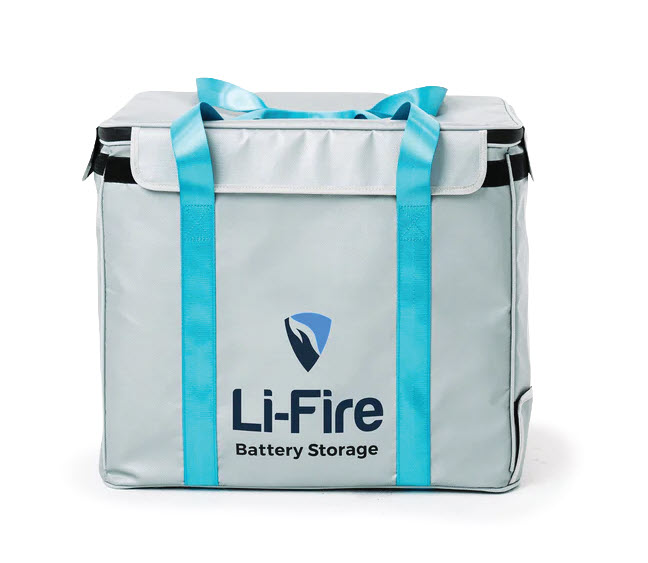
of a lithium-ion battery
fire containment bag
by Li-Fire,
What If a Fire Starts in Flight?
Let’s walk through a realistic scenario. You’re in cruise, and you smell smoke. You identify it coming from a bag or compartment where you stored a battery-powered device.
What now?
1. Fly the Airplane First
Maintain control. Don’t let the situation pull your attention completely away from flying.
2. Locate the Source
You need to confirm what’s actually causing the smoke or fire.
3. Cut Power if Applicable
If the device is plugged in, disconnect it.
4. Place Item in Fire Containment Bag
Fire containment bags should come with special gloves that will allow you to safely handle the device that is emitting smoke or is on fire. Do not touch smoking/burning Lithium-ion batteries without this personal protective equipment.
5. Use Your Class D Fire Extinguisher
A dry chemical extinguisher is your primary tool. Be aware that discharging it in a small cockpit will reduce visibility and air quality.
6. Ventilate the Cabin
If possible, open vents or windows to clear smoke.
7. Land as Soon as Possible
This is not a “let’s monitor the situation” event. Get on the ground quickly and safely.
Declare an emergency if needed. That’s why the system is there.
Common Items You Might Be Overlooking
Take a moment to think about what you regularly bring onboard:
- Power banks
- Spare phone batteries
- Tablets and laptops
- Portable Wi-Fi systems
- Rechargeable tools
- E-cigarettes
Each one of these has the potential, however small, to become a problem.
A Simple Preflight Safety Check
Before your next flight, ask yourself:
- Are all my batteries in good condition?
- Do I actually need everything I’m bringing?
- Are spare batteries protected from shorting?
- Can I reach them quickly if something goes wrong?
- Do I have a plan if I smell smoke in flight?
If you can answer those questions confidently, you’re ahead of the game.
Final Thoughts
Let’s be honest, handling a lithium battery fire in a small cockpit is not easy. In an unpressurized aircraft, you might consider opening a window to vent smoke. In a pressurized aircraft, the options are even more limited. This is exactly why prevention and accessibility matter so much. My goal here isn’t to make anyone paranoid, it’s to raise awareness.
The number of reported lithium battery incidents is rising, and while most of the headlines come from commercial aviation, the risk absolutely applies to us in general aviation.
Take a look at what you’re carrying. Make a plan. Think through the “what if.”
Because when it comes to fires in the cockpit, this isn’t something you want to figure out on the fly.
Fly educated. Fly smart.
ABOUT THE AUTHOR
Carl has close to 50 years of continuous experience working as an aircraft technician and 38 years as an IA. In addition to GA, he has acquired over 38 years of airline experience with Northwest and most recently with Delta, finishing his last 13 years of airline service as an aircraft inspector. He currently flies a 1976 Cessna 172N.