
You insured your aircraft to cover risks. Accident? You’re covered. Theft? You’re covered. Any incident that affects your aircraft’s value is covered by insurance, right?
Right. Except for your logbooks.
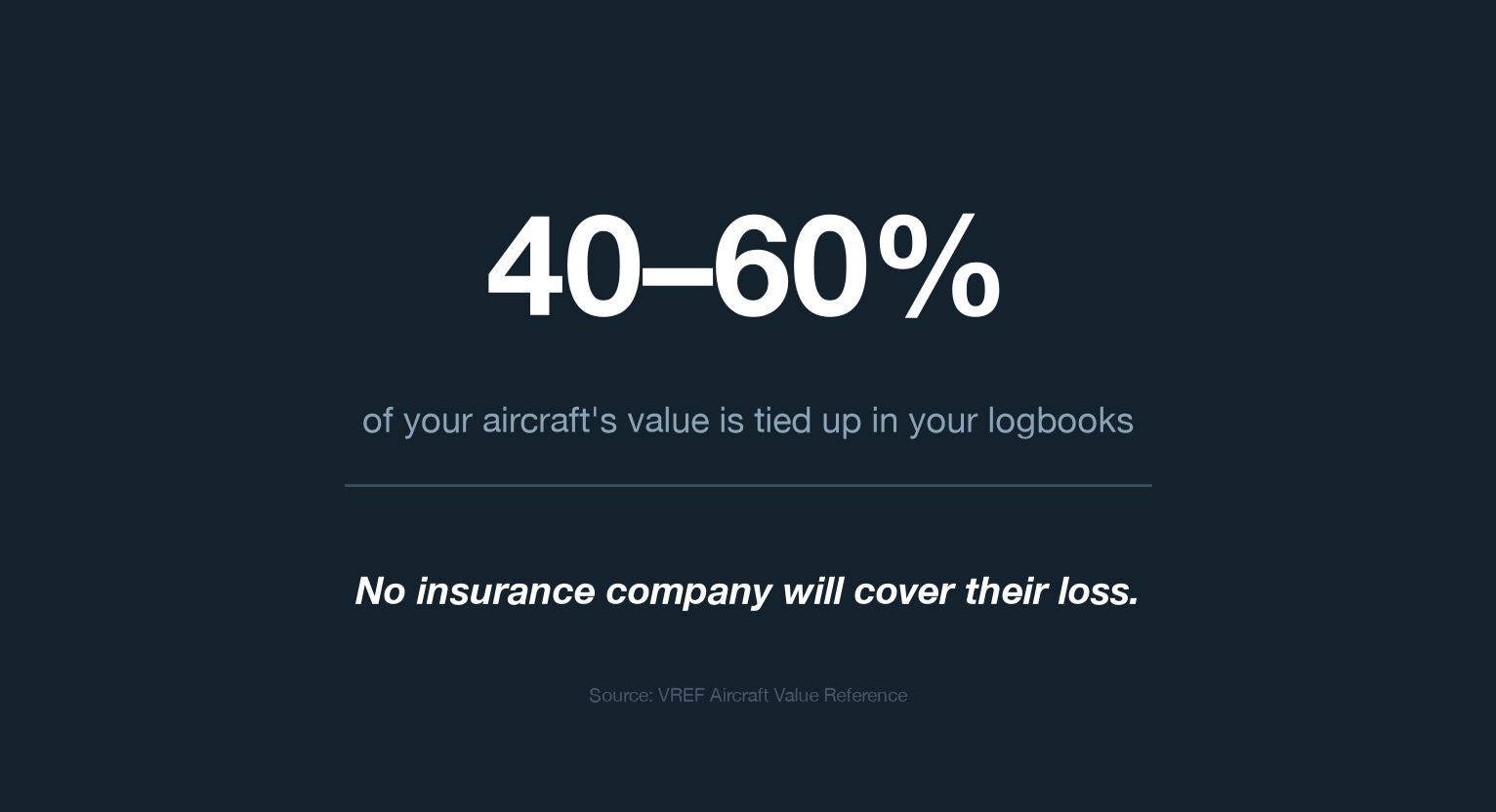
According to VREF, a prominent aircraft valuation service, missing maintenance records can decrease an aircraft’s value by 40-60%. That’s tens of thousands of dollars tied up in your logbooks, and no insurance company will pay for their loss. Companies may also be unwilling to take the additional risk posed by an aircraft with incomplete or missing maintenance history, or may charge more to insure it.
LOSS OF VALUE
On a pilot forum discussing this topic, I read: “I know a guy who lost one of his logbooks for a King Air. That lost book cost him $250K in parts and labor when he went to sell the plane.” Why? Because every AD and MSB had to be complied with… again! Some data can be recovered from mechanic’s records, but it will never replace the original logbooks.
HOW DO LOGBOOKS DISAPPEAR?
Loss of control. How many times are your logbooks not in your control? You hand them to a buyer, or his mechanic, for a pre-buy. If you’re in a partnership or flying club, the new guy wants to inspect the logs. Logs are the first things a maintenance shop wants. Each handoff is a chance they don’t come back.
Theft. David finished up at the hangar and put the logbooks in his backpack, taking them home for safekeeping. It was late, so he stopped at a diner for supper. While he ate, a grab-n-go gang hit the parking lot, got his backpack, and the logbooks were GONE! Isolated incident? My A&P said the owner of another plane he services had an identical experience.
Storage. You might keep your logbooks in a fireproof safe. But a safe only protects them if they stay inside it, and logbooks that stay locked away can’t help you. Every annual, every pre-buy, every partner review, they come out and into someone else’s hands. And most fireproof safes are not waterproof. A fire sprinkler, a burst pipe, or even condensation can soak the contents. If they’re in a filing cabinet instead, they’re exposed to everything.

Catastrophe. Fires, floods, tornadoes, hurricanes. Wherever you keep your logbooks, they’re only as safe as the building they’re in.
Everyday hazards. A spilled cup of coffee renders a logbook illegible. They get misplaced and never found. These things have all happened, even to well-intentioned owners and mechanics.
“TIME IS MONEY”
That saying is old, but still true. How does it apply to logbooks?
First, a fact about the planes we fly. Current FAA data for fixed-wing GA aircraft under 12,500 pounds shows more than 238,000 registered. Of nearly 46,000 registered light Pipers, 5 of 6 with a known manufacture date predate the personal computer. The median Piper was built in 1969.
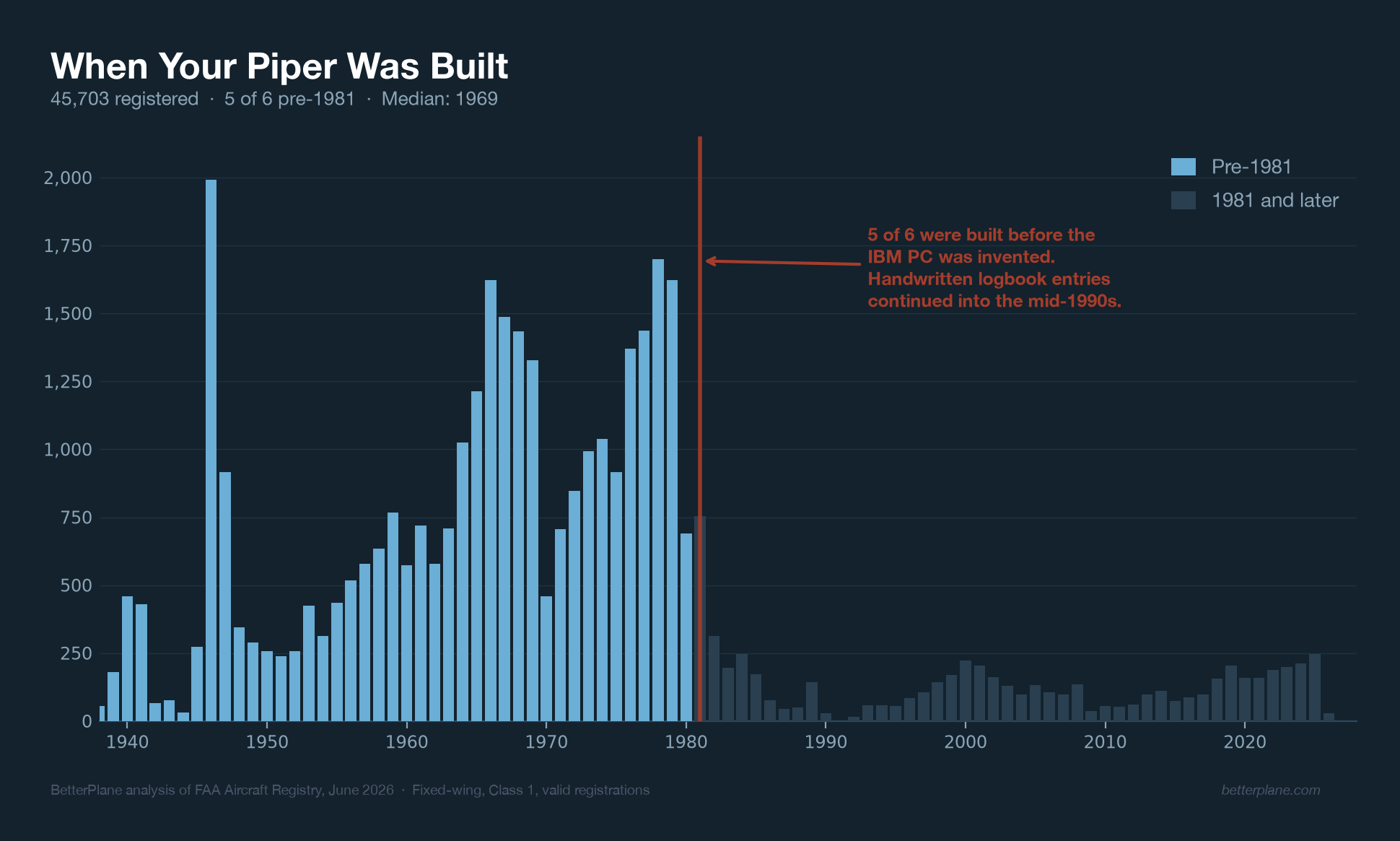
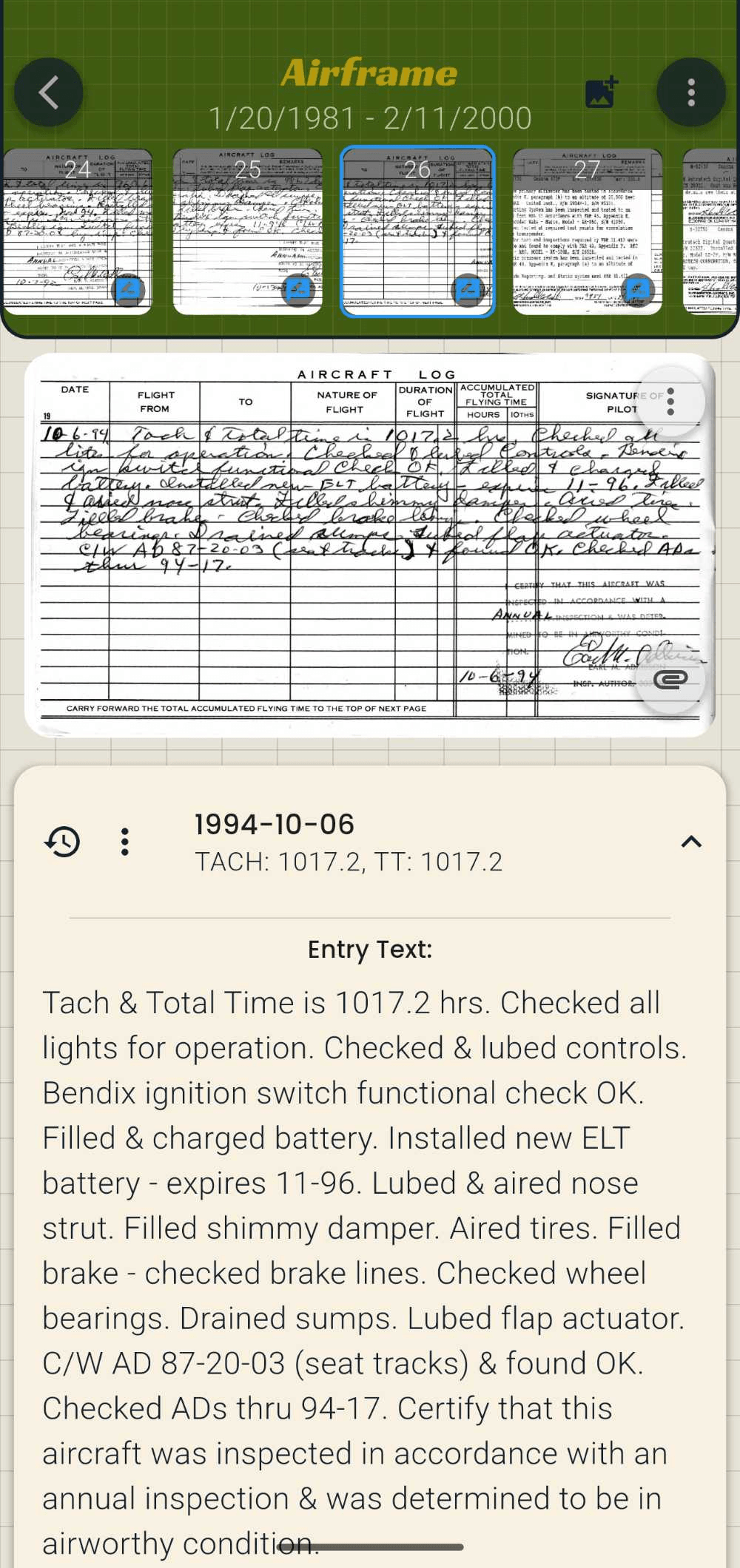
Why is that year significant? The IBM Personal Computer debuted in 1981. Log entries before that, and realistically into the 1990s, were all handwritten, in cursive. The first computer-printed sticker in my logbooks is dated 1995, and it was from a major aircraft dealer.
How does that cost you money?
Annuals and maintenance. A&Ps are obligated to cross-reference log entries with ADs and MSBs. The often-illegible cursive handwriting in those logs can make that job a long one, at shop rates of $130-165 an hour. And younger mechanics may have far less experience reading cursive handwriting than previous generations. That can add real time as they work through page after page of older maintenance entries.
Sales and pre-buys. Complete logs are a plus, but it takes time to decipher them and cross-check ADs. That results in extra hours, dollars spent, frustration, and delays. Illegible entries might as well be missing entries, and can mean a missed opportunity.
WHAT I DID ABOUT IT
Some owners have solved part of the problem by xeroxing their logs. Others used spreadsheets. Paid services offered manual transcription of paper logs. A few tried computer software programs. None of it solved the whole problem.
Because I wanted to understand my aircraft’s history, and like to keep on top of things, I used spreadsheets and forms, and spent hours parsing the data. I kept a detailed printout of everything due: ADs, maintenance intervals, inspections. It worked, but it took real time to maintain.
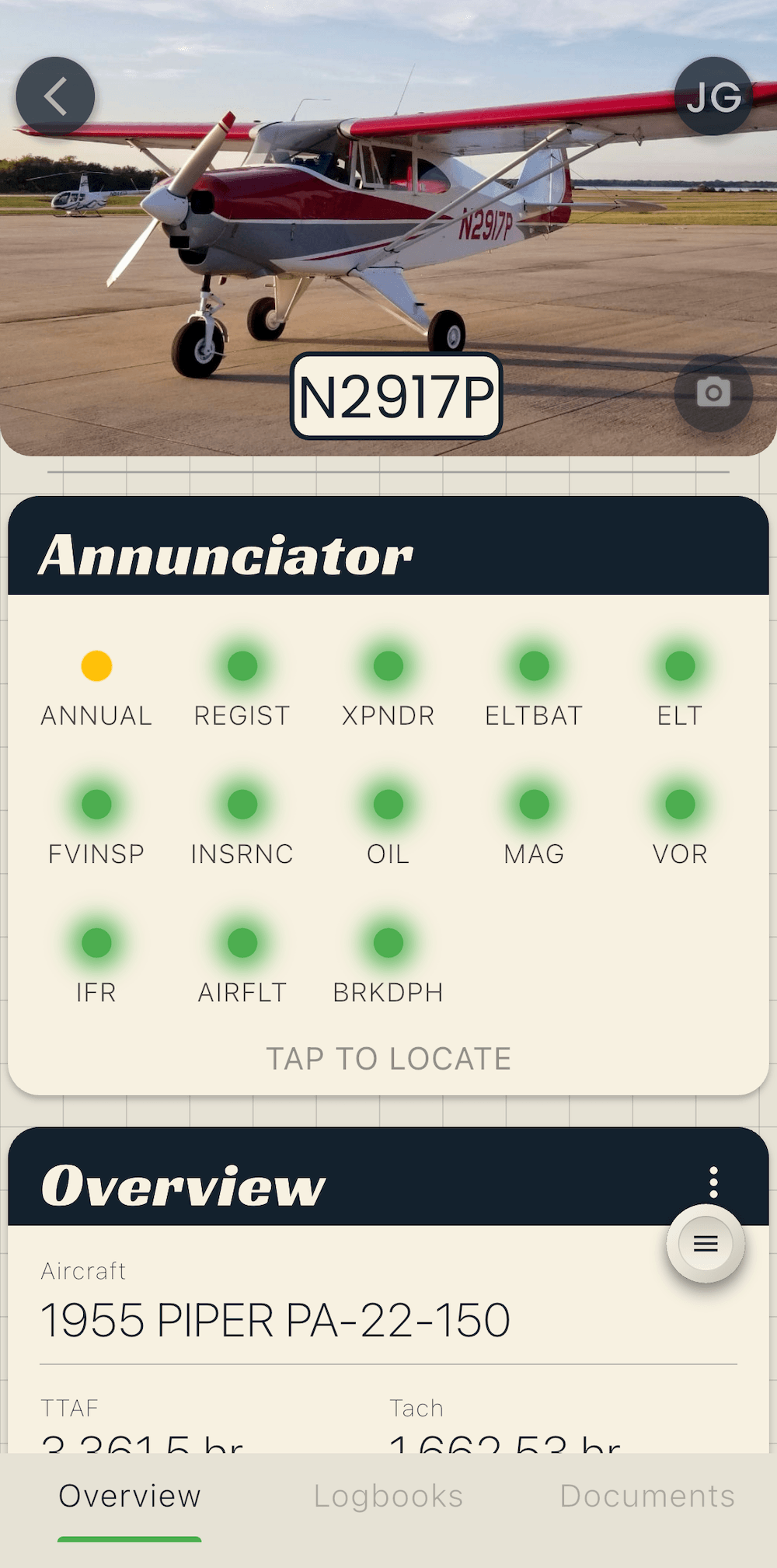
That changed forever last year. “Apps” that run on today’s phones and tablets do what once took a full-scale computer. I found one called BetterPlane, and it handles all three of the problems above: it scans your logbooks to create a safe, digitized backup; it helps decipher unreadable handwriting to get the information you need; and it tracks your maintenance, from oil changes to ADs. The detailed printout I used to maintain by hand? BetterPlane replaced it entirely.
And if you’re wondering whether electronic maintenance records are legitimate: the FAA’s own Advisory Circular, AC 43-9D, specifically mentions using commercial applications to scan records into a digital format. Part 91 operators can maintain electronic copies of their aircraft logbooks without any special approval.
Your logbooks aren’t getting any younger, and they’re not getting any safer in that filing cabinet. Fortunately, protecting them today is easier than it has ever been.
PROTECT YOUR AIRCRAFT’S HISTORY BEFORE YOU NEED IT
I spent years doing it the hard way. You don’t have to. We’ve all wished someone would help us solve three problems: scan our logbooks to create a safe backup, help decipher the unreadable handwriting, and help track maintenance from oil changes to ADs. BetterPlane does all three.
Best of all, you can see how it works with a free 30-day trial at betterplane.com/piperowner.
Author: Bob Wieneke is a USAF veteran, Civil Air Patrol Lt Col, and private pilot since 1980 with over 1,000 hours — more than 400 flying CAP missions. Introduced to flying by his father, an Army Air Corps CFII, Bob owns the Silver Hawk (N52750), the only Cessna 172-P painted silver by the factory for the Skyhawk’s 25th anniversary.
About BetterPlane: Founded by Jason Gould, a private pilot and owner of a ’55 Piper Tri-Pacer. The app grew out of Gould’s own frustration with paper logbooks, as well as a deeper motivation: his father was killed in a helicopter crash caused by missed maintenance when he was nine years old. BetterPlane exists so nothing gets missed. It backs up your logbooks, stores your aircraft documents, makes your maintenance history searchable, and tracks what’s due. Try it free for 30 days at betterplane.com/piperowner.