
By Jason Gould
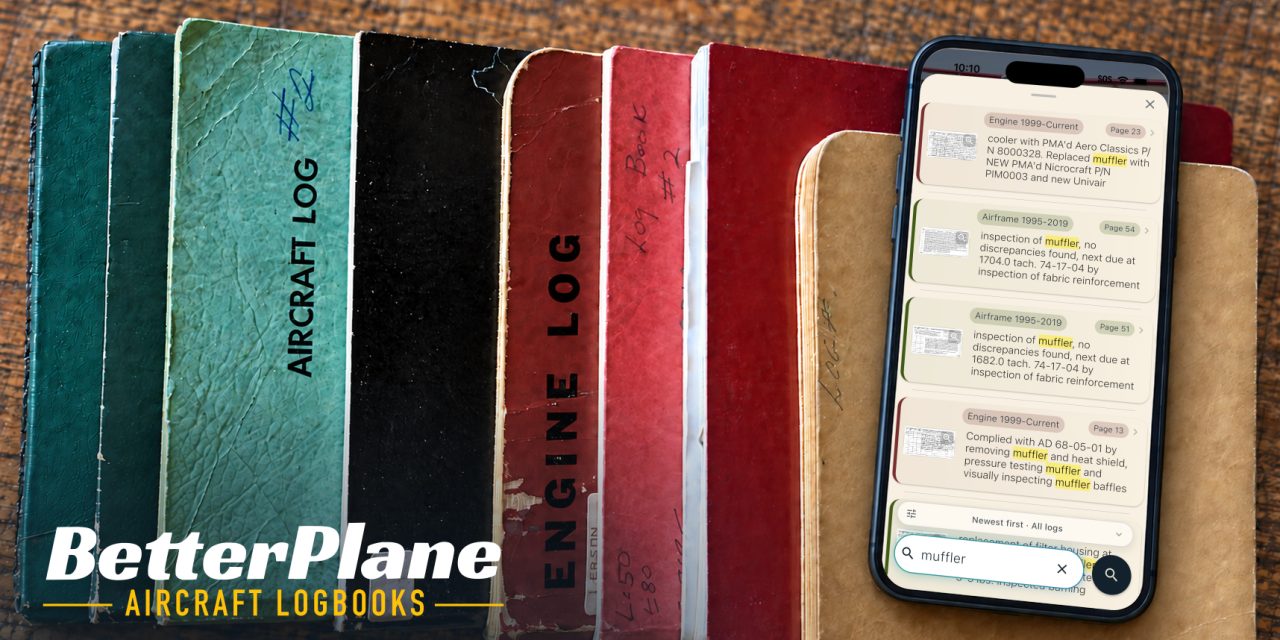
You probably know your airplane’s cruise speed, fuel burn, and a few quirks that never made it into the POH. But when were the magnetos last serviced? When was the muffler last inspected? And how old are the fuel hoses under the cowling?
Try answering one of those from the records. Find the entry, read what actually happened, and look for what came after it. How much digging does that take? Probably more time than you think.
Not long after I got my 1955 Piper Tri-Pacer, a few fixes turned into a partial restoration. So much for a few fixes. I spent plenty of time wrestling with paperwork, wishing I could find the entry I needed and put the actual page in front of my mechanic friend who was supervising me. That frustration was one of the reasons I built BetterPlane.
I want to know what’s been done to my airplane. If something doesn’t make sense, I want to ask about it. Paying attention to those details is part of keeping it maintained and flying it safely. Here are three questions I’d start with in my own records.
What else is in that entry?
Look at the March 30, 2002 entry shown here. It starts with an oil change. A few lines later, it records a new muffler from Dawley Aviation, a visual and pressure check referencing AD 68-05-01, and a next inspection point at tach 1387. Then it moves on to brake work.
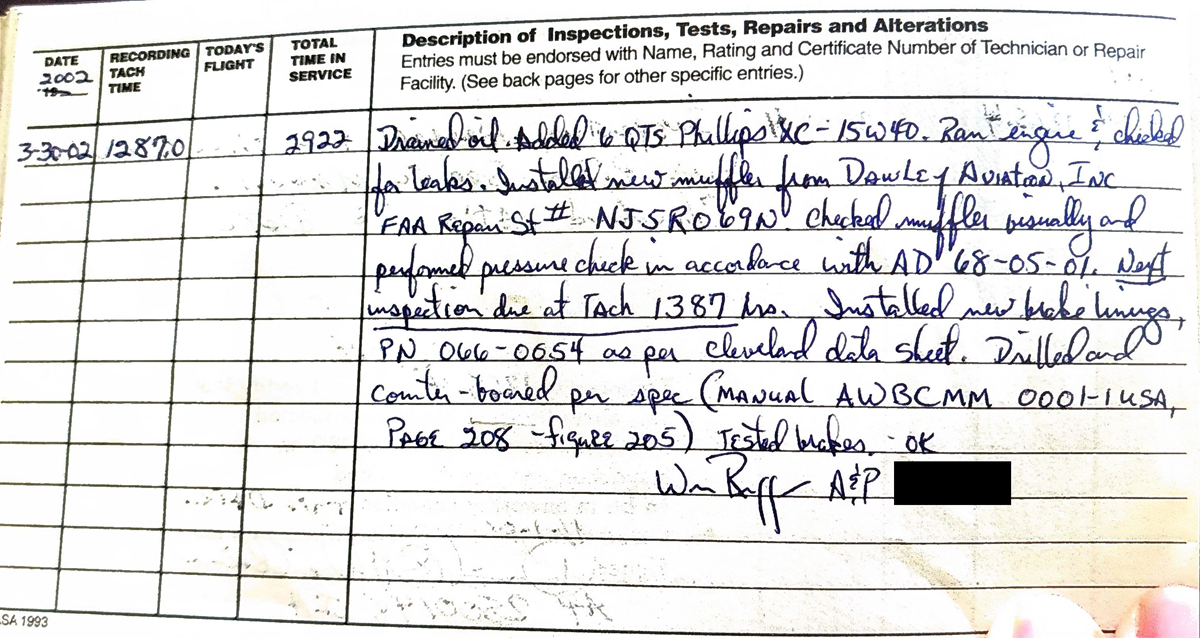
If you were looking for when the muffler was replaced, you might stop at “new muffler.” But the same paragraph gives you another question: was the next inspection actually done when it came due?
That’s the detail I’d want to follow into the later records. Was the inspection recorded? Was more work done on the exhaust? Did the component change again? This page tells us about work in 2002. It doesn’t tell us what condition the airplane is in today, or whether those inspections are up to date.
There is a lot packed into a few handwritten lines. An inspection, a repair, and a replacement mean different things, and a quick skim can blur them together. Reading the whole entry can change what you ask next.
Reading the whole entry can change what you ask next.
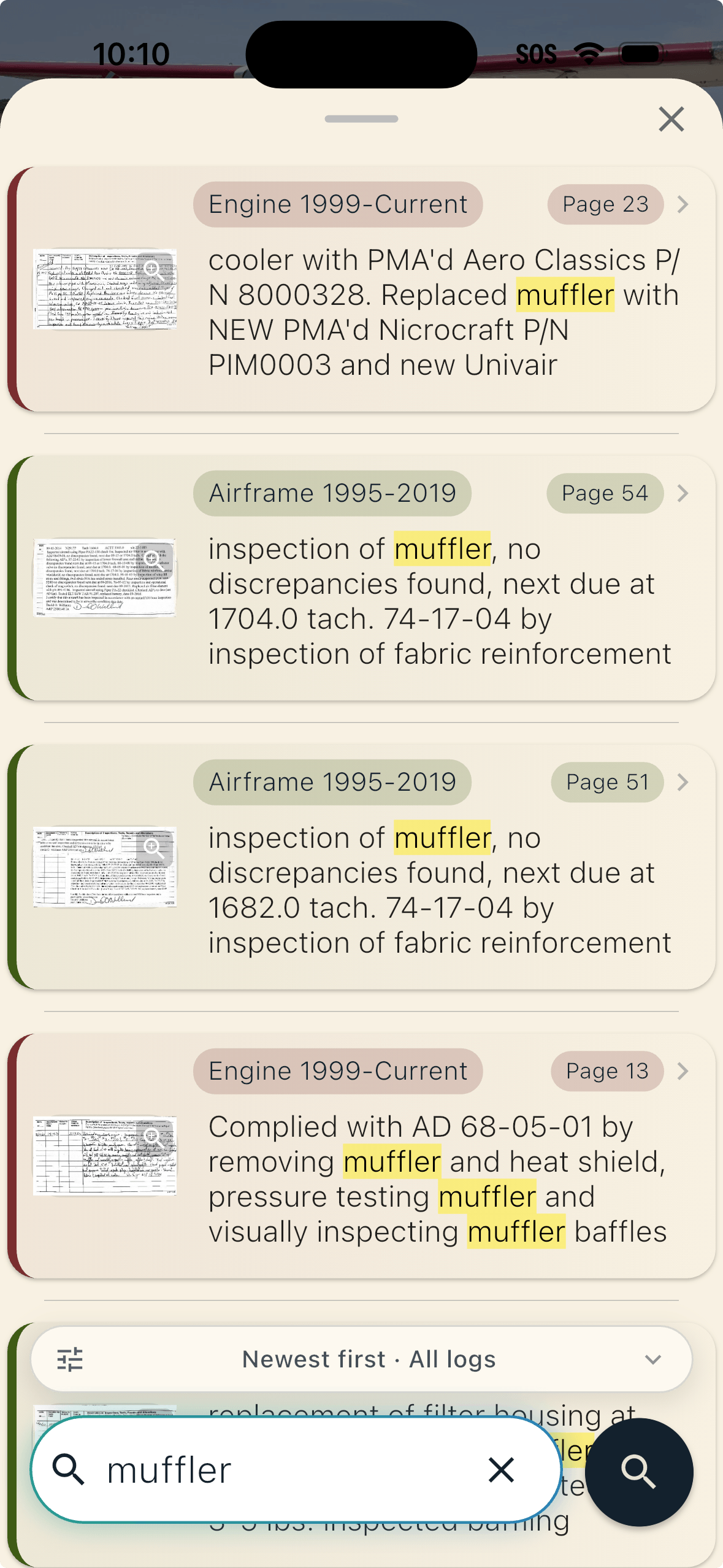
This is where making the records searchable earns its keep. BetterPlane turns photos and PDF scans of your logbooks into searchable text, with access to the original pages. That makes it easier to follow a component’s history and check what each entry actually says.
I want that original handwriting within reach. A transcribed number is useful for finding an entry; the page gives you the context to check it. I can keep the paper logbooks at home and still have the records with me.
What keeps coming up?
Suppose a hard-starting problem returns. Before trying to remember what was done last time, pull up the earlier work. Was the starter replaced, a connection cleaned, or something else repaired? How long afterward did the problem return?
Read through the earlier entries, noting the dates, recorded times, and work described. What you remember as the same repair may have involved different work each time. A parts tag or repair invoice may help fill in the details.
Those details give you more to bring to your mechanic than “I think we fixed that once.” You can discuss what was done and how it relates to what you’re seeing now. A component may show up several times simply because it was inspected. That doesn’t mean it kept causing trouble.
You can share an individual logbook page with your mechanic or invite them to your BetterPlane hangar as a member to look through the records themselves. They can read the original entries on their own device, including work done before either of you knew the airplane. That’s the sort of access I wished I had while working on mine.
What needs attention next?
That inspection note in the muffler entry is worth following through the later records. For my own airplane, I’d want to know what was done afterward and what needs to happen next.
You and your mechanic can use the history and the requirements for the equipment installed today to establish a schedule. The last recorded completion gives you a starting point. Some items follow calendar dates. Rubber components can deteriorate with age even on an airplane that doesn’t fly much. Other items follow operating hours, which may mean time on the engine or a particular component.
BetterPlane helps you keep up with that schedule. Templates cover common inspections, and you can add custom reminders for other items. You set the due dates or hours and keep the relevant hours current, so the app can remind you as work comes due. For recurring work, completing a reminder lets BetterPlane create the next one, helping you keep the schedule current as the maintenance history grows.
We’re also working on ways to help owners identify what needs tracking. I want BetterPlane to make it easier to use what you learn from the records, so important maintenance is less likely to be overlooked.
Start with one question
I’d like you to try this with your own airplane. Add a complete logbook to BetterPlane using photos or a PDF. Search for a component you’ve wondered about and follow its history through the original entries. Bring in the other logbooks as you go.
How old are those fuel hoses? Find out what was installed and when, and bring any questions to your mechanic. If there’s work to do, keep track of it and see it through.
Start a one-month free trial with a new annual single-aircraft plan, then pay $119 per year. Lifetime access for one aircraft is also available as a one-time purchase. Download BetterPlane for iOS or Android at betterplane.com/piperowner.
Jason Gould is a private pilot, EAA lifetime member, and caretaker of a 1955 Piper Tri-Pacer. He founded BetterPlane to make aircraft history easier to use and help owners keep important maintenance from being missed.