By Michelle Adserias
Four generations of John Dunnings. Four generations of pilots. This family is passionate about flying.
Grandpa John Dunning was a private pilot. John Dunning’s father was a professional pilot. John Dunning, the owner of the recently-restored Piper Warrior discussed in this article, is also a professional pilot. He flies a 737 for American Airlines from LaGuardia. And his son, John, is preparing for his PPC check ride.
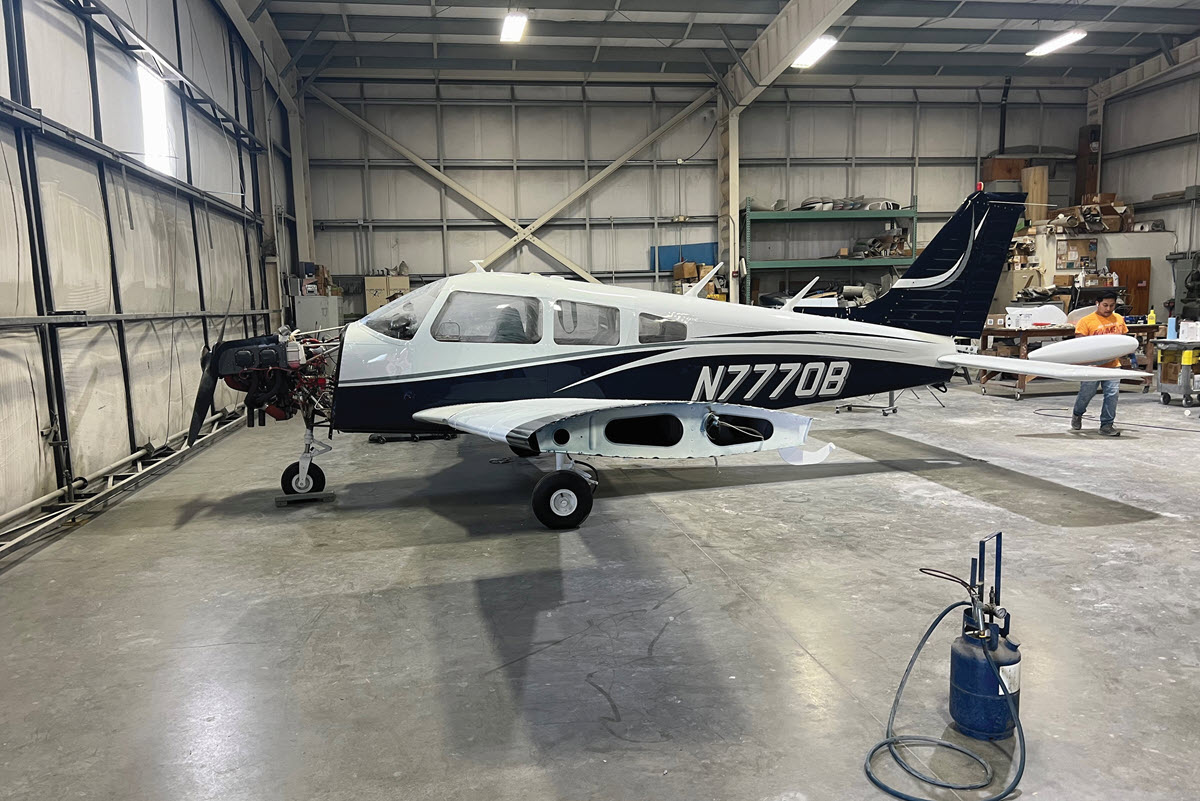
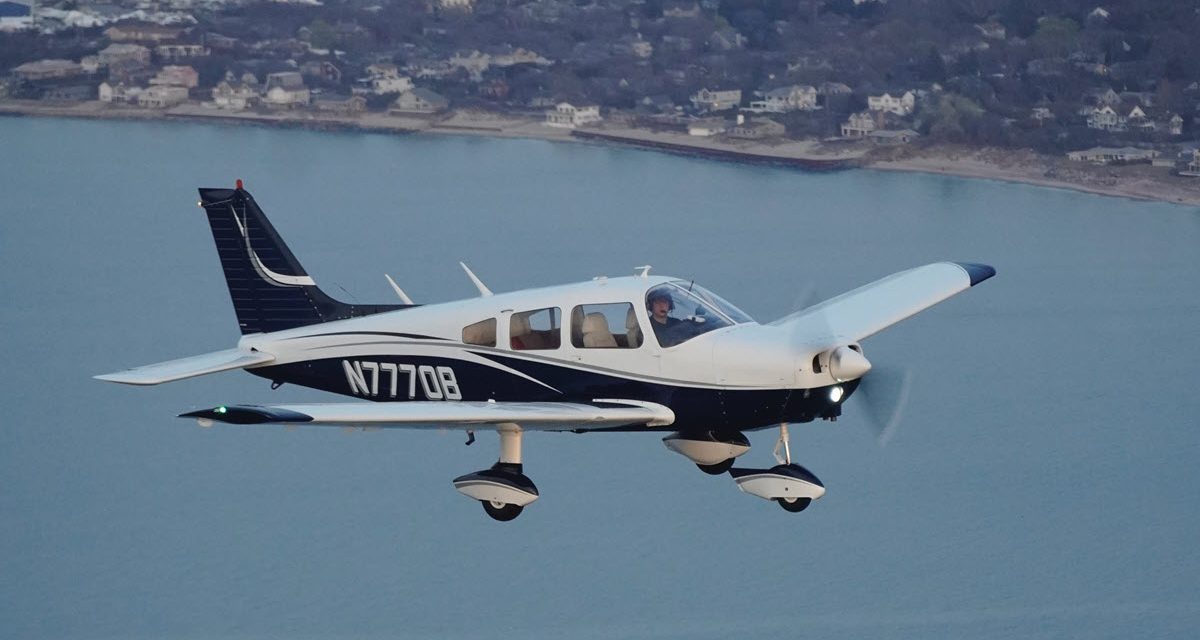
John remembers sitting beside his dad in the cockpit from the time he was about six years old. He completed his PPC when he was 16 and decided to pursue an aviation career. He’s 54 now and, for the first time, owns his own airplane; a 1974 PA-28-151 Warrior, tail number N7770B. He was already familiar with this aircraft. It belonged to a friend who owned it for many years. It changed hands just once before John bought it two and a half years ago.
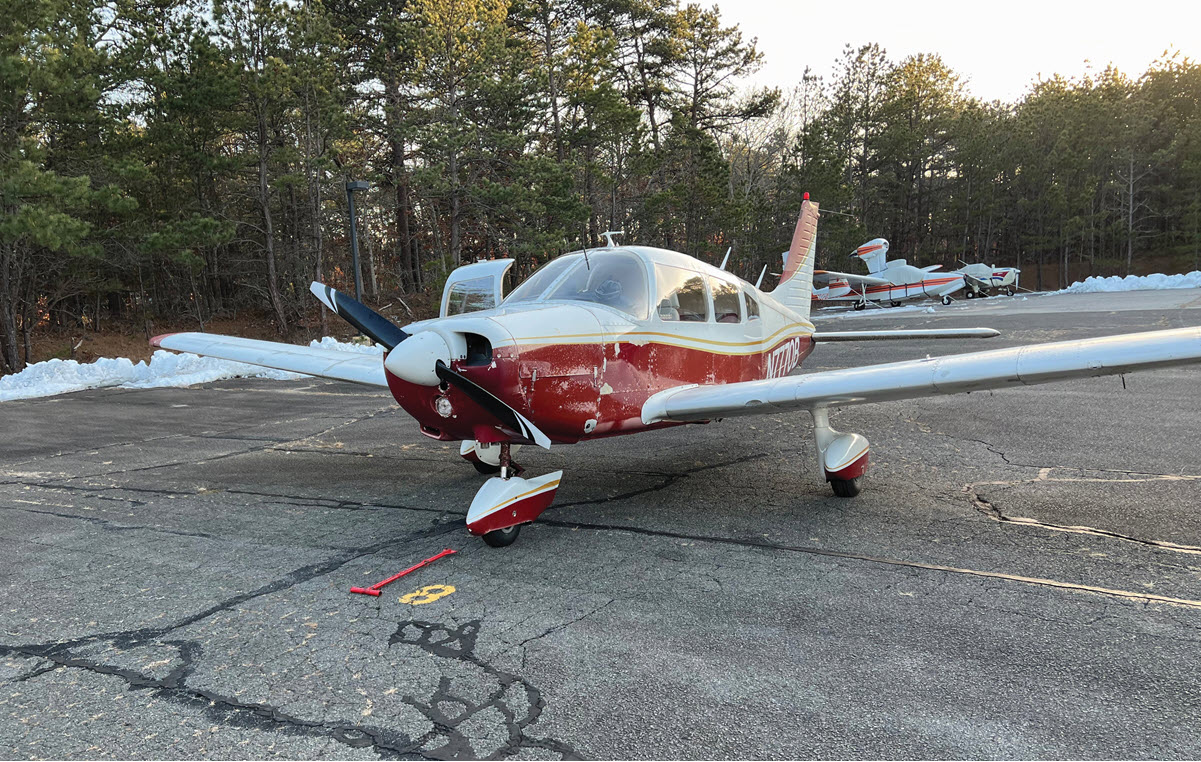
54 now and, for the first time, owns his own airplane; a 1974 PA-28-151 Warrior, tail number N7770B. He was already familiar with this aircraft. It belonged to a friend who owned it for many years. It changed hands just once before John bought it two and a half years ago.
A Bigger Job Than Anticipated
Most of us have undertaken a “small” remodeling or restoration project. Based on what we see on the surface, it won’t take much — time or money-wise — or so we think. But more problems than we anticipated lay in wait just under the surface, problems that turn that little fix into a major job.
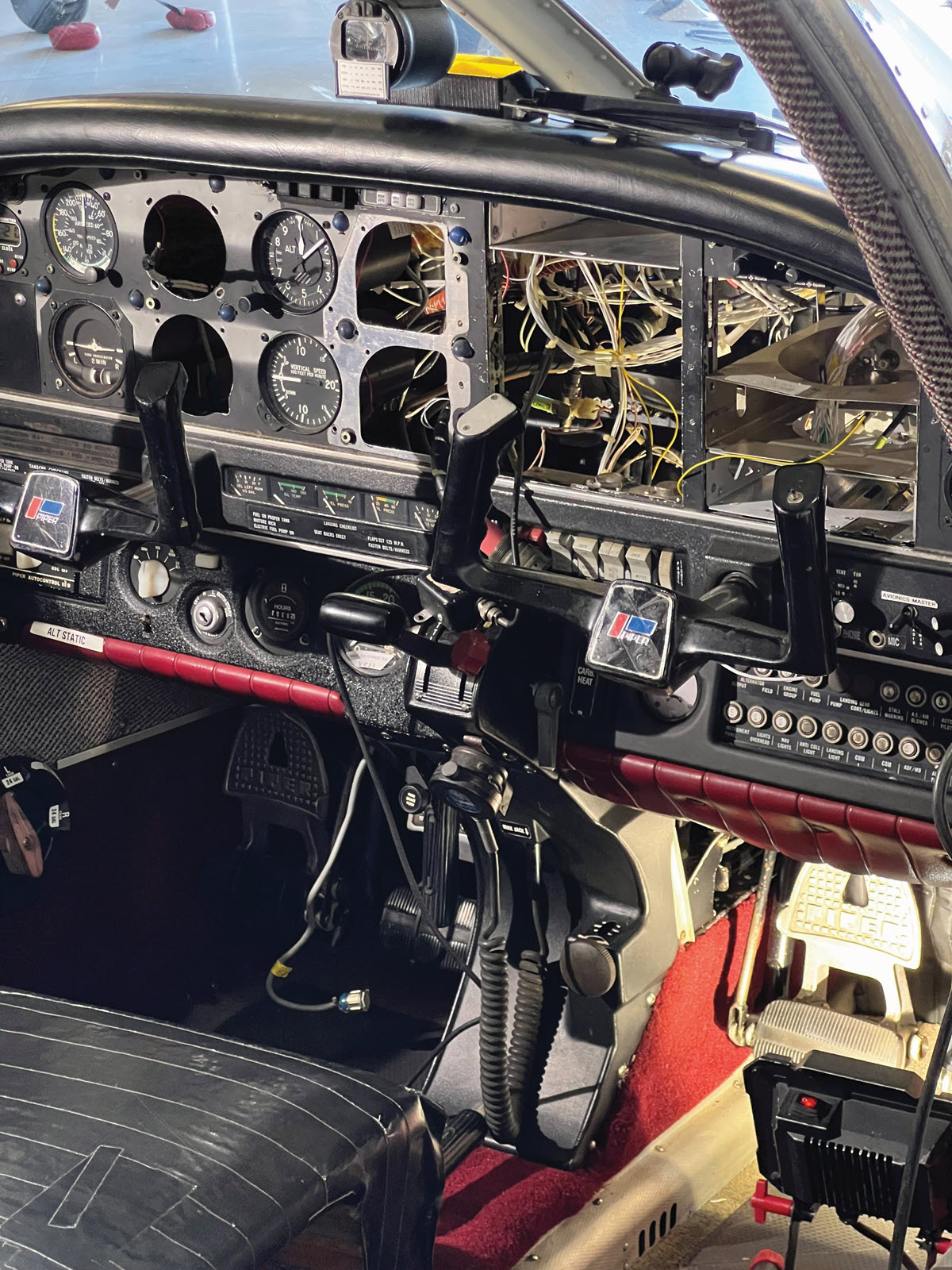
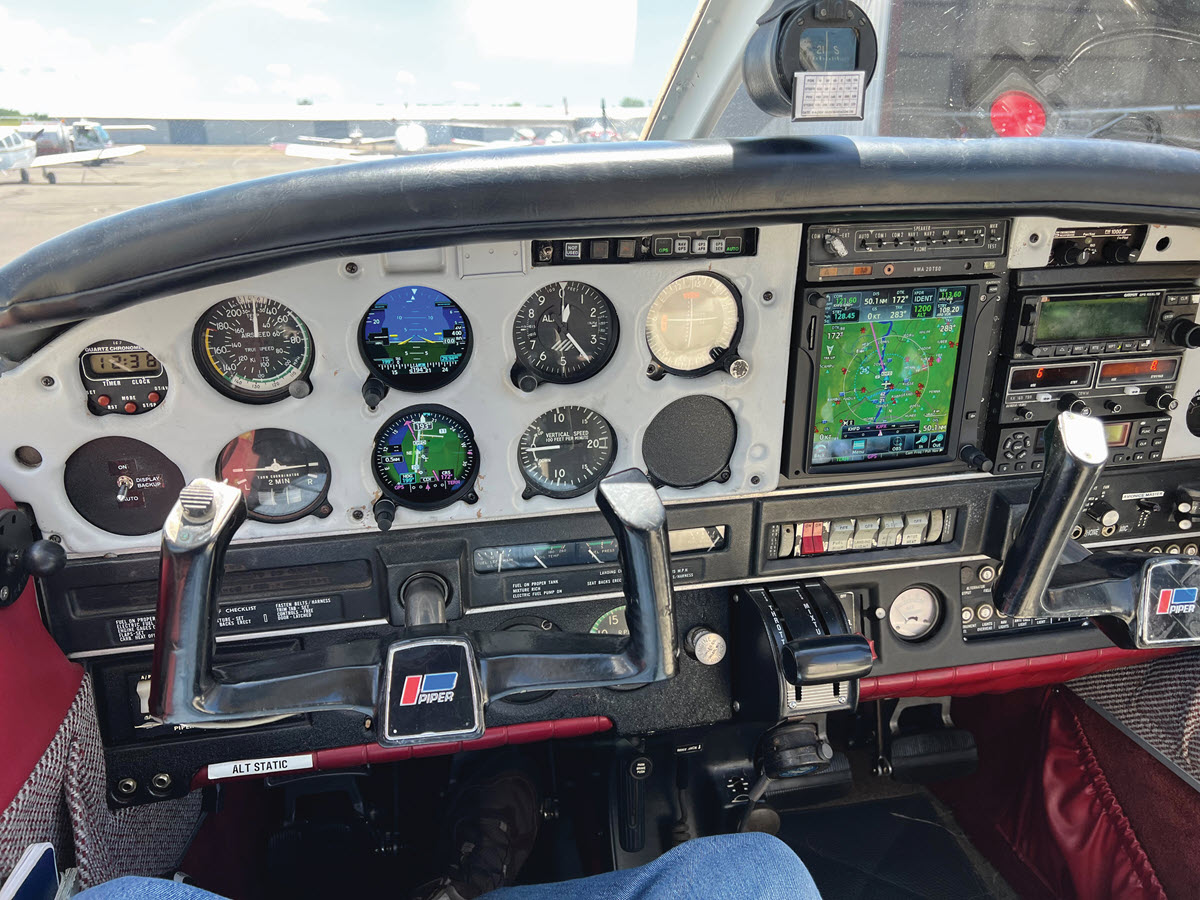
This was the case when John took his Warrior in for a facelift. He had already upgraded the 1970s avionics with Garmin 275s and a Garmin 750 touchscreen. He had already decided the interior, which was redone years ago, could wait. But the exterior needed a fresh new look and while it was in the shop, it seemed the right time to make sure everything on the aircraft was up to par.
The project began in mid-December. Ed Yezarski, owner of Ed’s Aircraft Refinishing* at Brookhaven Airport in New York (KHWV) took on the task. He and his father opened their business together in 1987 and Ed has since taken over. It’s a three-hangar operation; one for stripping and repairing the aircraft, one for painting the aircraft, and one for reassembling the aircraft.
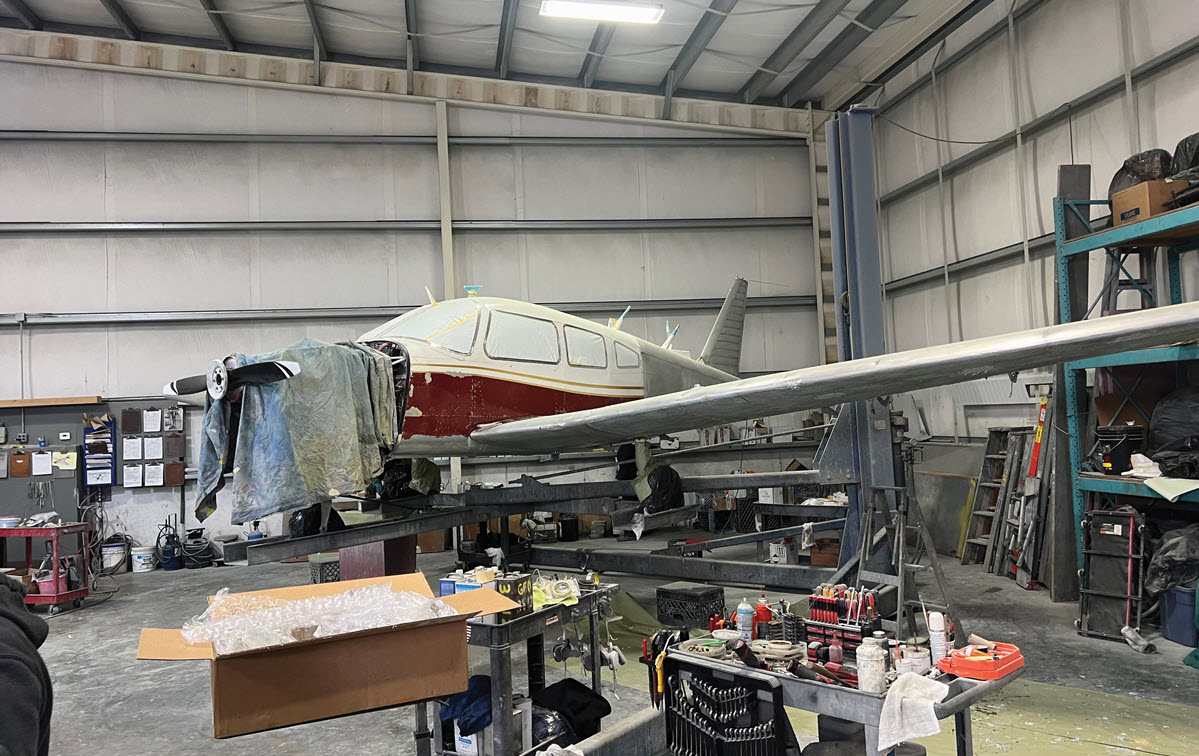
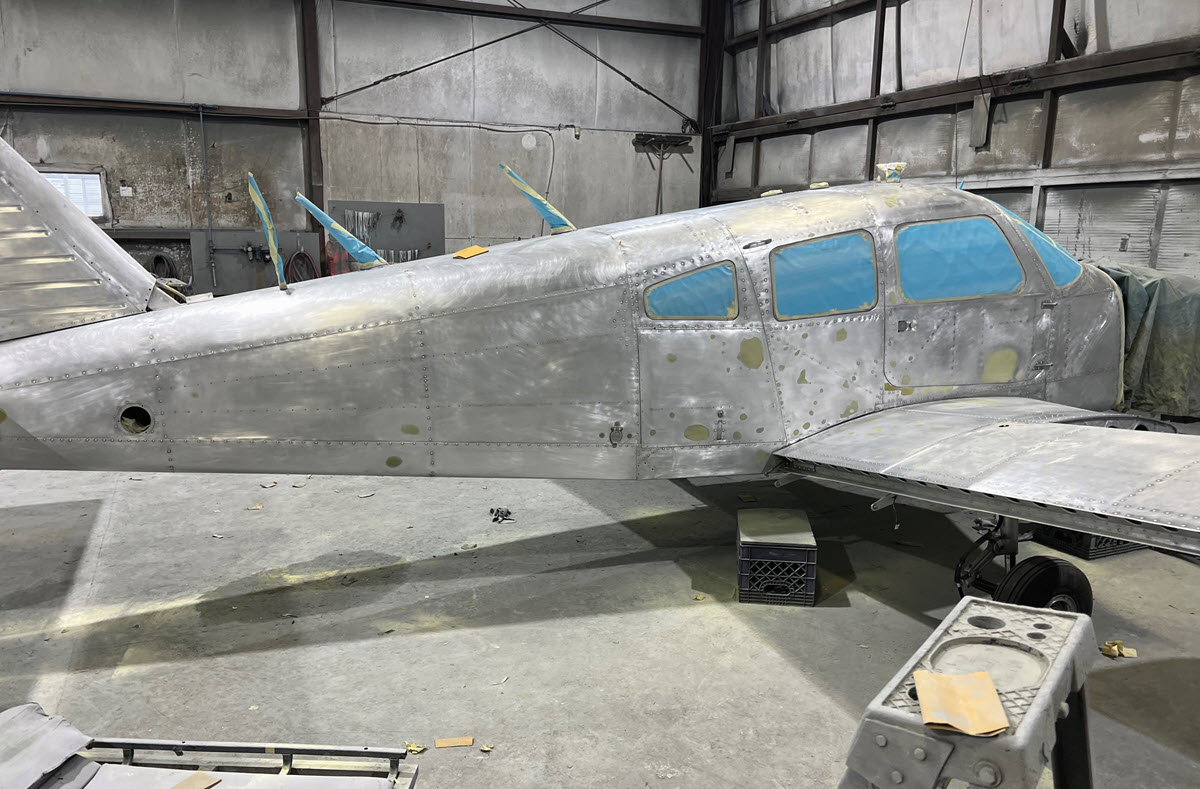
During the first restoration phase, Ed removed the fuel tanks to check for corrosion in compliance with a related service bulletin. Then he epoxy-painted the tanks and wing spar. He also replaced most of the exterior plastics on the Warrior with Knots2U fiberglass and carbon fiber replacement parts. They are lightweight but stronger than plastic and not as brittle. The parts come with a white base but not pre-drilled. Even factoring in the labor to have the shop professionally drill the holes for mounting, John found the cost was comparable to buying pre-drilled parts.
Ed’s also restored the engine cowl and bowl with fiberglass and carbon fiber, an extensive and laborious task. It came out beautifully. It just happened that the Warrior needed an annual while it was in the shop so Ed, in conjunction with a mechanic, did the annual while it was disassembled. By the time it got a fresh coat of paint, all those hidden issues had been addressed.
John couldn’t say enough good things about Ed’s shop. “He does amazing work. He’s meticulous. If you want it done cheap and fast, he’s not your guy. But he gets the job done right.” The project was completed in April. In the end, John is confident it was time and money well spent.
The next upgrade John is planning, after the interior is refurbished, is installing a bigger engine. He’s considering a 160 conversion, which is not much more expensive than overhauling the current engine. His other option is putting in a 180 hp engine, but that’s more costly and requires more modifications.
John stumbled across Pipers Magazine about the same time he bought the Warrior. While he said he enjoys the whole magazine, he’s particularly grateful for all the feedback he got through the member’s forum regarding that engine upgrade he’s contemplating. Hearing all the pros and cons from other pilots was very helpful.
N7770B’s Mission
Between its down times in the shop, the youngest John Dunning using it for flight training, and John’s work schedule, he hasn’t had as many opportunities to fly N7770B as he would like. But with mandatory retirement now in sight, and the airplane now upgraded to his liking, he foresees more recreational flight time in his future.
One place John would like to revisit is Block Island, off the coast of Rhode Island. Before he owned N7770B, when his children were younger, he borrowed it for a family trip to the island, which is only accessible by boat or plane. There’s a short, 2,500-foot runway and a small service called New England Airlines that flies from Westerly, for those who don’t own their own aircraft.
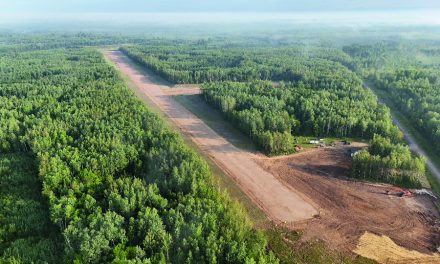
Whenever possible, John and his son enjoy flying into grass strips, like the one at North Canaan Airport in Connecticut (CT24). They recently flew in on a warm day, With the tall trees at the end of the runway, it was a tight takeoff — one of the reasons John is contemplating a larger engine with a little more oomph.
The Warrior burns about eight gallons of fuel per hour. Thankfully, the aviation association at their local airport offers discounted fuel to members, which helps with operation costs. When he added his son to the insurance policy as a student pilot, his costs went up to about $1600 per year. That will go down once his son has 300 hours in.
“My hopes and dreams are to fly this airplane all over with my wife, after I retire,” John said. By then, all the upgrades should be complete and it will be relatively affordable to maintain through his retirement years.