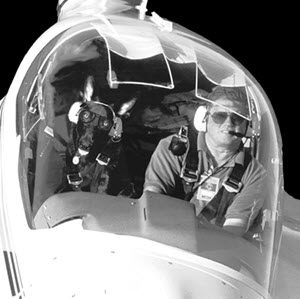
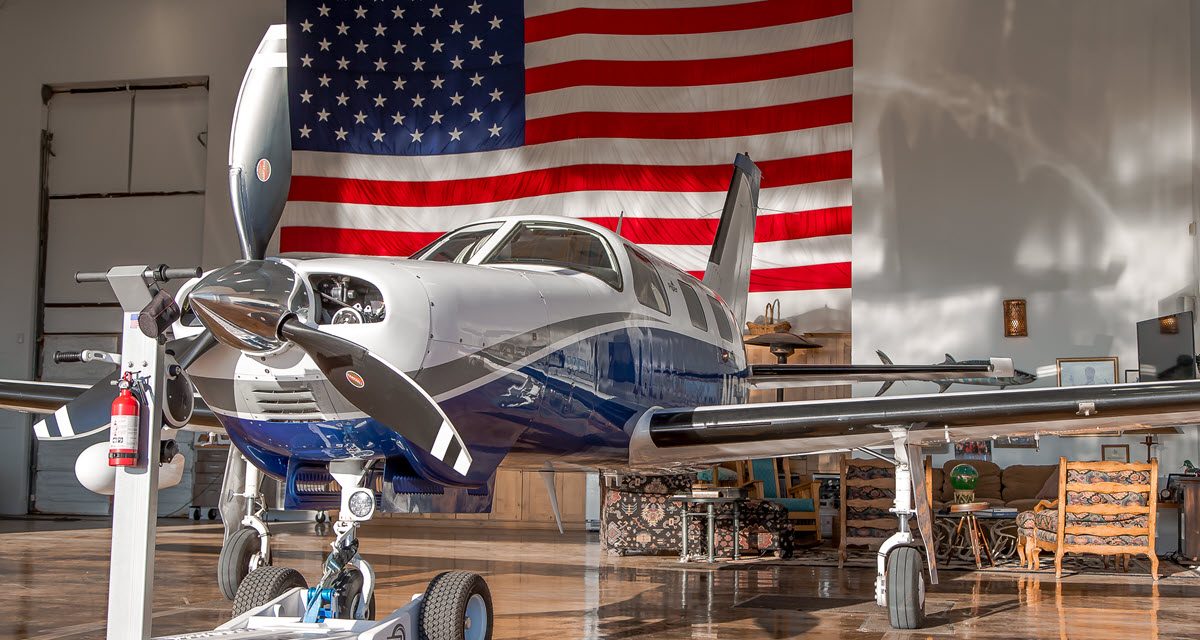
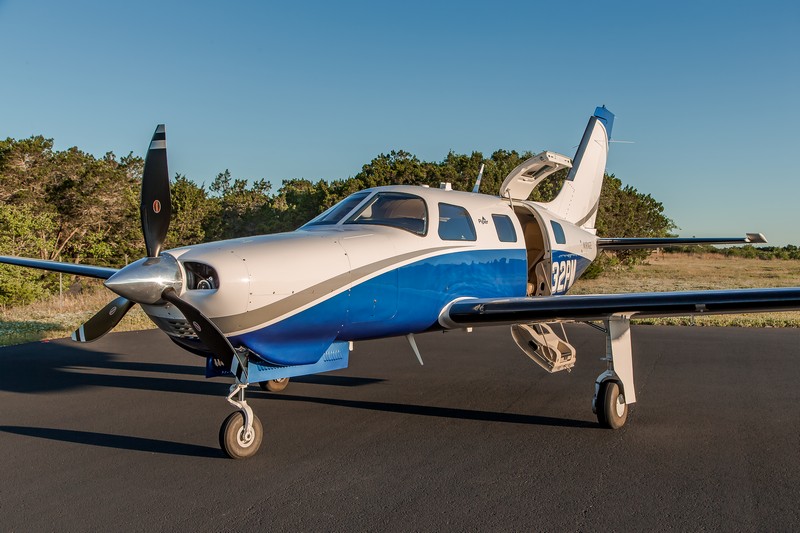
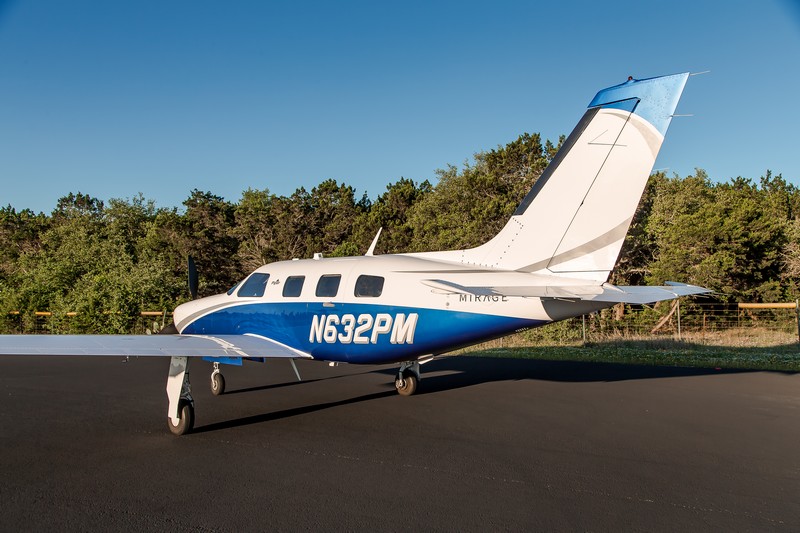
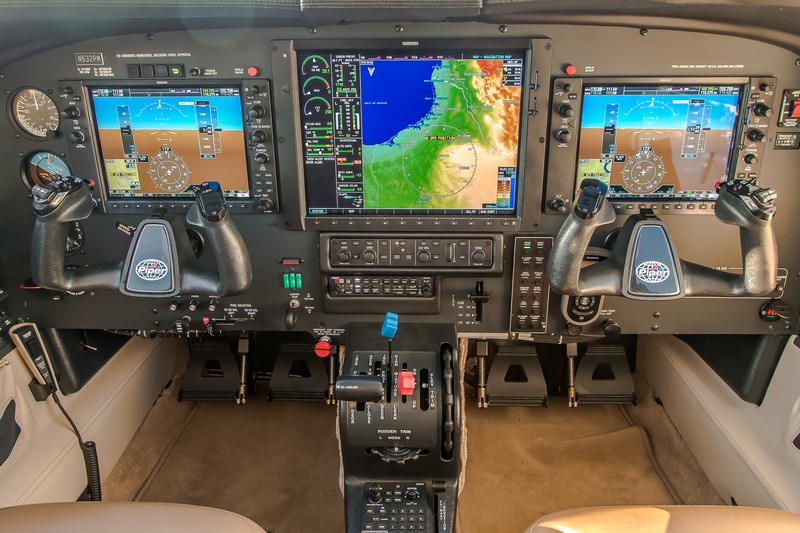
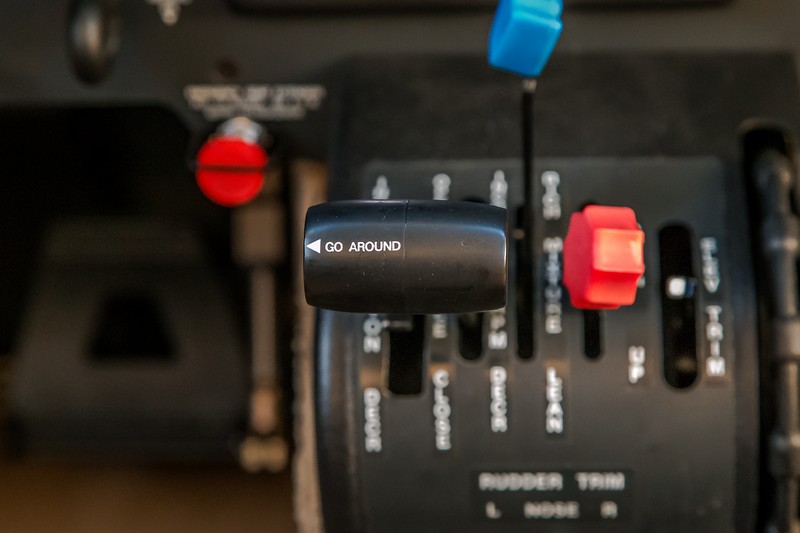
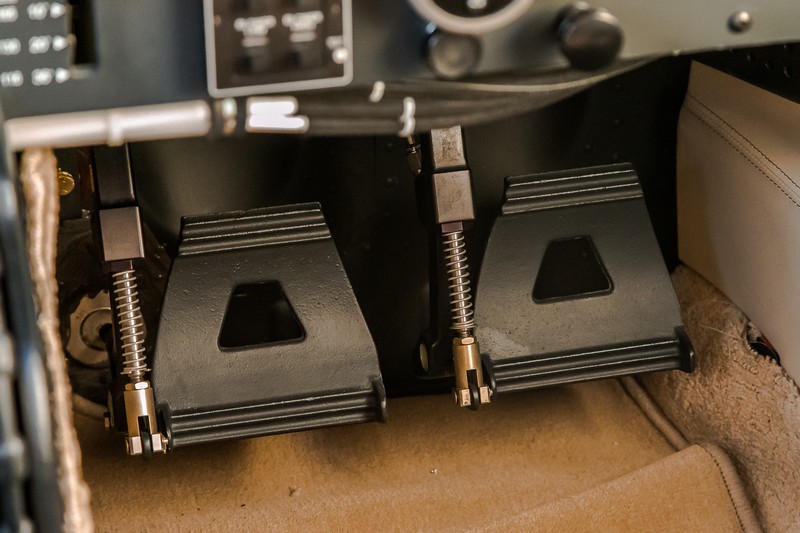
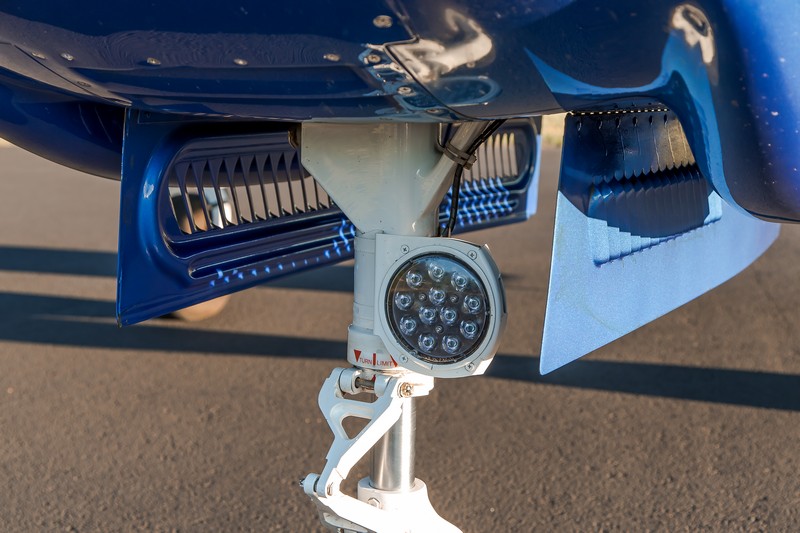
Photos by Jack Fleetwood (www.JackFleetwood.com) of a 2014 PA-46-350P Malibu Mirage owned by Susie and James Awalt.
I introduced a good friend to aviation here in Southern California many years ago. He’s a reformed dentist who now makes a good living dealing in real estate all over the Southwestern U.S.
We’ll call him Peter, because that’s his name.
After earning his private license, Peter served his apprenticeship renting a variety of marginally airworthy airplanes, then, leased a Mooney Ovation for two years. He loved the Mooney so much, he tried to buy it when the lease expired. Unfortunately, the owner wouldn’t sell.
As a result, Peter rented for a while longer, then, opted to purchase a very unusual, remarkably renovated Cessna 150. It’s known as a 150/150, and yes, before you ask, it has a 150 hp, Lycoming O-320 engine out front in place of the original Continental O-200A. This transforms it into a Super 150, complete with a STOL kit, custom paint and interior, long range tanks and other goodies you might never expect. Predictably, the former owner was a bored and retired airline captain living in Ft. Lauderdale, Florida who wanted something fun to fly when the spirit moved him.
Lately, Peter has been contemplating his next step. He’s flown a variety of candidates – another Mooney, a now-discontinued Cessna TTx, a Cirrua SR22 and a few other flying machines. He’s also been considering a late–model, Piper PA-46-350 Mirage.
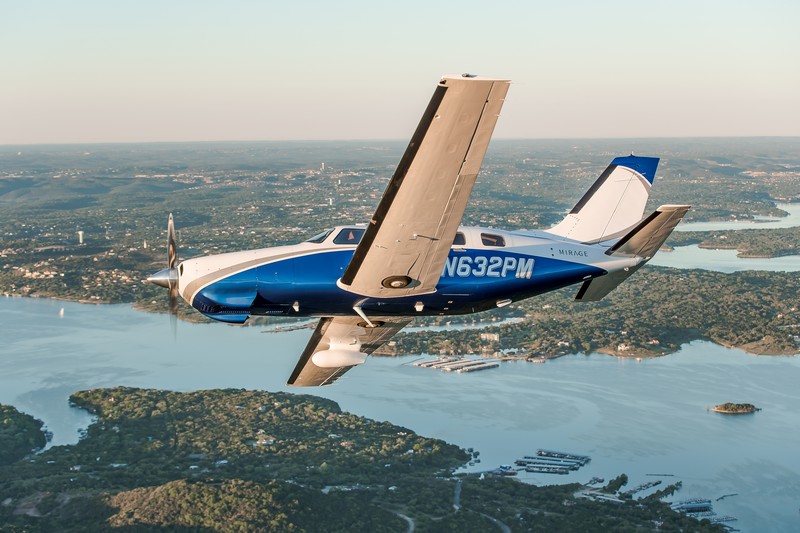
Enter the Malibu
It’s true, a six-seat Mirage won’t keep up with a Mooney Acclaim S (nothing else with pistons will, either), but the Mirage continues to enjoy an advantage over virtually every other piston single on the market.
Upscale aircraft buyers don’t think the way they used to in the last century. In those often-halcyon days when general aviation manufacturers were selling airplanes almost as fast as they could build them, class distinctions were fairly clear cut. Assuming you were shopping for a high-performance piston product, you had your choice of a single or a twin. You had a variety of models to choose from. In fact, there were nearly as many twins on the market in 1982 as there were single-engine retractables.
The rationale for twins
Twins obviously weren’t for everyone. In fact, they weren’t even for many who thought they were. In addition to the multi-engine license, more rigorous training demands, and more frequently recurring requirements, twins mandated greater systems knowledge.
The initial cost could be a little staggering, as well. Contrary to popular belief, operating expenses were often far more than simply double those of a single. A twin owner once told me, sarcastically “Yeah, operating expenses on a twin do increase by a factor of two. That’s an exponential two.”
Why not a single-engine twin?
Such realities fostered several companies to consider building a single-engine piston airplane that could do most of the tricks of a twin, but without the cost, complexity, and asymmetric control problems of a second engine. Such a task would obviously demand a large, six-seat cabin, a turbocharger out front and, perhaps the ultimate pilot creature comfort, pressurization.
An ultimate single wasn’t exactly a new idea. Mooney tried it first in the mid-60s with the five-seat, M22 Mustang, but that airplane fell on its sword after only four years of production. A mere 25 examples were built, and development costs pushed Mooney into one of its series of bankruptcies.
Quest for the Super Single
In a variation on the super single theme, Beech considered mating the six-seat, pressurized, 58P Baron fuselage and model 36 Bonanza wings to a Garret/AiResearch TPE-331 turboprop engine. The resulting prototype was called the Lightning, but Beech eventually declined to pursue certification. Only two were built.
By far the most successful early attempt at a pressurized, piston single was Cessna’s P-210 Centurion of the late ’70s. Cessna adapted the Turbo Centurion wings and fuselage, rounded the airplane’s windows, beefed up the cabin structure to handle repeated inflation and deflation of the fuselage. Then, they installed a turbocharged, 310 hp, Continental engine and employed the existing Pressurized Skymaster’s 3.35 psi pressurization system to keep both occupants and engine breathing normally as high as 20,000 feet. The Wichita company introduced the P210N in 1978 to rave reviews.
The Cessna P-210 premiers
Well, perhaps not exactly “rave” reviews. The P210N proved a popular airplane, but Cessna waded thru a myriad of system problems; short-lived engines that were difficult to cool, at least one or two premature jug rebuilds between overhauls, persistent pressurization leaks trying to inflate a semirectangular cabin rather than a tube, vacuum pump and alternator failures, exhaust system cracks and other systemic problems.
Piper went to school on Cessna’s problems and analyzed both the P-210s successes and shortcomings. The engineers at Piper were convinced they had some better ideas. Designers Jim Griswold and Ed McDonough led the team that conceived the Malibu as a pure, high altitude, pressurized airplane.
Designing the Malibu
Griswold and McDonough didn’t try to reinvent the wing with the new model. “The technology was actually pretty conventional,” Jim Griswold told me at the new model introduction in 1983. “Everyone mistakenly believed the resulting airplane was highly innovative,” said Griswold.
“In fact, aerodynamically, everything that went into that airplane was well known in 1933. We didn’t have to pull any rabbits out of a hat. All we had to do was our jobs.” Jim Griswold didn’t believe in hyperbola.
The designers reviewed a collection of research materiel accumulated by Cherokee designer Fred Weick and incorporated all the best ideas into the new, pressurized design.
Piper’s engineers had always been masters of adapting existing parts to new models, but the Malibu was a totally clean sheet design. “There were no parts on that airplane (the Malibu) that had anything in common with older models,” Griswold explained. “The only thing common to other Pipers was the company logo.”
In keeping with the demands of pressurization, Piper configured the fuselage in a nearly tubular structure, so all six seats had roughly the same head and elbow room. Similarly, the engineers designed all systems to accommodate the low temperature/low pressure environment of altitudes above 15,000 feet.
Benefits of pressurization
Piper knew that pressurization would encourage pilots to fly higher, often above the weather and out of the low-level turbulence that frequently afflicts the bottom three miles of sky.
Accordingly, Piper set pressurization at 5.5 psi, a better choice for older pilots. This meant Malibu owners could fly at 12,000 feet MSL with a sea level cabin or aviate at the airplane’s maximum altitude of 25,000 feet breathing air pressurized to a reasonable 8,000 feet. For that reason, the company fitted the airplane with a high aspect ratio wing with 4.0 degrees of dihedral and a 43-foot wingspan – try fitting that into a standard T-hangar. (Aspect ratio is span divided by the average chord.)
The result was an improved glide ratio and better handling in the thin air of the flight levels. The Malibu’s wing was more reminiscent of the airfoil used on a glider than that of most other piston-powered, single-engine machines.
The Malibu’s aspect ratio (better known as L/D in engineering terms) was nearly 12 to one. In contrast, a Schweizer 2-33 sailplane has an L/D of about 23 to one. The Mirage won’t glide with a Schweizer, but it will outdistance anything in its class in the event of an engine failure.
Continental or Lycoming
The original 1983 package was powered by a six-cylinder, Continental TSIO-520BE, practically the same engine Cessna had used on the original P210N. Piper’s powerplant was rated for 310 hp and featured twin turbos, twin intercoolers, and it was approved for operation 50 degrees on the lean side of peak. There’d been some debate between Lycoming and Continental advocates at Piper regarding the engine choice, but Continental won the original coin toss.
As it turned out, the first Malibu’s had a few problems to resolve. The biggest was that few pilots had ever heard of flying lean of peak, and they assumed that had to be wrong. They leaned to the rich side of peak, and the result was a series of engine problems.
Piper nevertheless knocked Cessna completely out of the box in 1984, so much so that Cessna elected not to produce an ‘84 model P210 that year. Instead, the Wichita company went back to the drawing board, and made some major changes that upgraded the original P210N to the P210R. Longer wings, 15 more horsepower per side and a number of other changes made the 1985 Cessna P210R a better airplane that might have stood a chance of competing with the Malibu.
Sadly, it was all for naught, as Cessna CEO Russ Meyer shut down all of his company’s piston aircraft production in late 1985, vowing not to build any more piston airplanes until Congress passed a law limiting general aviation liability to a reasonable age limit.
Congress passed the General Aviation Revitalization Act in 1994, imposing a maximum statute of repose (age limit) of 18 years, beyond which a manufacturer could not be sued for an alleged design fault.
The Malibu dominates
The Malibu entered the marketplace in late 1983 and was quickly heralded as the world’s most talented single-engine, piston airplane. With dual vacuum pumps, dual alternators, six hours of fuel and even a pilot relief tube for pilots with less endurance than the airplane, the Malibu had almost all the talents of a twin.
The rest of this article & Piper PA-46 Malibu/Mirage Specifications/Performance can be seen only by paid members who are logged in.Have a website login already? Log in and start reading now.
Never created a website login before? Find your Customer Number (it’s on your mailing label) and register here.
JOIN HERE
Still have questions? Contact us here.