
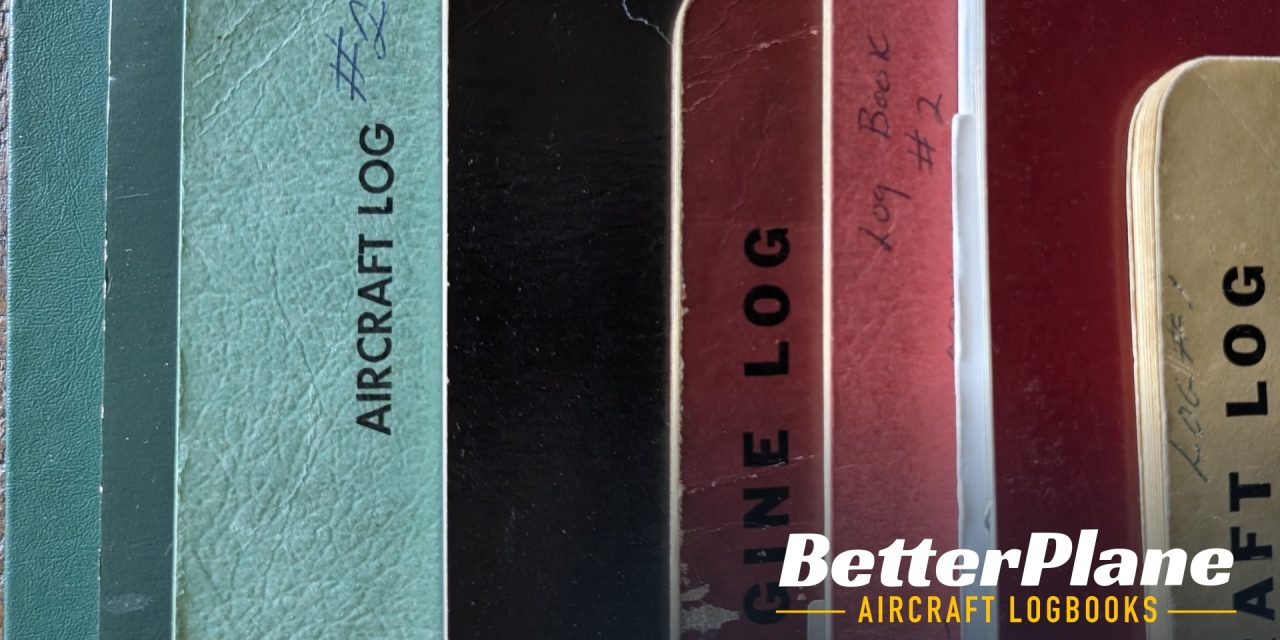
By Jason Gould, airplane owner and founder of BetterPlane
When I bought my airplane, we didn’t get to look at the logs until we drove 11 hours to the seller’s hangar, and they handed over a big filing box filled with logbooks and paperwork and receipts. Buyers I’ve spoken with say they won’t fly out to look at an airplane until they’ve seen the logs, and their mechanic wants the logs before the prebuy.
Then I had to hang on to them. Early on, before I started doing owner-assisted maintenance with an A&P IA friend, I used a local shop to do some maintenance. They took all my logbooks and were supposedly going to scan them for me. Well, they finished the work and forgot to give me my logbooks back. I had to make several calls and a trip down to their shop to get them, a week or so after the work was finished. Come to find out, they had briefly misplaced them.
Owners I’ve spoken with tell worse shop stories than mine. One owner’s shop held the logbooks for months after the bill was paid. Another owner’s shop lost years of logs at an annual. VREF, the aircraft valuation service, says the loss can be 40-60% of the airplane’s value if the logbooks never come back.
One of the reasons I built BetterPlane is so my logbooks don’t have to leave my hands. It creates a searchable copy of my logs, and I can share it while the logbooks stay in my safe. You can see how it works at betterplane.com/piperowner.
Let them look while the logbooks stay home
In the app, my airplane and its records sit in what BetterPlane calls a hangar. I can invite a mechanic, a buyer, or the buyer’s mechanic as members of my hangar. They see what I see in the hangar: the logbooks, search, squawks, and documents such as the POH, weight and balance, and avionics manuals. They also see the hours on each component, like the engine and airframe total time, and whether each maintenance alert is on track, coming due, or overdue. They can’t change the records, and they don’t pay. I can remove them anytime.
Members sign up in the BetterPlane app on a phone. After that, they can also read the logs on a computer at app.betterplane.com. If someone would rather not install an app, I can export a logbook as a PDF.
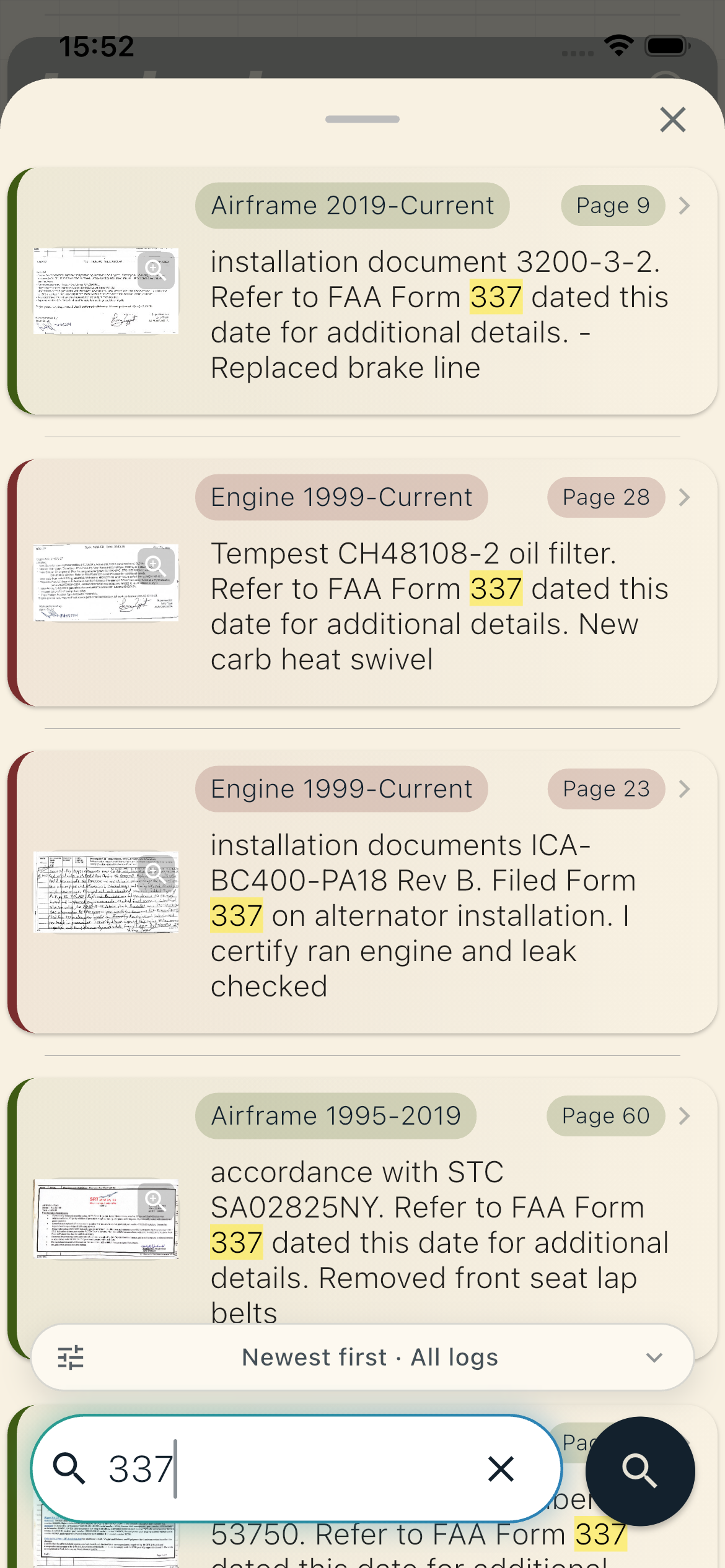
Some owners share a digital folder of photos or a PDF. That gets the pages to a buyer. As members of my hangar, a buyer and the buyer’s mechanic can also search the logs, because BetterPlane turns the pages into searchable text. The mechanic can type “337” and open each page it finds.
You can see how sharing works at betterplane.com/piperowner.
Can you find these in five minutes each?
A shop, a lender, or a buyer’s mechanic can ask for your records. When I financed my airplane, the bank wanted photos of a few pages, including the last engine overhaul.
A buyer and the buyer’s mechanic usually check for major repairs, AD compliance, and service bulletin compliance. (The FAA’s owner guidance says that under Part 91, a service bulletin is advisory unless an AD includes it.) Beyond that, buyers are looking at whether the airplane has generally been well maintained, with regular greasing, oil changes, and the like. AOPA’s purchase inspection checklist also asks for a “complete maintenance history.”
Getting your logs ready for a buyer really just means being a better-prepared owner. Take your logbooks off the shelf tonight and start with these five. Give each one five minutes.
I’d rather find a gap on my own kitchen table than hear about it from a buyer’s mechanic.
Major repairs and alterations. A buyer wants to know whether there was any major damage that was repaired, and how it was repaired. AOPA tells buyers to look for “entries that suggest repairs due to an accident or incident.” Each major repair or alteration should have a Form 337. You get a signed copy, and another goes to the FAA (FAR 43, Appendix B). For a major repair that follows a manual acceptable to the FAA, a repair station can give you a signed work order and maintenance release instead. The 337s often aren’t in the logbooks themselves. You can request the FAA’s copies on its CARES site (cares.faa.gov). Can you match each 337 to its entry in your logs?
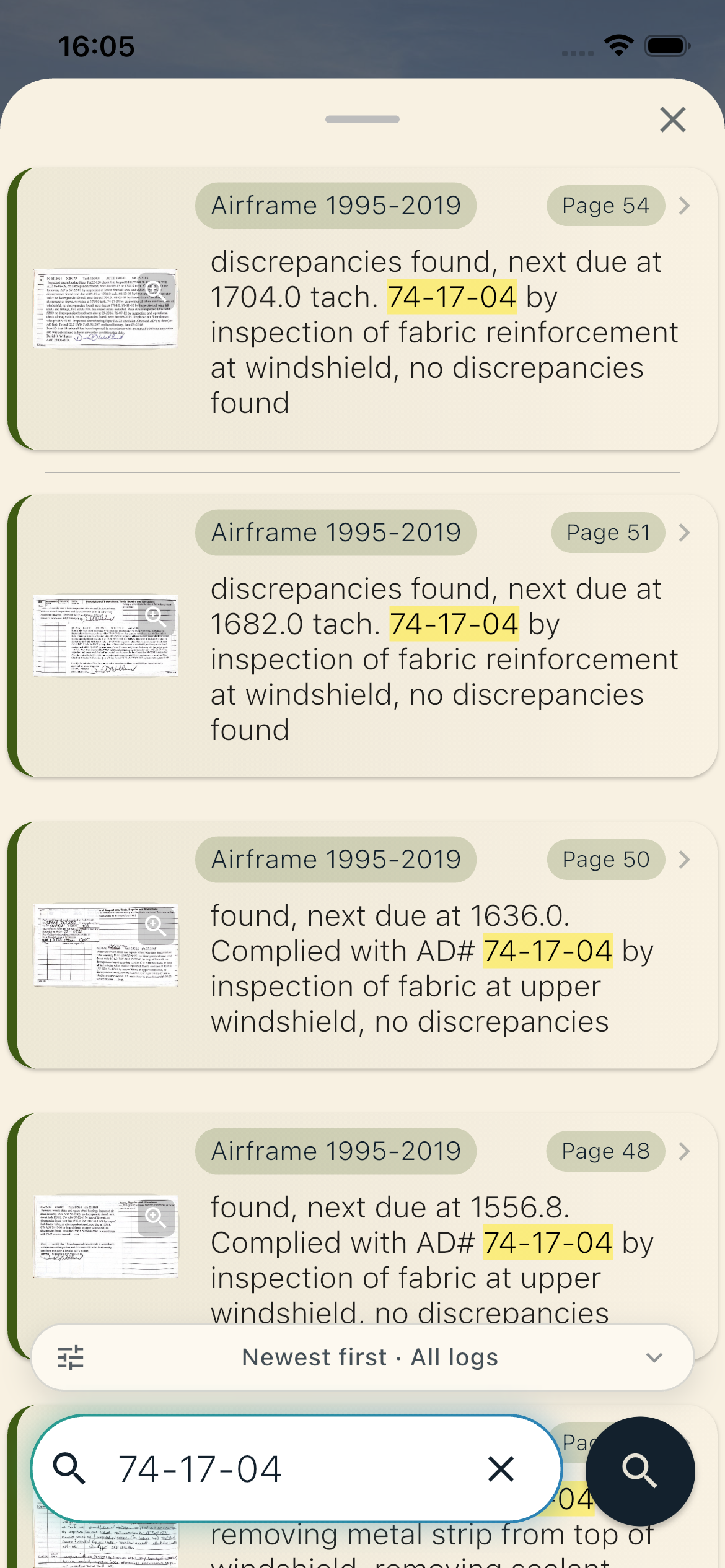
AD compliance. Under FAR 91.417, the owner keeps the current status of each applicable AD: the AD number, revision date, and method of compliance, and for a recurring AD, when it’s next due. Can you find your AD list, and what’s the date on it?
For a recurring AD, I search its number in BetterPlane and see each entry for it, with the next due time. In my logs, the search takes under a second.
The hours. Aviation Consumer says, “Check the math.” It also says to check each log’s beginning and ending entry. “Do they sequence?” Do yours?
Every annual. An appraiser writing in AVweb looks for “an annual inspection signoff for each year.” Can you find one for each year?
Weight and balance. AOPA’s list includes “weight and balance with current equipment list.” Is yours current with what’s installed?
If something is missing, ask your shop. Some of it can be tracked down, since a shop that did the work may still have its records. AC 43-9D, the FAA’s advisory circular on maintenance records, says that rebuilding AD status may take a detailed inspection, and in some cases performing the AD again.
I’d rather find a gap on my own kitchen table than hear about it from a buyer’s mechanic.
When it’s time to sell, a listing at betterplane.com/forsale is free with a paid plan. It shows photos, specs, and the scanned logbooks for any buyer to open, and buyer emails come to you. Under FAR 91.419, the records go to the buyer at the sale. Member access covers the time before that. After the sale, BetterPlane can move the airplane and its records to the buyer’s own BetterPlane account.
Start with your current logbook
If you want to try BetterPlane, add your airplane first. You look it up by its N-number, and setup takes a few minutes. You don’t have to scan every logbook to start. Tonight, while the logbooks are still on the table, scan your current logbook. It’s the one most likely to have your last annual and your most recent AD compliance entries. Then search for one of the five records and see how BetterPlane reads the page. Aircraft owner and BetterPlane customer Nate G. uploaded 60+ years of logs in about an hour.
Start a one-month free trial with a new yearly single-aircraft plan. After that, it’s $119 per year. Download BetterPlane for iOS or Android at betterplane.com/piperowner.
Jason Gould is a private pilot, EAA lifetime member, and caretaker of a vintage fabric-covered airplane. He founded BetterPlane to make aircraft history easier to use and help owners keep important maintenance from being missed.