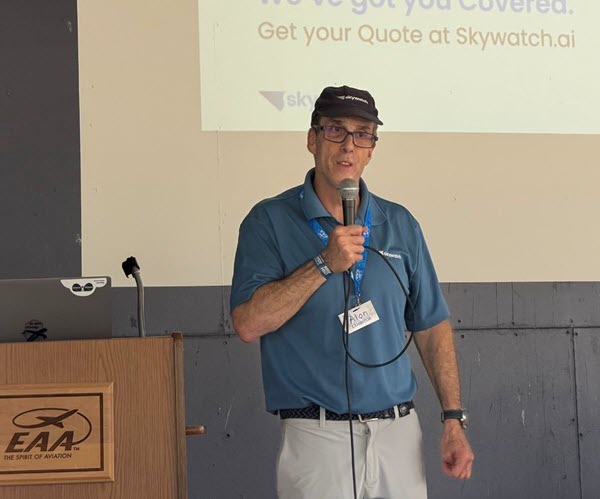

GA owner Grant Brown walks through his annual policy renewal with Alon Admi, Aviation Insurance Manager at Skywatch, and shares the questions every aircraft owner should ask.
By Grant Brown
My partner and I own a light airplane, and like most GA owners, we fly it every chance we get: weekend trips, a little sightseeing, and plenty of time just enjoying being in the air. I have spent most of my life around airplanes, but owning one comes with its own set of responsibilities, and insurance is one of them.
I am not an insurance expert. Every year, renewal season brings the same temptation: let the policy roll over and get back to flying. But a policy written last year describes last year’s airplane, last year’s pilots, and last year’s plans. This year we had a lot of changes, so instead of guessing, I went to someone who handles renewals every day.
We Asked, Skywatch Answers: Meet Alon Admi
Alon Admi is the Aviation Insurance Manager at Skywatch and oversees the company’s renewals process. He has been in the insurance industry for 22 years, starting his career as an underwriter, and has spent the last three years at Skywatch helping pilots protect their aircraft. He is based in Maryland, outside Washington, D.C.
He also has a name pilots tend to remember. “Alon is spelled Alpha Lima Oscar November,” he told me. “There’s an Aircoupe with the same spelling.” If you have ever seen an Alon Aircoupe on a ramp, you will not forget it.
I asked Alon to walk me through renewal the way he would with any owner. Here is the process we followed, with his advice along the way.
1. Start with how you actually flew
We logged about 75 hours this year, almost all of it on weekends and usually together, after losing a month of prime summer flying to maintenance and upgrades. Hours flown, who flew, where you flew, and how the airplane is stored all help an underwriter understand the risk. Write it down from your logbook before you request a quote.
“Most renewal issues I see aren’t about price. They come from a policy that still describes last year: a pilot who isn’t listed, an upgrade nobody reported, hours that changed. Renewal is the easiest time to fix that.” Alon Admi, Skywatch
2. Make sure the insured value matches the airplane you own today
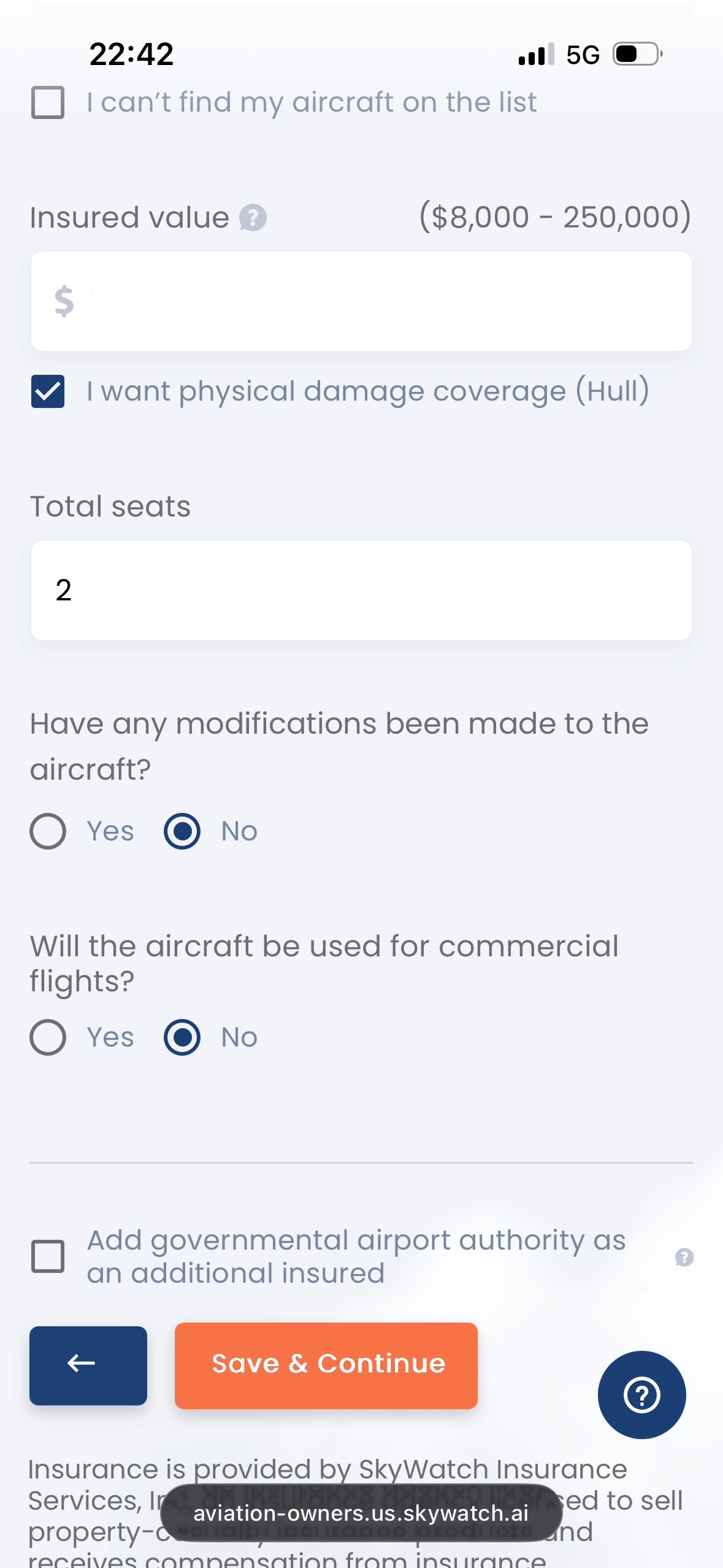
Since our last renewal we added an engine monitor, installed a new interior, and completed the annual. We are also planning an avionics upgrade to dual G5s with a GNX 375. Upgrades change what it would cost to replace the airplane, but not every dollar spent comes back in market value, so I compared similarly equipped aircraft on the market to set a realistic number.
- Know how your policy values the hull. Many aircraft policies insure it for an agreed value, the amount you and the insurer settle on at the start of the term.
- Setting the value too low saves a little on premium but can leave you unable to replace the airplane after a total loss.
- List completed modifications and planned ones separately, with expected installation dates.
- Ask how to update the value mid-term once planned upgrades are installed.
“Tell us about the upgrades, with dates and invoices if you have them. An accurate hull value protects you. Guessing low to save a little premium can cost a lot more after a total loss.” Alon Admi
3. Account for every pilot
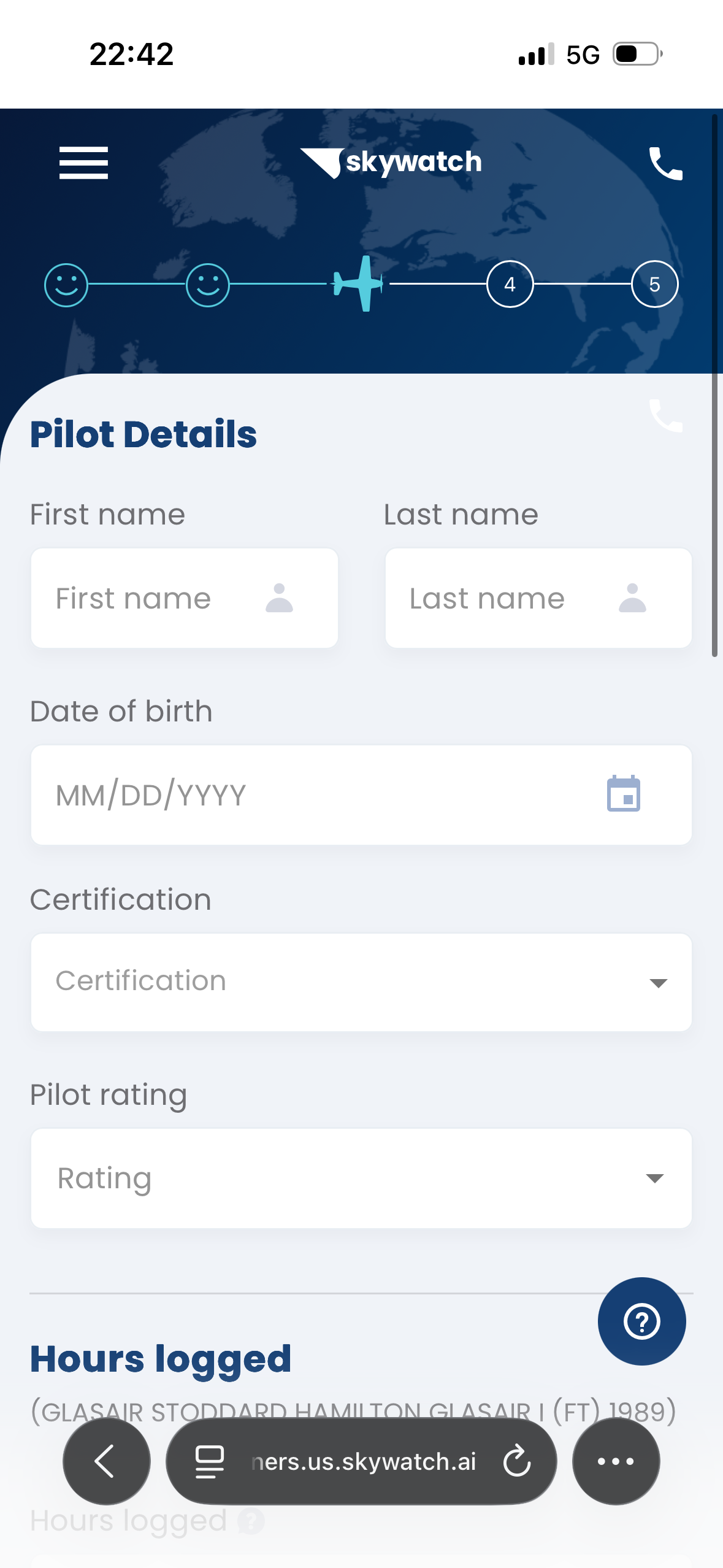
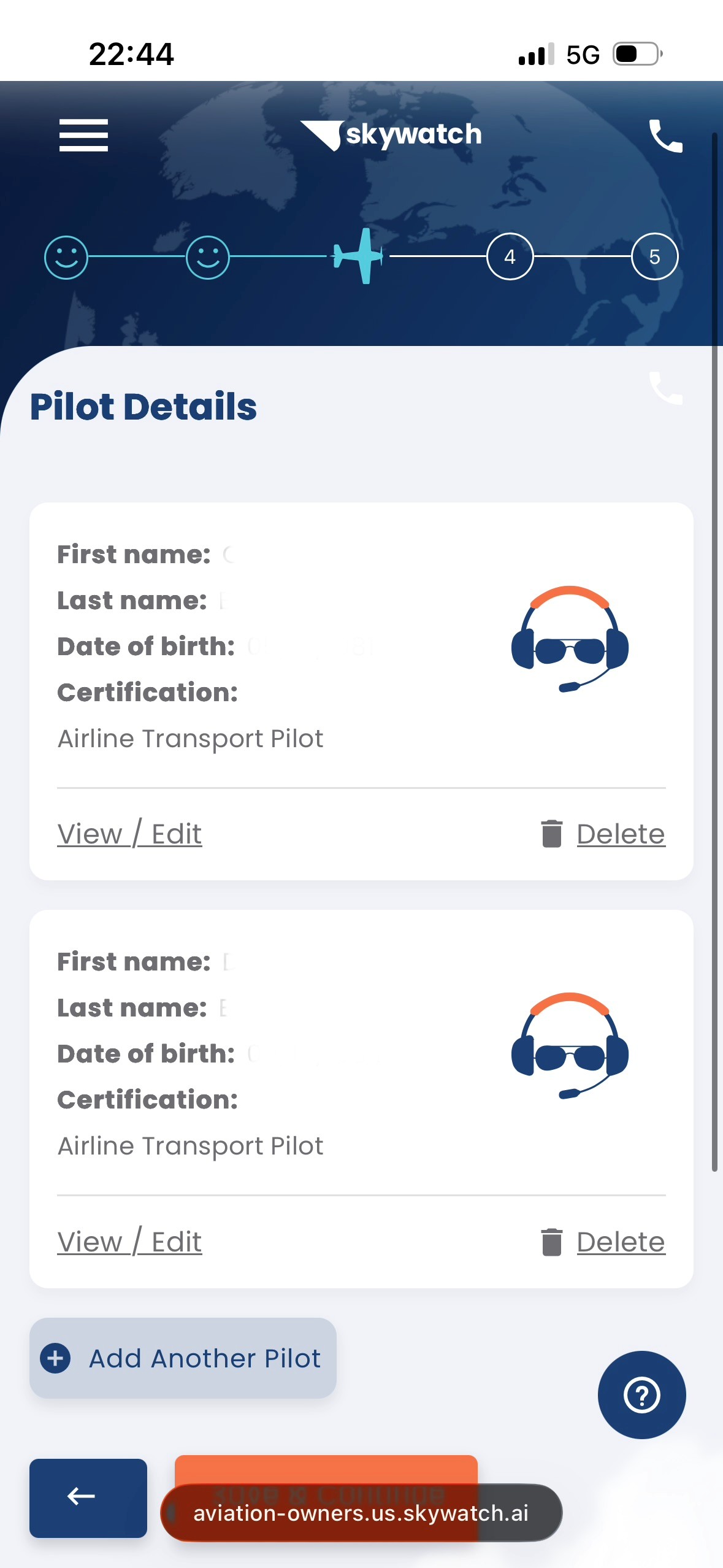
Our pilot picture changed too. I added a single-engine sea rating, my partner doubled his hours and is working on his instrument rating, and we may invite one or two qualified friends to fly the airplane. Update certificates, ratings, total time, and time in make and model for everyone who will fly.
This is where it pays to understand the difference between named pilots and an open pilot clause:
- Named pilots are listed individually on the policy and approved based on their own experience.
- An open pilot clause extends coverage to pilots who are not named, but only if they meet specific minimums, such as certificate and ratings, total time, time in make and model, and a required checkout or recent training.
If a pilot misses even one of those conditions, coverage for that flight may be in question. Meeting the requirements also does not necessarily give that pilot the same protection as the owner. Depending on the policy, an insurer that pays a claim may be able to seek recovery from the pilot who was flying, which is why regular pilots should also consider their own non-owned aircraft (renter’s) insurance.
“If someone flies your airplane regularly, don’t rely on the open pilot clause. Ask us to name them. It takes a few minutes and removes the guesswork.” Alon Admi
4. Know how MOSAIC affects your ratings
With the FAA’s MOSAIC rule expanding what sport pilots and light-sport aircraft can do, a lot of owners and pilots are asking how insurers will treat sport pilot certificates. I asked Alon directly.
“We are ready for MOSAIC. We will use your highest rating, and the premium will be the same for someone who’s a sport pilot as for someone who’s a private pilot with the same experience.” Alon Admi
If you or a pilot on your policy holds a sport pilot certificate, mention it at renewal and make sure experience is reported accurately.
5. Describe the arrangement accurately
Letting a few friends fly your airplane is different from renting it out or placing it in a club. If money changes hands, or the airplane is available to a wider group of pilots, a private owner policy may no longer fit, and the operation may call for club, rental, or commercial coverage.
“Tell us how the airplane is really used. If friends start chipping in or it becomes a club airplane, that changes the conversation. It’s much better to have that conversation before a claim than after.” Alon Admi
6. Read the liability limits closely
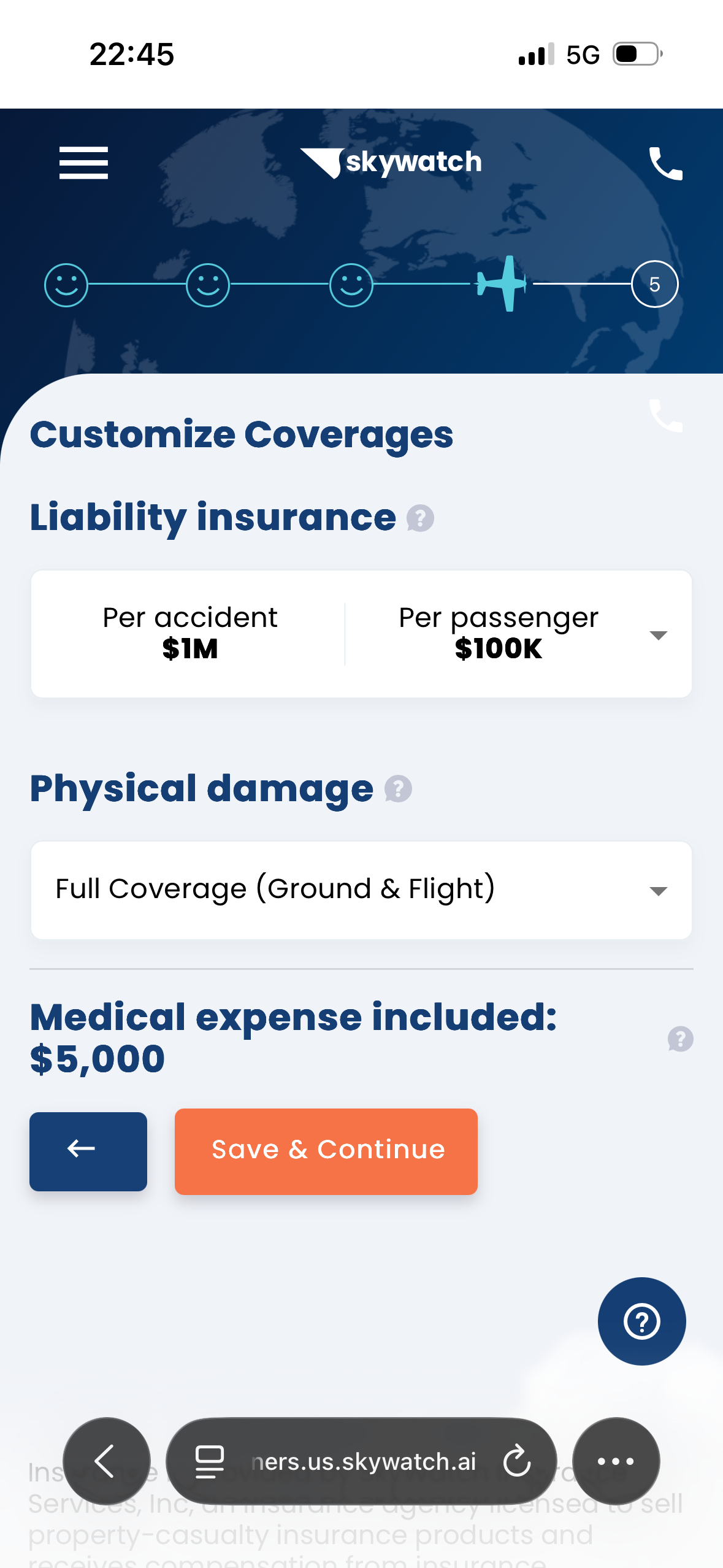
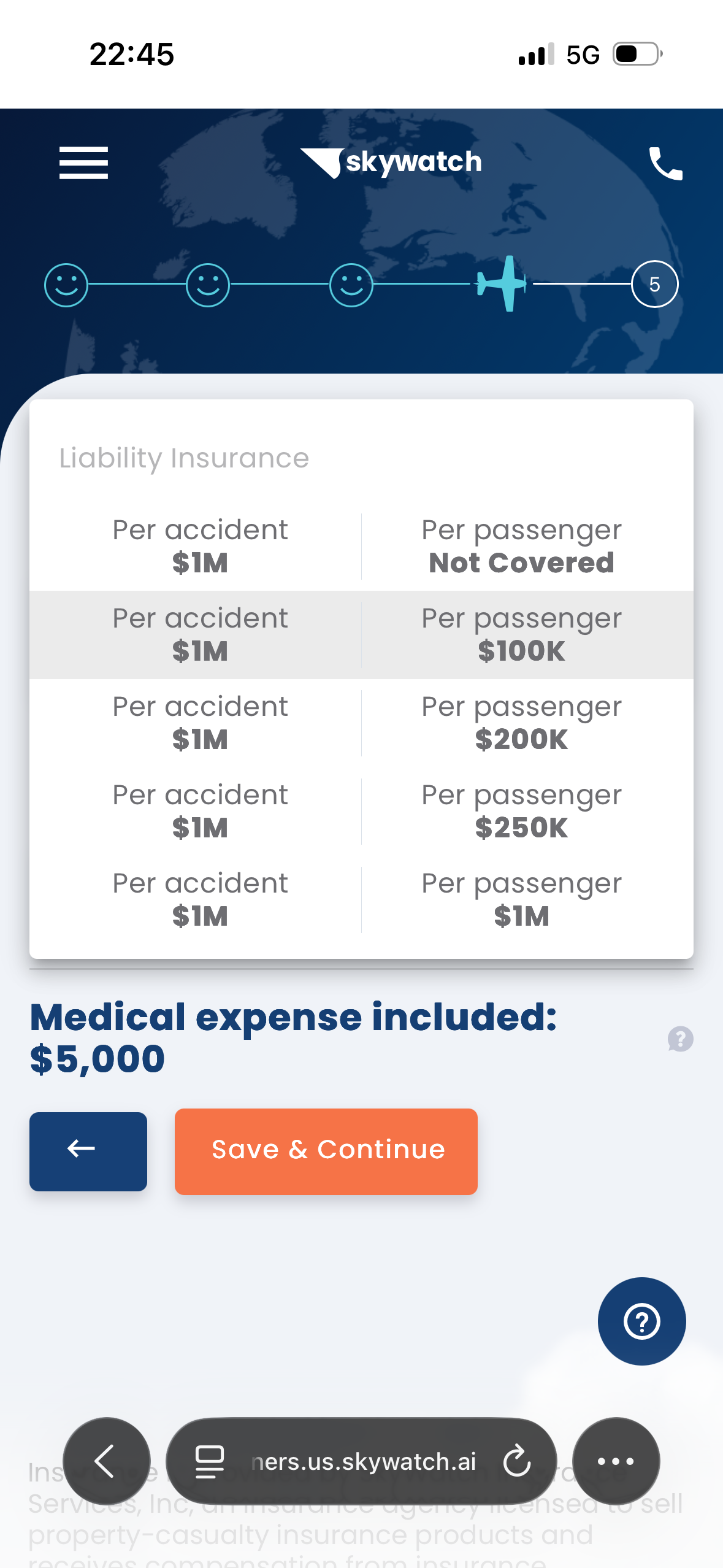
Liability is often shown as two numbers: a per-occurrence limit and a per-passenger sublimit. A policy with a $1,000,000 per-occurrence limit and a $100,000 per-passenger sublimit responds very differently to a passenger injury than one with a $1,000,000 combined limit and no per-passenger cap. Review both numbers, and think about who typically rides with you.
“Look at the per-passenger number, not just the headline limit. That’s the one owners are most often surprised by.” Alon Admi
7. Confirm deductibles and territory
Check the hull deductibles in the quoted terms. Deductibles can differ for losses on the ground and in flight, and some policies apply different deductibles depending on whether the airplane is in motion. Know what you would pay out of pocket before you need to file a claim.
Living in northern Minnesota, a spontaneous trip to Canada is always on the table. Every policy defines where coverage applies, so confirm the territory before you plan a cross-border flight, not after.
8. Match hull coverage to how you plan to fly
Hull coverage typically comes in two forms: ground only (not in motion) or ground and flight (in motion). Ground-only coverage costs less and can make sense during extended downtime, such as a long avionics project, but it does not protect the airplane while it is taxiing or flying. We plan to fly more in 2027, so ground and flight coverage is the right fit for our mission.
A quick renewal checklist
- Review last year’s hours, pilots, and typical flights
- Update the insured value for completed and planned upgrades
- Update every pilot’s certificates, ratings, and hours
- Decide who should be named instead of relying on the open pilot clause
- Report sport pilot certificates and experience accurately
- Confirm the policy type matches how the airplane is actually used
- Compare per-occurrence and per-passenger liability limits
- Confirm ground and in-flight deductibles and the coverage territory
- Choose ground-only or ground-and-flight hull coverage
The people behind the policy
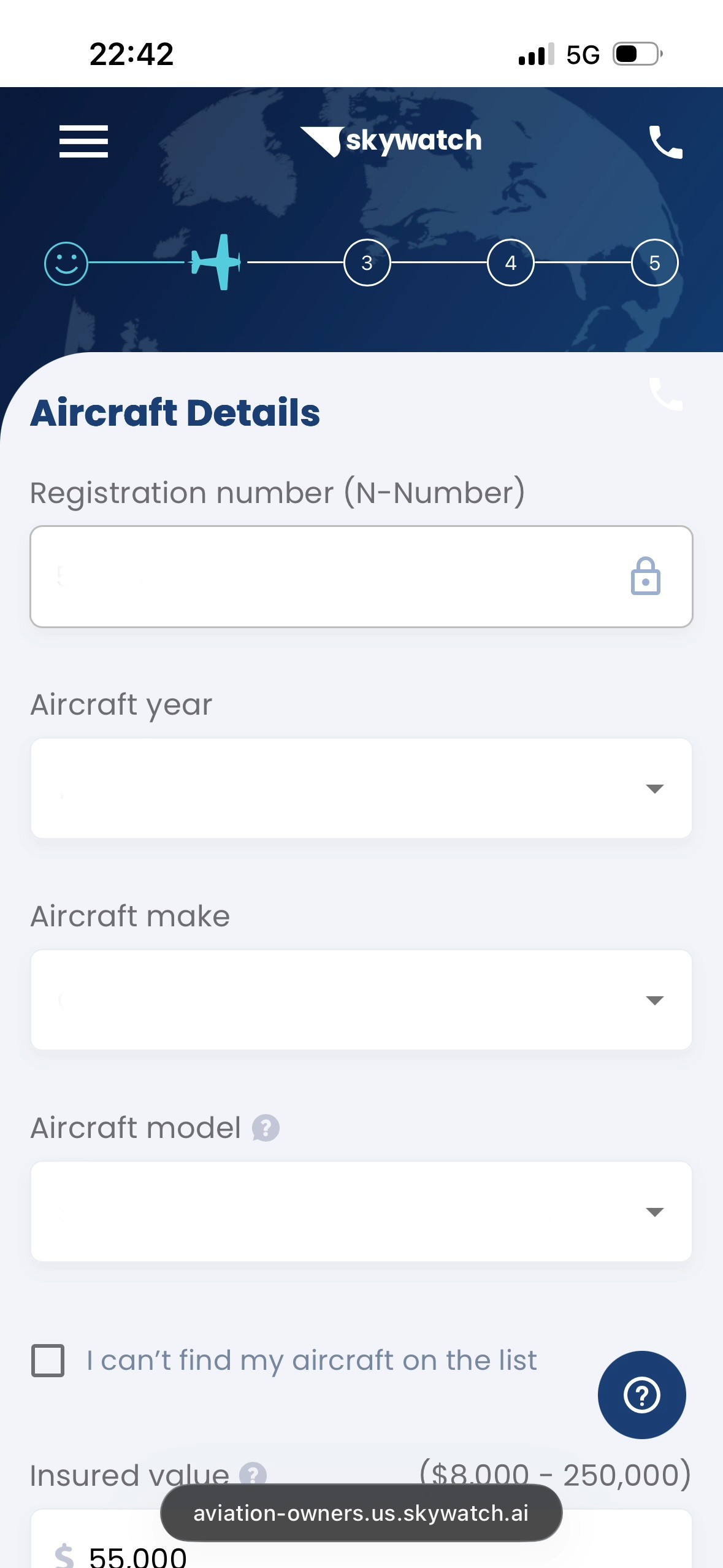
I used Skywatch’s online platform to update our aircraft and pilot details and compare coverage options side by side. What stood out this time was the conversation with Alon. Having someone with two decades in the business explain the reasoning behind each question made the process faster and left me more confident in what we were buying.
“The online quote gets you started in minutes. But behind every policy there’s a team that’s been doing this a long time. If anything is unclear, call us before you renew. That’s what we’re here for.” Alon Admi
Whichever provider you use, the fundamentals are the same: give the insurer an accurate picture, read the terms carefully, and ask questions before you bind. Coverage always depends on the actual policy, its endorsements, and the facts of a specific situation, so ask a licensed insurance representative to confirm anything unclear in writing.
Now, where should we go on that next trip?
For more information about Skywatch, visit www.skywatch.ai/aviation-owners-insurance.
About the author
Grant Brown served in USAF avionics maintenance out of high school, then left the Air Force to pursue becoming an F-16 pilot, earning an electrical engineering degree with minors in mathematics and astronomy. He joined the Air National Guard in 2007 and earned F-16 initial qualification, flight lead, mission commander, instructor, and evaluator, later serving as director of operations and commander. He attended the USAF Weapons Instructor Course in 2015 and taught there from 2016 to 2018. He has deployed five times, to Iraq, Saudi Arabia, Kuwait, Afghanistan, and Korea, and has 3,600 hours, about 250 of them in combat, primarily in the F-16 Block 50 “Wild Weasel.” He joined a major air carrier in 2019, flying the right seat of the Boeing 777. He owns an H35 Bonanza and loves flying it.
About Alon Admi
Alon Admi is the Aviation Insurance Manager at Skywatch, where he oversees the renewals process. He has 22 years of insurance industry experience, beginning as an underwriter, and has spent the last three years at Skywatch helping aircraft owners and pilots find the right coverage. He is based in Maryland, outside Washington, D.C.