No, It’s Not a Cherokee
I was sitting on the sand in Venice, Florida, watching the placid Gulf of Mexico rolling up onto the shore, casually monitoring the general aviation traffic orbiting the Ven ice airport and shooting touch-and-gos on runway 04. As I watched the parade of Pipers and Cessnas streaming down final, I spied a vaguely familiar outline headed for the air port. The airplane was a mile offshore as it turned base to final toward the beach.
“It’s a P-51,” I said out loud to no one in particular. It was 1968, and I knew Trans-Florida Aircraft (later Cavalier Aircraft) of Sarasota sometimes did training at wide open and uncontrolled Venice Airport, a former WWII training base. The Cavalier was an extreme, high-end two-seater Mustang fitted with full dual controls and converted by the company from a WWII fighter to a corporate transport for high rollers who’d truly arrived. Cavaliers always had that characteristic Packard Merlin sound, that unmistakable snarl. This didn’t sound like any standard Merlin engine I’d ever heard, however.
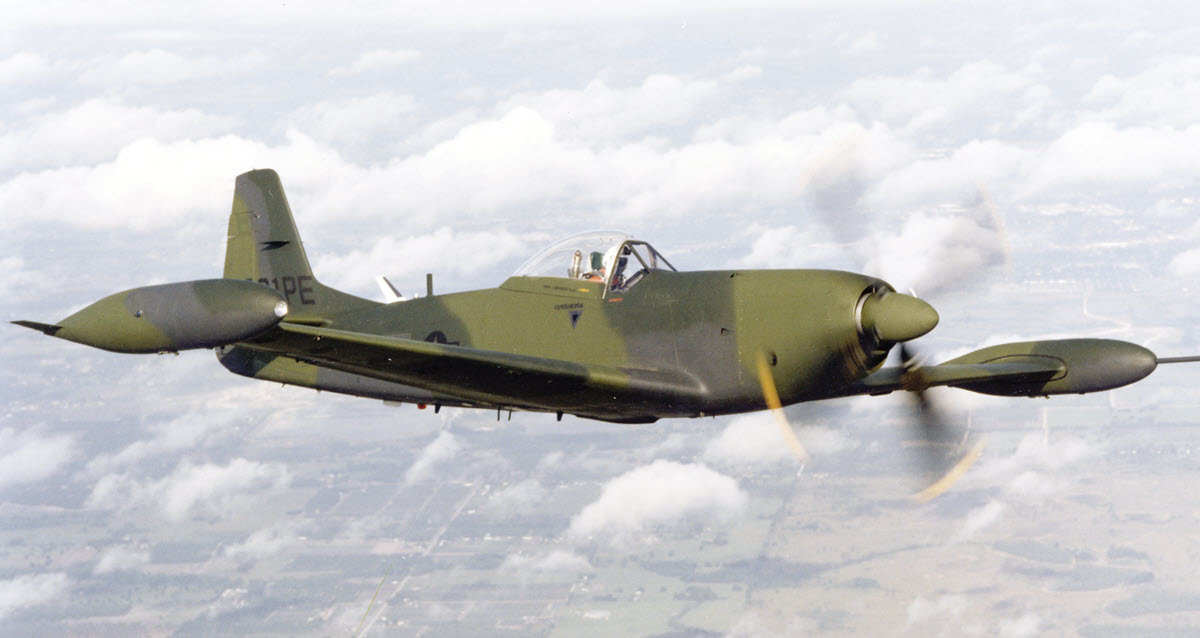
As the airplane passed overhead, the telltale, high pitched howl of a turbine identified it as a very different kind of Mustang. I watched as the airplane flared above the threshold, touched down near the numbers and turned off toward the ramp.
I grabbed my towel, jumped in my Austin Healey and sped around the airport to the ramp side, arriving just as the airplane was taxiing in and shutting down. Sure enough, it was a turboprop.
Yes, it was a Cavalier Mustang, but an unusual variation on the standard luxury P-51 conversion. The big prop spun down with the characteristic whine of a jet and, as so many times before, I was mesmerized by the big Mustang. But this time, it was a P-51 with a difference. The two pilots refused to answer any questions about the airplane as they quickly dismounted and went into the FBO.
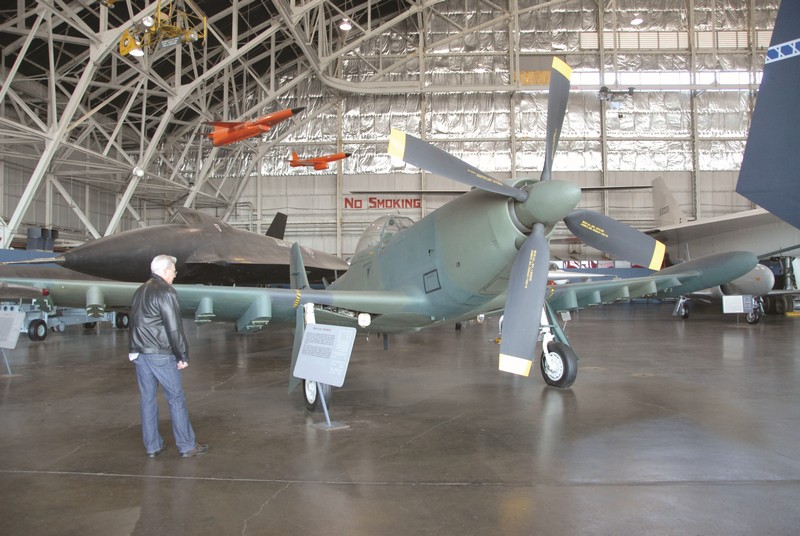
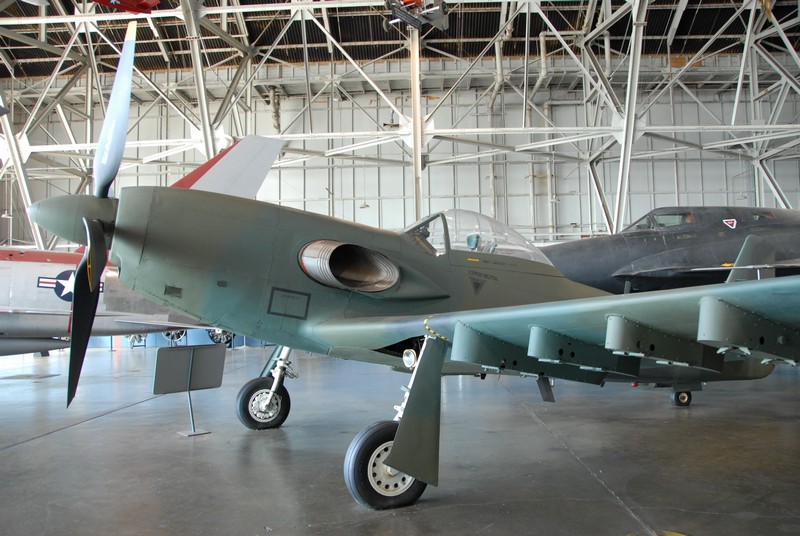
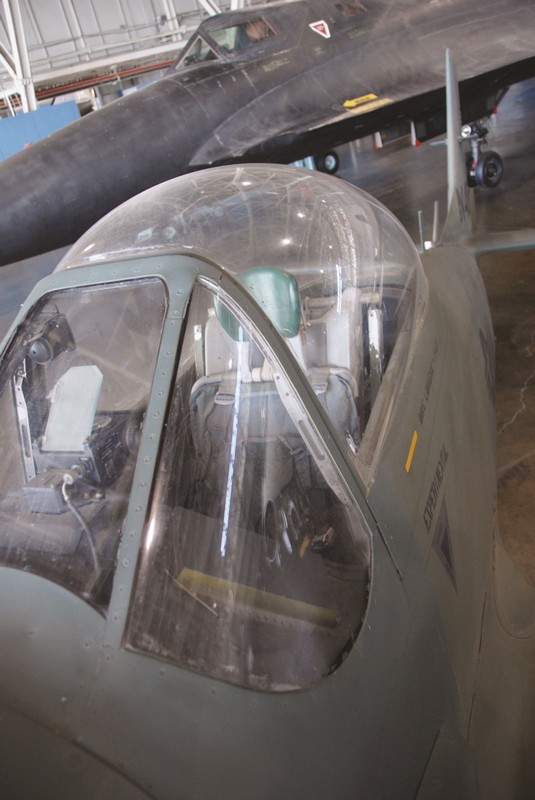
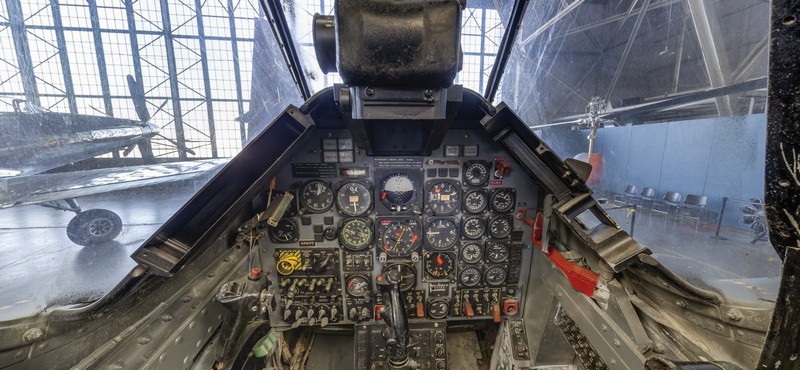
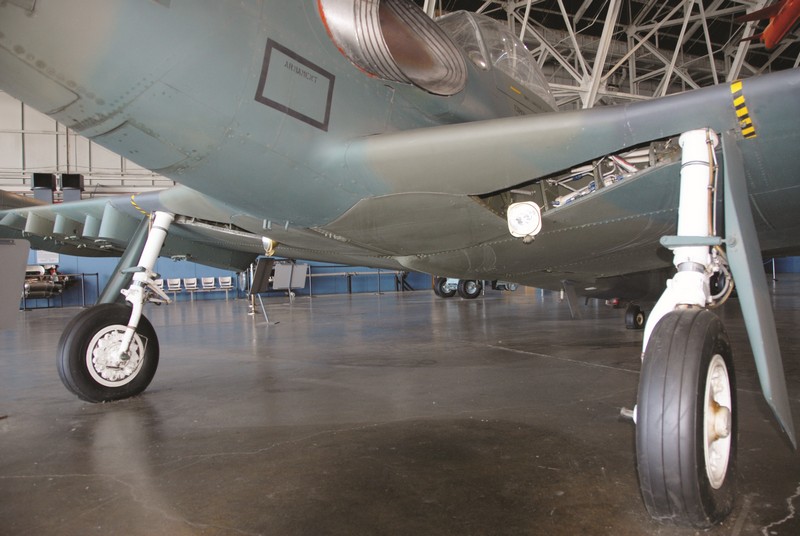
Today, only two Piper Enforcers survive. The one pictured here is currently in storage at the National Museum of the USAF at Wright Patterson AFB near Dayton, Ohio. The other is on display at the Air Force Flight Test Museum at Edwards AFB in California. Photos provided courtesy of the National Museum of the USAF – www.nationalmuseum.af.mi
The Story Behind the Enforcer
Developed by Cavalier as a contender for an Air Force “PAVE-COIN” contract for a counter-insurgency aircraft, that first turbine Mustang sported a 1740 shaft horsepower (shp) Rolls Royce Dart 510 engine out front. (Later turbine Mustangs were adapted to accept the huge Lycoming T55 L-9 turboshaft engine, rated for 2455 shp, about 750 more than the stock P-51D Mustang). The turbine-powered P-51 had other modifications, as well.
The propjet Mustang was developed by Cavalier owner and CEO David Lindsay, but Lindsay knew his company didn’t have the capability to mass produce large quantities of air craft. Accordingly, he sold the project to Piper Aircraft of Vero Beach. Though two test airplanes were built, one crashed as a result of flutter. The sole remaining Cavalier turbine Mustang was delivered to Piper on November 4, 1970, and the turbine Cavalier became the Piper PA-48 Enforcer.
At the time, the US military was heavily involved in the Vietnam War and one of the most popular attack aircraft was the prop-piston Skyraider. The A-1 Skyraider was a relatively slow behemoth of a single-engine Navy carrier aircraft that carried huge amounts of external stores and was capable of loitering in the target area for hours. It was thought the En forcer might bring better performance to the ground support role while also offering better time on target.
I moved back to California a few months later and never saw a flying Enforcer again. Apparently, Piper built another four of the prototypes in hopes of interesting the USAF in a contract.
I did see a grounded example of a turbine-powered P-51 when I visited the Air Force Museum at Wright Patterson AFB in September 2007. More than coincidentally, I was in Ohio for the Gathering of Mustangs in nearby Columbus, and I took an extra day to check out the famous museum. The contrast between the 75 or so P-51s flying and on display at Columbus and the lone Enforcer parked in a hangar at Dayton was both happy and sad.
A Different Kind of Piper
The Enforcer was indeed a different kind of Piper but perhaps not that big a surprise, considering the airplane’s talented heritage. In addition to its service in 12-cylinder piston form as one of the most feared fighters of World War II, escorting bombers all the way to Berlin and back, the P-51 was adapted to a variety of missions following the war.
The popular fighter was mounted on skis for operation from snow runways, fitted with a tail hook for possible use on a carrier and even powered with a specially built experimental Rolls Royce engine as strong as 2100 hp (by pulling 80 inches of manifold pressure!) The type was sold or lend leased to some 34 foreign governments and used as a frontline fighter through the ‘70s in places such as Haiti, Guate mala and Bolivia.
Though Mustangs are most famous for their service in WWII, the type saw considerable service during the Korean War because of their range, an attribute proven during the European campaign of WWII. They could fly from bases in Japan and hit targets in Korea not accessible to the short-ranged F-80 jet fighters. They were superb ground pounders, fast enough to avoid most AAA (Anti-Aircraft Artillery) but slow enough to allow them to put bombs on target. After Korea, Mustangs saw service as Air National Guard aircraft until 1957.
When the P-51 was officially withdrawn from military ser vice, hundreds of surplus airplanes were dumped onto the civilian market, and Cavalier Aircraft acquired the rights to the P-51 from North American Aviation. In later years, the US government came back to Cavalier and purchased batch es of aircraft for use in the Military Assistance Program, sending a variety of aircraft to several foreign governments, primarily in Central and South America and Asia.
These aircraft were remanufactured from existing P-51D airframes but fitted with new Packard Merlin engines, up graded radios, the taller P-51H vertical tail and a strengthened wing. (One of the later generation P-51s was even fitted with a 106 mm recoilless rifle to evaluate that weapon’s use against ground targets.)
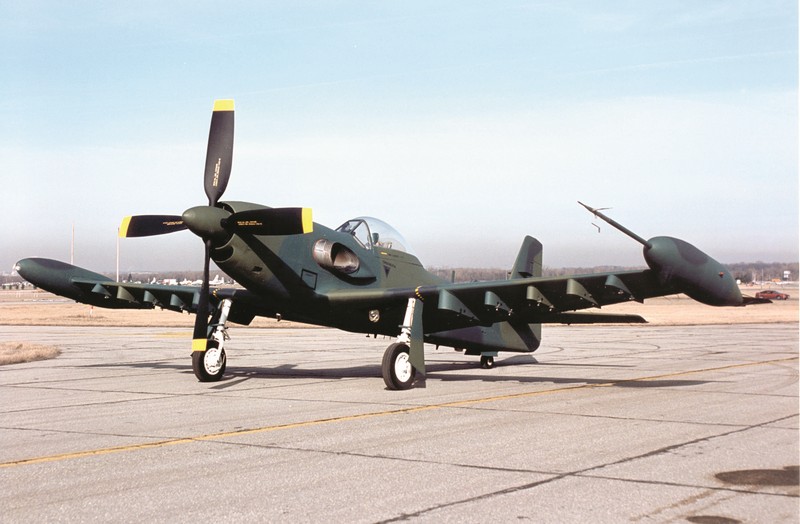
There were two of the original military turbine Mustang models built, one a single-seater and the second a two-seater with a GIB (Guy-in-Back) occupying the rear seat. Though there was a strong physical resemblance between the Piper PA-48 Enforcer and the original P-51 Mustang, that’s where the resemblance ended.
Over the years, the airplane evolved to different engines and equipment. By the time the Enforcer was fully developed in the late ‘70s, it shared only about 10 percent of its parts with the original P-51D. In addition to the obvious engine swap, the Enforcer featured a highly modified wing with a longer span and chord, increasing wing area over 70 per cent. The combination of more power and a larger wing increased climb performance dramatically, from 3200 fpm to 5000 fpm. Top speed with the turbine engine was just over 403 mph.
Additionally, the fuselage was lengthened two feet and gross weight increased by 2000 pounds. The characteristic radiator scoop under the fuselage disappeared (turbine engines are rarely water-cooled), an ejection seat was fitted and the tail was enlarged to handle the higher power.
The Lycoming’s exhaust was extracted via a huge stack on the left side of the cowling. The original Cavaliers had been fully demilitarized, missing machine guns and bomb racks, but the proposed PAVE-COIN airplane was far from naked. In place of the wing mounted .50 caliber machine guns fitted to the original P-51, the Enforcer featured ten underwing hardpoints to accommodate either bombs or cannon.
Development continued for nearly 16 years. In 1979, the DOD budget included $11.9 million for development of the Enforcer. Testing continued at Eglin AFB, Florida and Ed wards AFB, California into the early ‘80s. But by that time, many squadrons of Republic A10 Thunderbolt II attack jets were long since on line and the Enforcer project was quietly shelved for good in 1984.
A Rare Privilege
Few pilots were privileged to fly the Enforcer but I was al lowed to fly Lee Lauderbach’s “Crazy Horse” TF-51 Mustang a few years ago in conjunction with a story. Lauderbach runs Stallion 51 in Kissimmee, Florida, and his company handles transition training for pilots stepping up to their own Mus tang or just Walter Mitty types interested in seeing how a Mustang flies. Lauderbach now operates “Crazy Horse” and “Crazy Horse II,” both magnificently restored but reasonably stocked two-seat, dual-control Mustangs.
During my brief 1.5 hour flight in the TF-51, I flew a variety of high speed aerobatics, everything from loops and rolls to Cuban Eights. The airplane manifested the characteristic light controls that made it a formidable fighter during WWII, at least until the airspeed passed about 300 mph.
I’d flown with Bob Hoover a few times in his yellow Mus tang and Hoover had advised that high speed maneuvering demanded both hands on the stick because the Mustang didn’t use any hydraulic assist to lighten the stick. Lauderbach confirmed that control forces multiply as speed increases. The Piper Enforcer had a top speed in excess of 400 mph, so stick force must have been prodigious.
Today, only two examples of the Enforcer survive, if in nonflying condition. In addition to the Enforcer on display at the Air Force Museum, a second turbine P-51 has been restored and is currently exhibited at Edwards AFB, California.