By Piper Owner Society Staff and JP Instruments
If you own or fly a piston-engine aircraft — be it a Cherokee, Archer, Comanche or other model — consider how adding a full‐function engine monitor can change the way you operate, maintain, and troubleshoot your airplane. These devices aren’t about flashy gizmos; they’re about making engine health visible, catching problems early, and giving you real-world data that pays off in safety, reliability, and lower costs. Below is a down-to-earth look at what an engine monitor can do, why you should have one, and how the information it provides can help you fix things before they get worse.
What an Engine Monitor Does
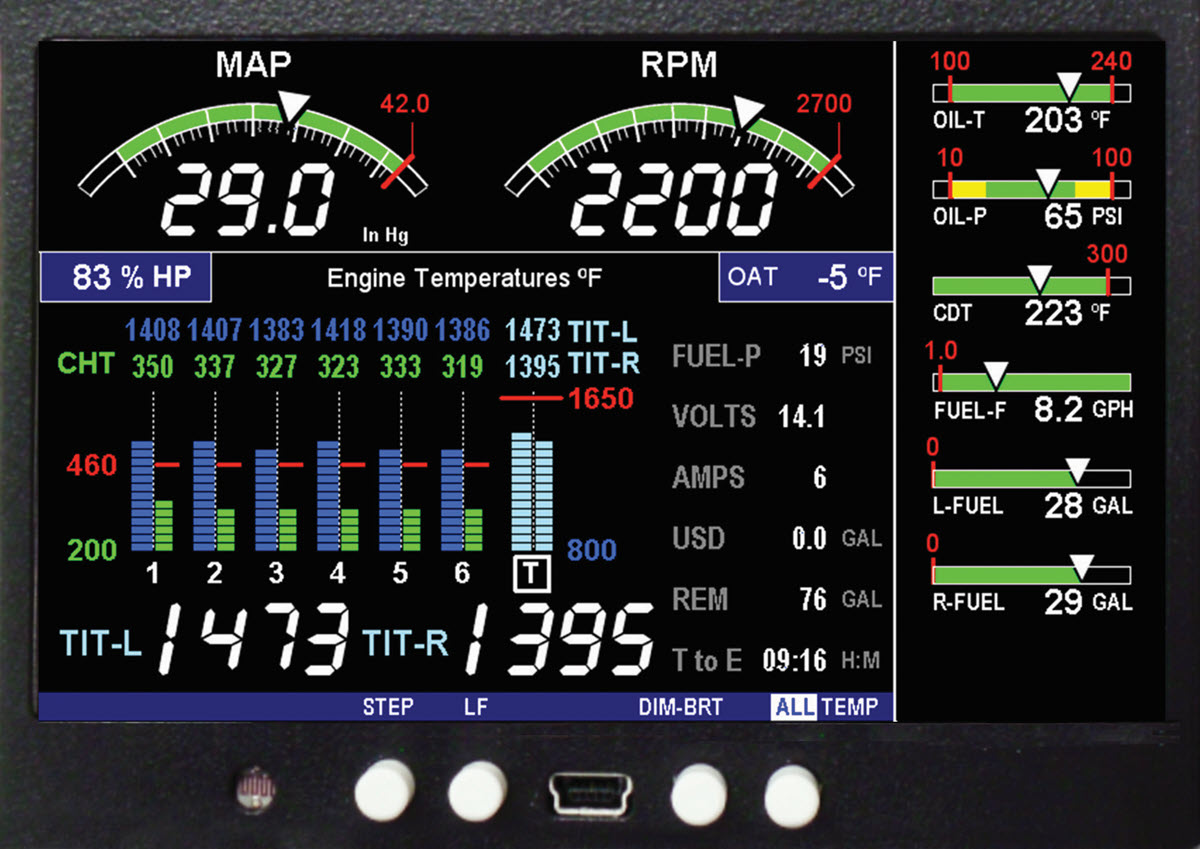
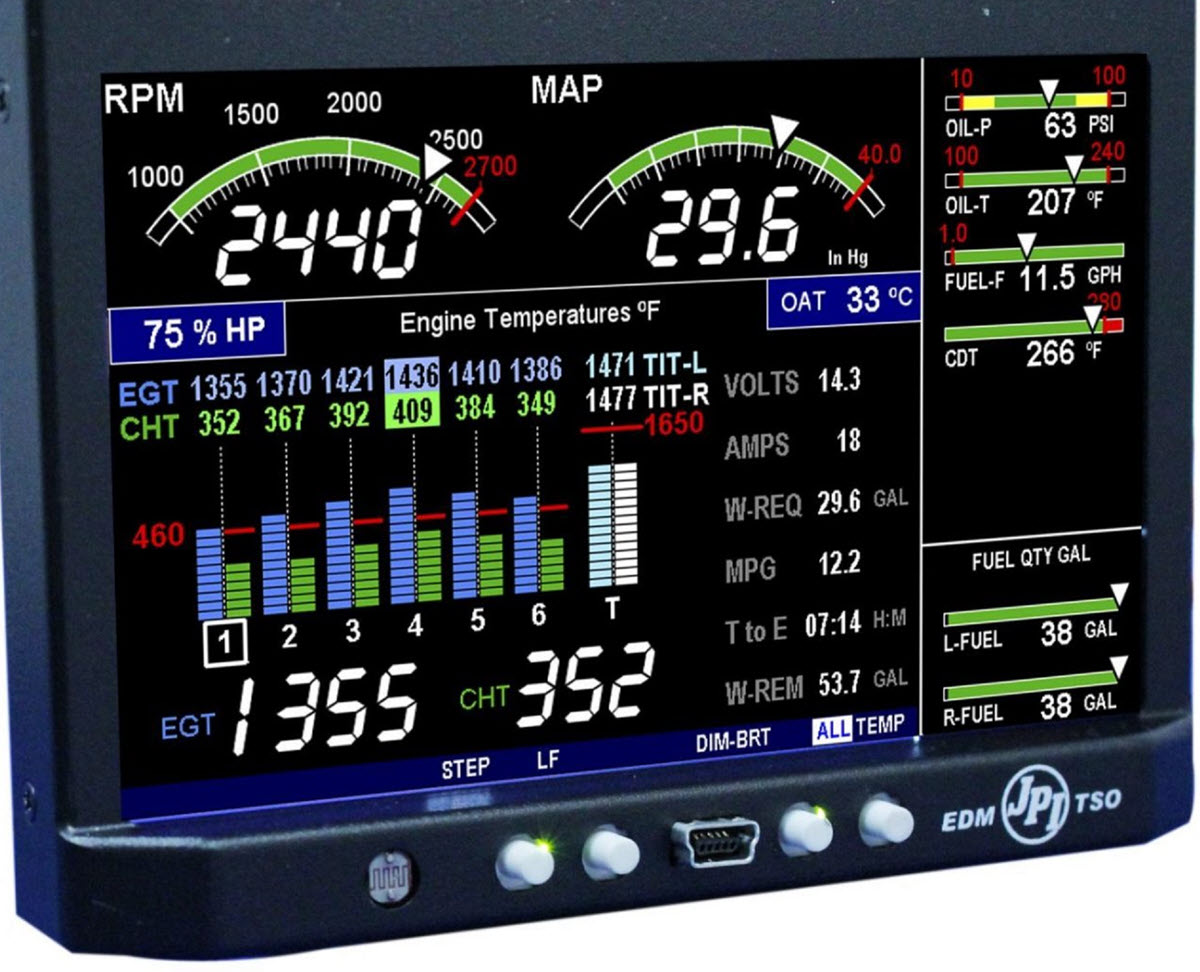
At its core, an engine monitor is a kind of “flight engineer for the cockpit.” Instead of relying solely on individual mechanical gauges (oil pressure, oil temperature, cylinder head temperatures, exhaust gas temperatures, etc.), a monitor pulls together multiple engine parameters, continuously watches them, records them, and provides alerts if something drifts out of bounds.
Here are key functions you’ll commonly find:
- CHT (Cylinder Head Temperature) and EGT (Exhaust Gas Temperature) measurements for each cylinder, rather than just an average or a single gauge for all cylinders. This cylinder‐by‐cylinder view is crucial.
- Oil temperature, oil pressure, fuel pressure, electrical system voltage/amps, manifold pressure, outside air temperature, fuel flow, remaining fuel monitoring, and more (depending on how equipped).
- It logs and stores data over time: you fly, it records. Later you (or your mechanic) download the data and look for trends, deviations or anomalies.
- It gives you audible and/or visual alerts when a parameter exceeds a preset limit.
- Many units include “leaning assist” functionality: by monitoring EGTs in real time across cylinders and fuel flow, they help you lean the mixture more precisely (rich of peak or lean of peak), which improves fuel efficiency and engine condition.
Some integrate fuel management which includes knowing how much fuel you’ve used, how many gallons remain, your fuel burn rate, sometimes even linking to GPS data so the computer can estimate fuel remaining for your destination.
In practical terms, rather than glancing at a handful of gauges, the monitor gives you real numbers, detail on each cylinder, trend lines you can track, and alarms you can trust. It’s more sophisticated than just adding a fuel‐flow meter or extra gauge; it’s engineered for the whole engine.
Why You Should Have One
- More accurate awareness of engine condition
Many aircraft were designed at a time when instrumentation was simpler—individual analog gauges, no data logging, no per-cylinder temperature scanning. That’s fine if everything’s behaving, but if one cylinder begins to run hotter, or one injector is richer/leaner, you might never see it until the trouble gets serious. With an engine monitor, you see exactly which cylinder’s CHT is creeping, or which EGTs are divergent. For example, one pilot noted that their monitor flagged EGT on cylinder #1, as it was running 240 degrees hotter than the lowest EGT reading of the other 3 cylinders. This led to the discovery of a plugged injector. - Increased engine longevity, fewer surprises
Because you’re catching early signs (over-temp cylinders, shock‐cooling events, rich/lean imbalance, fuel flow discrepancies), you can take the right corrective actions before damage happens. A cylinder running hotter or cooling too quickly can wear faster. The fuel mixture out of optimum can shorten spark plug life and cause fouled injectors. The data gives you options: adjust mixture, adjust fuel flow, inspect ignition, monitor cooling, or maybe adjust your operating procedures. - Fuel savings and operating efficiency
With precise monitoring of fuel flow, EGT/CHT, and mixture leaning assist, you can lean to optimum rather than guessing. That means less fuel burned for the same power setting and cooler cylinders for the same fuel burn. Over time, that adds up. - Better troubleshooting and maintenance support
When something goes wrong, rather than starting from scratch, you’ll have logged data. When your mechanic asks, “What changed?” or “Which cylinder is acting up?” you have numbers. Was the oil temperature gradually creeping? Was one cylinder’s EGT trending upward over a few flights? Did fuel flow drop unexpectedly? Did electrical load show a dip before alternator issues?
How the Data Guides Repairs
Step 1: Set Your Baseline
Once installed, run the airplane in known good condition. Lean per your normal technique, check that all cylinders’ EGTs and CHTs are within expected limits, record fuel flow at cruise, note oil temperature and pressure, etc. Build your baseline reference.
Step 2: Monitor trends flight-to-flight
- Are any cylinder EGTs creeping upward consistently (say +50 degrees Fahrenheit over several flights)?
- Are CHTs higher than last year for the same cruise power and ambient conditions?
- Is there a new divergence between cylinders (one cylinder hotter than the rest)?
- Is fuel flow increasing for the same cruise power?
- Is oil temperature higher or taking longer to stabilize?
- Is shock cooling (cooling rate during level-off/descent) exceeding limits in your log?
If you detect anomalies, it’s time to act.
Step 3: Diagnose and correct
With concrete numbers you and your mechanic can use the data to guide inspection rather than blindly checking everything.
Step 4: Adjust operating practices based on what you learn
Because the monitor shows you what’s actually happening, you can fine-tune operating procedures for your particular plane. Over time this can yield longer engine life, fewer maintenance surprises, better fuel economy, and generally more efficient operations.
Step 5: Use the “big picture” data for planning
The logged data isn’t just useful for immediate fixes; it becomes part of your maintenance planning. If you notice, over several hundred hours, your oil temperature is gradually increasing or your fuel flow at a given cruise is creeping upward, that might signal upcoming maintenance. You’re proactively planning rather than reacting to big failures.
PRACTICAL NOTES FOR A PIPER OWNER
Installation and compatibility. Check whether your specific Piper model (engine type, 4-cylinder versus 6-cylinder, carbureted versus fuel-injected, turbocharged or normally aspirated) is supported by the engine monitor system you choose. Many monitors offer STC or TSO options for common Lycoming/Continental engines.
Budget versus scope. You’ll find different tiers of monitors—from advisory units that simply add data while retaining the old gauges, to “primary” systems that replace your engine instrument cluster entirely. The cost, labor and panel work vary accordingly.
Think long-term. If you plan to keep the airplane for a long time, investing in a monitor makes more sense. If you may sell soon and don’t plan major engine hours, you might choose a lighter upgrade.
Lean versus rich operation. A monitor greatly helps lean-of-peak operation by giving you real EGT/CHT data, rather than guessing. JPI’s engine monitors include a “LeanFind™” function that helps the pilot identify when cylinders are peaking, which cylinder peaked first or last, and then guiding the pilot on setting the mixture for efficiency.
Maintenance discussions. Having logged data makes your conversations with your A&P or engine shop much more productive. JPI developed their own software, EZTrends, which analyzes flight data files generated from their engine monitors, creates charts/graphs, and guides data interpretation.
Avoiding guesswork. Older analog gauges, while still functional, often don’t show subtle divergence among cylinders or gradual shifts in performance. With a monitor you don’t have to guess whether one cylinder is slightly weak — you’ll see the data.
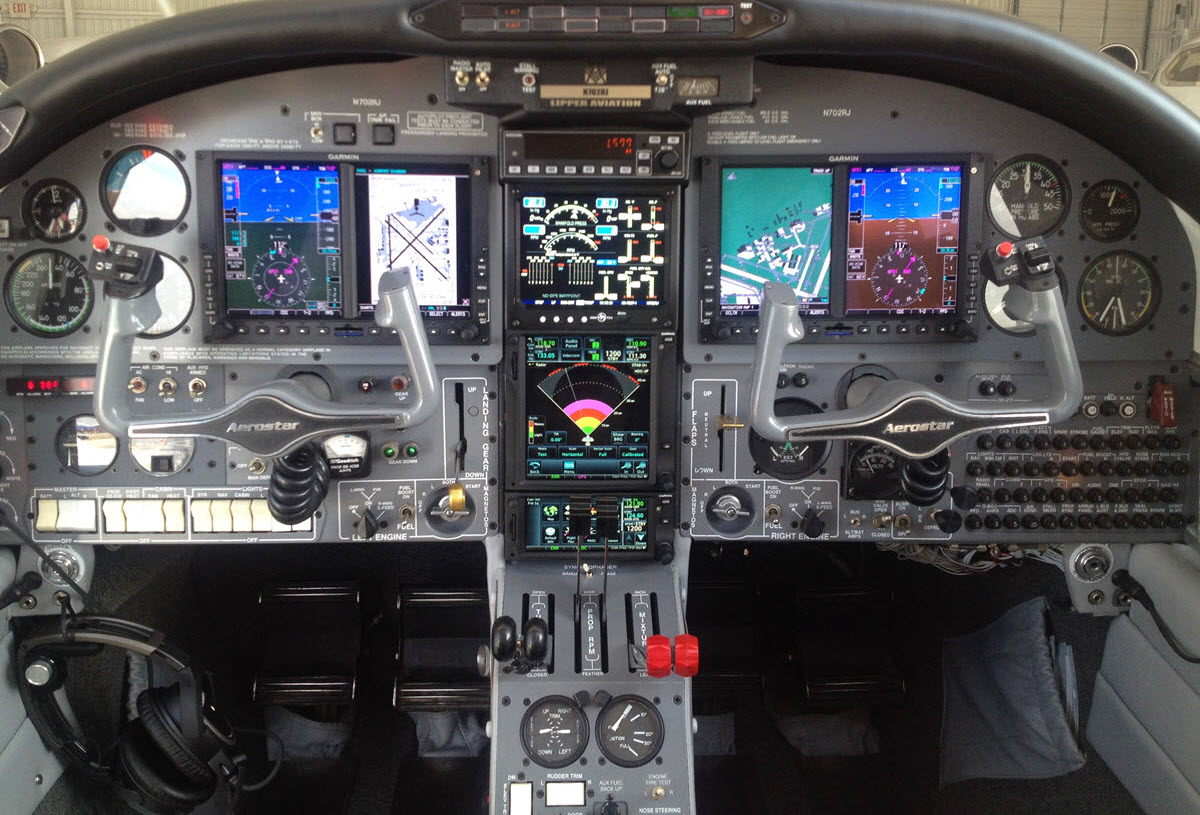
Panel space and ergonomics. JPI engine monitors can either be primary or advisory. As primary, you can remove any pre-existing gauge in the plane that offers the same information. Choose placement where the engine parameters are easily scanned.
Training and procedures. Because you’ll have more data, you (and any pilot flying your plane) should become familiar with what “normal” looks like. Don’t just install and ignore—it’s the regular review of data, recognition of trends, and timely action that make the difference.
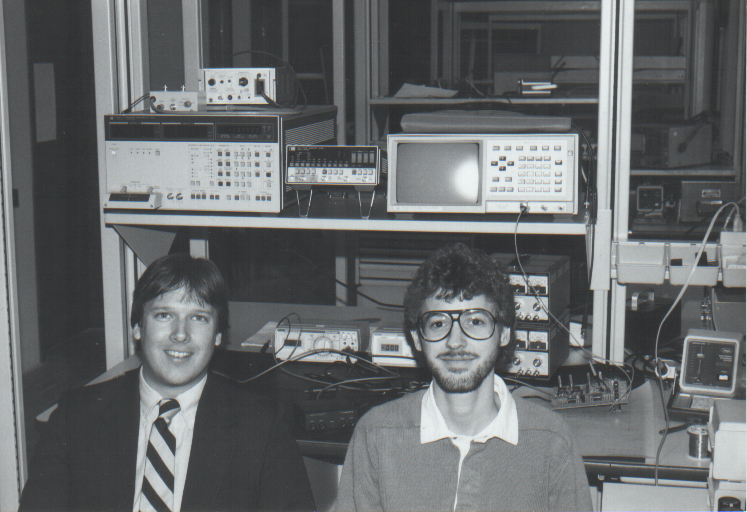
Founded in 1986 in Huntington Beach, California, J.P. Instruments was established by mechanical engineer and former Pratt & Whitney test engineer Joseph Polizzotto. Drawing on his expertise with thermocouples and instrumentation, he created the company’s first product—the Scanner™—while flying his Cessna 172. Today, JPI is a world leader in aircraft engine-data management systems, fuel-flow instrumentation, and precision probes and sensors, trusted by pilots and mechanics for innovation, accuracy, and service. Contact JPI at JPInstruments.com or 800-345-4574.