By Rocky Landsverk
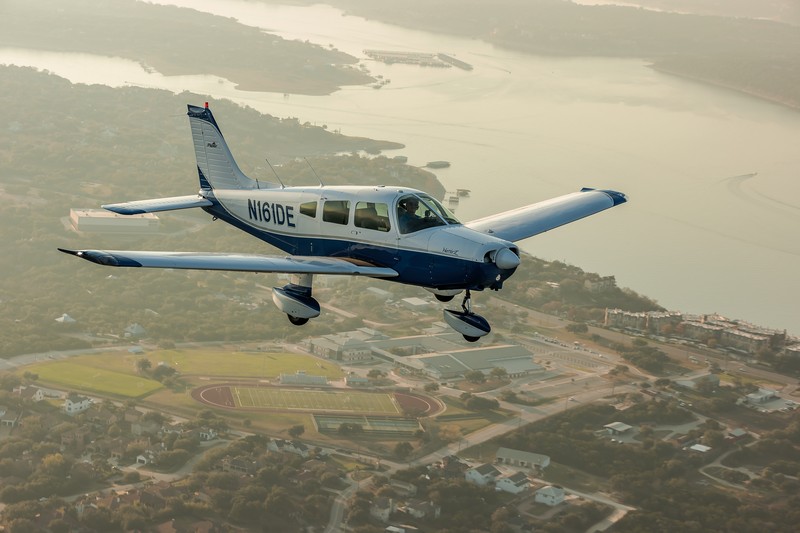
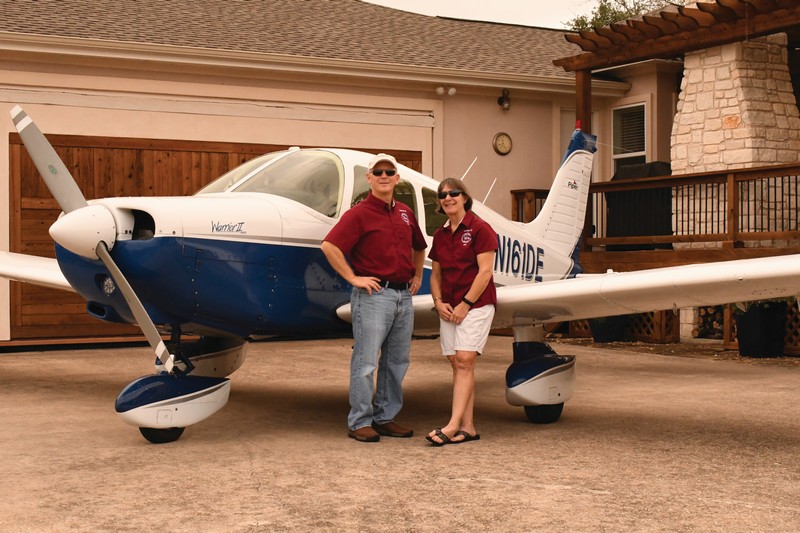
Have you been mostly done upgrading your plane since 2015? If not, you might be just a bit jealous to learn that Ed and Dori LeBlanc of Austin, Texas, have had their 1978 Piper Warrior II 161 since 2008 and upgraded and updated it to the point that they’ve been very comfortable with their plane since 2015.
If you’re wondering how somebody could have completed ADS-B by then on a plane from 1978, well read on, we’ll discuss it later. And the exterior, interior, and engine have all been overhauled.
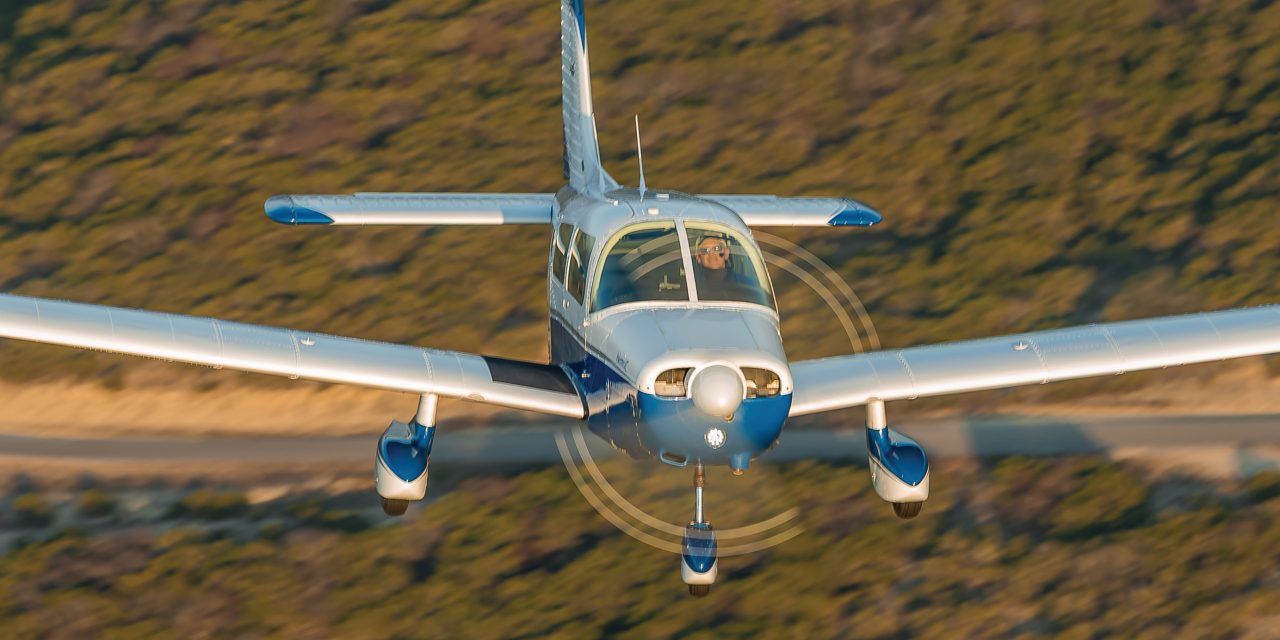
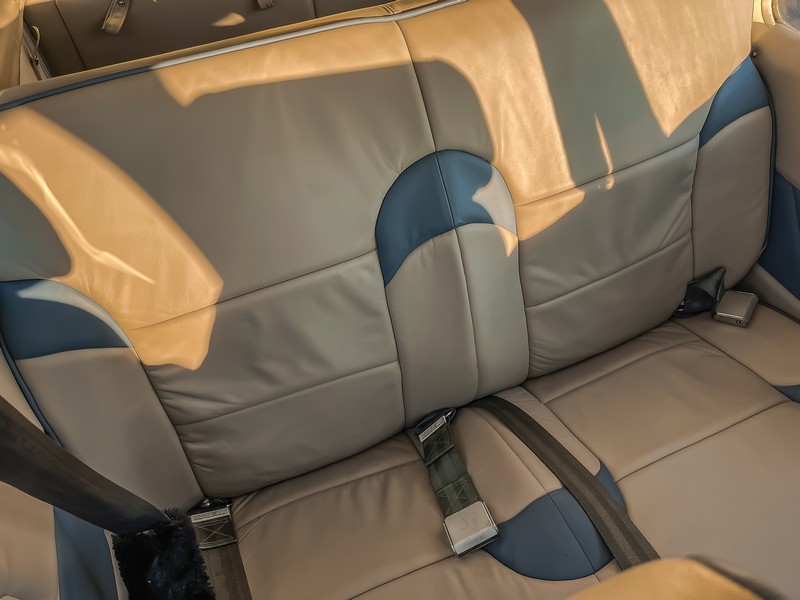
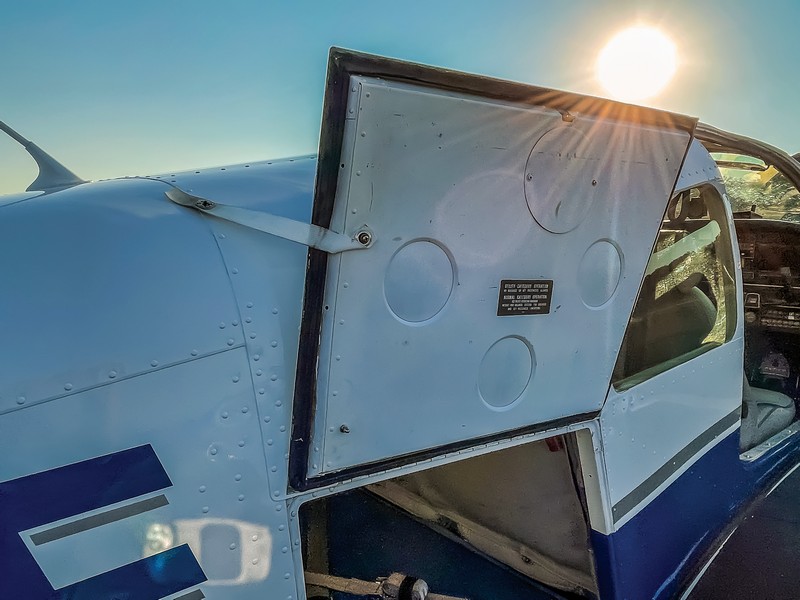
It’s not a fancy plane, but as you can see from the photos, it is very nice-looking. And it’s not a jet, but it’s fast enough to go cross-country and has a 180-hp engine. For somebody like Ed who, with a twinkle, calls himself “cheap,” we can all agree we should all be so frugal if this is the result.
Warriors vs. Archers
Ed said he found this plane in April 2008 via a broker in the Phoenix, Arizona, area. Note that this plane is actually a Warrior II (a PA-28-161 is a Warrior II; the earlier PA-28-151 is technically called a Warrior) but for simplicity’s sake in this article, we’re going to call it a Warrior.
“I looked at Warriors and Archers just because my background, my training, was in PA-28s and I was comfortable with them,” he said. “At the time, Archers were about $20,000 more than a comparable Warrior.”
When he first saw this plane, he liked that it had the Arch/Warrior STC, which is similar to the Bold-Warrior STC. “It has the 180-hp engine in it, so it was the best of both worlds, but it was priced closer to a Warrior than an Archer,” Ed said. The engine is not modified to 180 hp; it’s simply a 180-hp engine. “This engine is a Lycoming O360-A4M, which is the one the 1978 Archer would have had at that time.”
The Warrior and the Archer are similar airplanes. “The biggest difference is the engine,” Ed said. “The Archer has 180-hp engine versus the Warrior’s stock 160 hp. The Archer has a little bit higher gross weight, about 110 pounds more. I think it’s 2,550 (mine with a paperwork STC is still at 2,440 pounds). I couldn’t up the gross weight with the STC for the engine; they left it at 2,440.”
That gross weight issue is one reason that some people do not upgrade the engine; the larger engine weighs about 30 pounds more, and doesn’t increase the gross weight, so some pilots don’t bother. But Ed and Dori don’t often carry anybody but themselves.
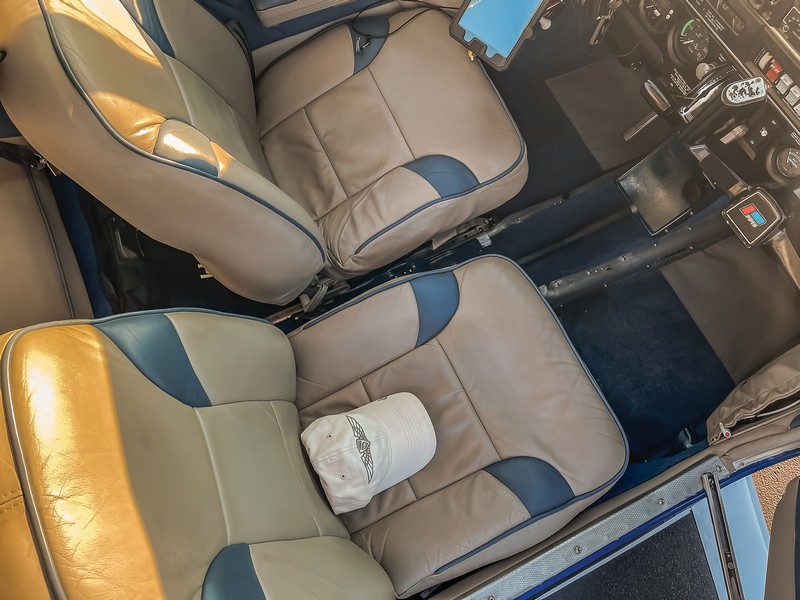
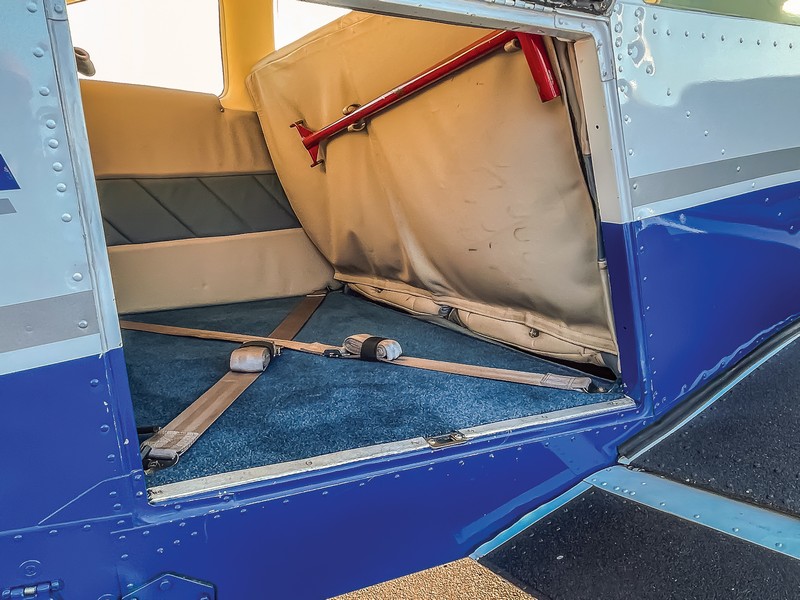
Other than the engine, in terms of differences, he said, “the Warrior has a bench seat in the back instead of the pop out bucket seats. The other really nice thing is the Warrior engine cowl has big, long piano hinges, so you can open up both sides and see the whole engine, versus just a little oil door for the Archer.”
There are a couple other minor differences, like the size of the nose-wheel tire, but other than that, they’re pretty much the same airplane. “The interior is largely the same,” he said. “The wings are identical. The differences are primarily the engine, the back seats, and the cowls.”
Changes and Upgrades
As we noted at the start, this plane has been in great shape for almost seven years now. But it wasn’t that way when he bought it in 2008. “The year that I bought it, I had a big annual — new tires, new ignition switch, new battery, new brakes,” he said. “I had them install an engine monitor as well, and after I got the annual done, I went to an avionics shop and got a pretty good upgrade on the avionics. Remember now, this was 2008.”
In other words, “a pretty good upgrade on the avionics” didn’t mean glass panel.
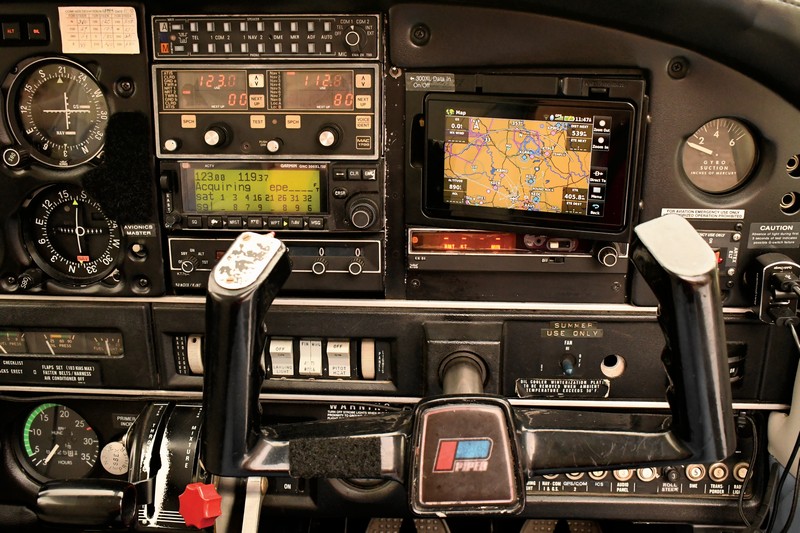
“I don’t have a glass panel, and I’m not sure I miss it,” he said. “It had an old Trimble GPS in it, which had no moving map on it — it was purely numbers on there. So I updated that to an older Garmin 300 XL, which is actually very long in the tooth now, but back then it was a lot less expensive than the Garmin 430s that were kind of hitting their prime.
“For the same money, I ended up getting that 300 XL plus GPS roll steering, the thing that couples the autopilot to the GPS, as well as a Garmin 396 handheld mounted in the panel and connected to the 300 XL. I got all that installed for about the same price as if I had just put in the basic Garmin 430. And that’s still the panel I have today.”
One minor update came more recently — the Garmin 396 has been upgraded to the Garmin Aera 660. “It fits in the same panel space,” Ed said. “And with a Garmin GDL50 on the dash, I have radar weather on the 660 that’s as good as the XM weather I had in the 396. Plus, the GDL50 provides an Attitude and Heading Reference System (AHARS), which makes the 660 an excellent and affordable standby attitude indicator.”
Ed also added a new engine monitor more recently, a JP Instruments EDM 830 with outside air temp, fuel flow, and manifold pressure added. “Having the outside air temperature (OAT) plus manifold pressure (MP) enables it to calculate percent horsepower; otherwise, the MP wouldn’t add much value in a fixed-pitch-prop plane,” he said. “I added that a year ago, replacing a red-and-black JPI EDM 700 that was below the yoke. The 830 replaced a StrikeFinder lightning detector that had died. JPI had an upgrade path that made that pretty painless and cost-effective.”
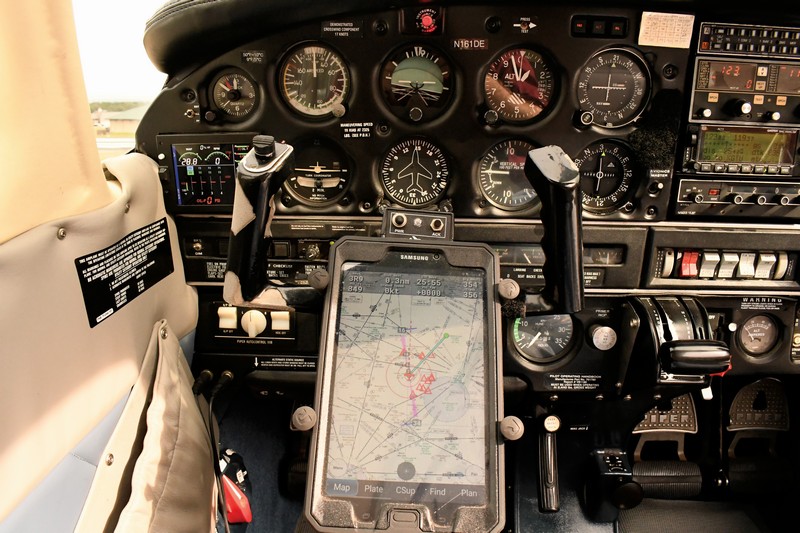
With an 8-inch tablet that he attaches to the yoke, Ed doesn’t really feel like he’s missing out on anything. His ADS-B In and Out is through a FreeFlight Systems RANGR (www.freeflightsystems.com), which is actually made in partnership with Trig.
“So I have a regular old Mode C transponder, a KT78A, and I have the FreeFlight RANGR, and the RANGR gets the information it needs from the old transponder,” Ed said. “I had that done in the summer of 2014. I was kind of an early adopter.”
And he’s glad he did it this way. “I get ADS-B In and Out. It doesn’t work with the Garmin stuff, but it works with a free app called Avare. I have a little $150 Samsung tablet from Costco, so I get maps and everything on there, and the FreeFlight feeds the ADS-B traffic on that tablet just fine. I have IFR charts and plates, it has moving maps, and traffic. The weather is not that good (on the tablet).”
So while the rest of the GA world was considering glass panels versus cheaper options, Ed already had an affordable solution that few people know about.
Exterior and More
The rest of this article & Warrior II Specifications/Performance can be seen only by paid members who are logged in.Have a website login already? Log in and start reading now.
Never created a website login before? Find your Customer Number (it’s on your mailing label) and register here.
JOIN HERE
Still have questions? Contact us here.