By Rocky Landsverk
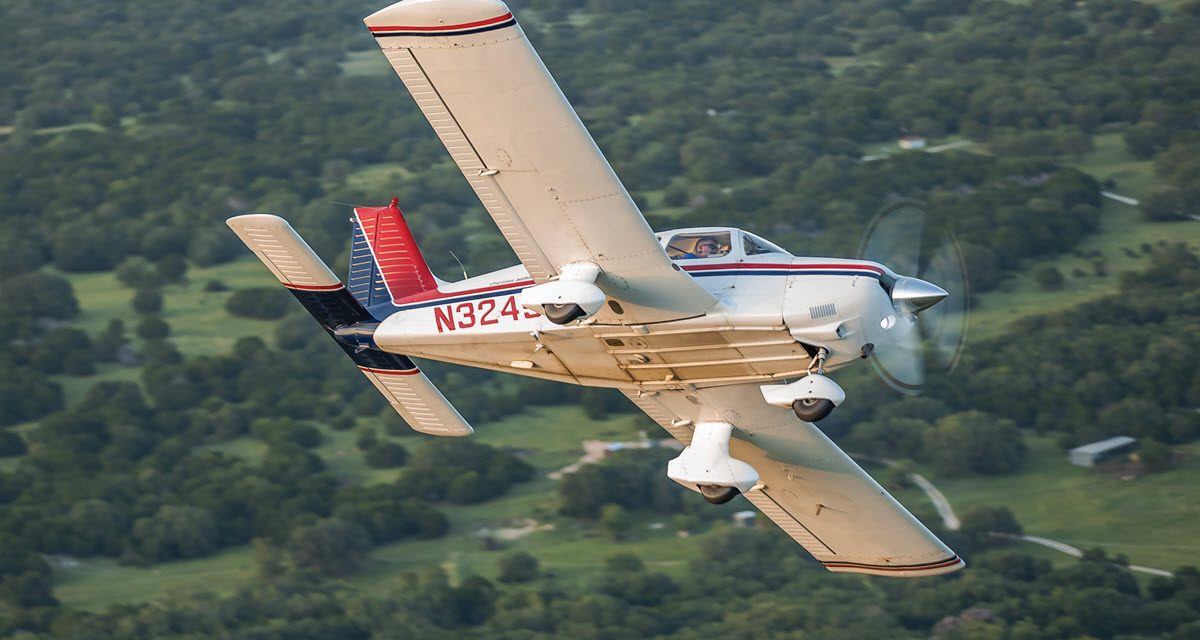
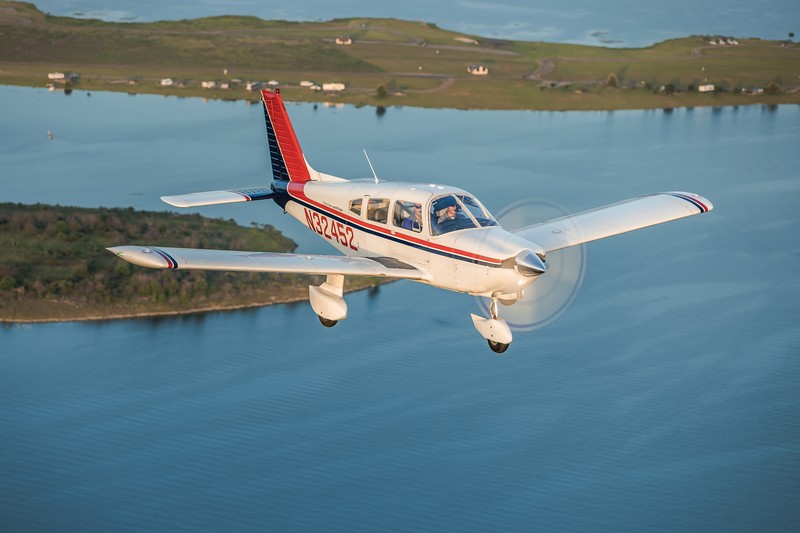
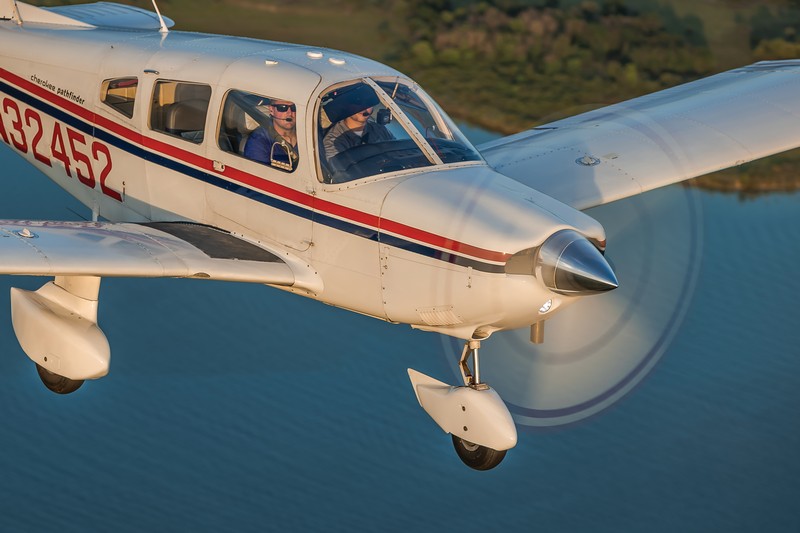
Photos of Shane Alcock’s 1974 Piper Pathfinder PA-28-235 by Jack Fleetwood (www.JackFleetwood.com).
Shane Alcock doesn’t disagree with the notion that the Piper Dakota — the fourth and final version of the 235 hp PA-28s — is a great airplane. Most people would say it’s an improvement over the Pathfinder, its predecessor.
The big question is whether the Dakota is worth the extra dollars. Dakotas are particularly revered on the secondary mar ket, in part because of their tapered wing, and they’re growing in price and value at a rapid clip, especially the turbo versions. They’re not very easy to find, either.
In fact, Alcock, who owns this month’s cover plane and lives and works for the Army in Texas, originally went searching for a Dakota. But so far, he’s more than happy with his choice — a 1974 PA-28-235 Pathfinder. “I was looking for a 236 Dakota,” he said. “The 236 has a lot of pedigree that goes along with it. But along with the pedigree came the price tag, in part because of its rarity. Some friends of mine were big fans of the 236 Dakota. And that’s where I kind of started. We found this airplane with a four-person flying club in Wyoming.”
Strengths of the Pathfinder
The top speed for a Pathfinder is 140 knots, while a Dakota is 148 knots. Of course, by now, most of these planes have mods and STCs ga lore, so that will be different for every plane you look at today. But in general, the Pathfinder is awfully close to a Dakota in almost all performance metrics. Most importantly, it’s a fairly comfortable four-person hauler.
“I don’t think the Dakota is much faster as far as performance goes,” Alcock said. “I wanted to have the ability to carry fuel, and I have a wife and two kids, plus their baggage. The four of us can climb in the plane, fill all four tanks, and go.
“Like this past Christmas, we went to go visit my mom in Florida, and we flew down there. I took off at 2,900 pounds, and we had a full baggage compartment, but I still had 100 pounds. My criteria for buying a plane was that I didn’t want to have to sacrifice fuel.”
How Pathfinders and Dakotas Differ
There are a few differences between the Pathfinder and the Dakota. “The Pathfinder was the last year of the Hershey-bar wing,” Alcock pointed out. “They moved to the tapered wing on the 236, and they went from four tanks down to two tanks.”
Alcock’s Pathfinder has the O-540 engine, just like all 1974-77 Pathfinders do. Actually, non-turbo Dakotas do, too.
And if you still want a Dakota? “One, good luck finding one,” Alcock said. “And two, I hope you can afford it. It is a great airplane.”
Alcock is also a flight instructor and he said in general, most pilots won’t notice a serious difference between the Hershey-bar wing and the tapered wing. It improves the performance but not necessarily the characteristics. “There are a few extra knots and lower stall speed, but as far as going flying, both wings produce lift, and I get to go where I need to go,” he said.
Alcock’s Pathfinder Panel
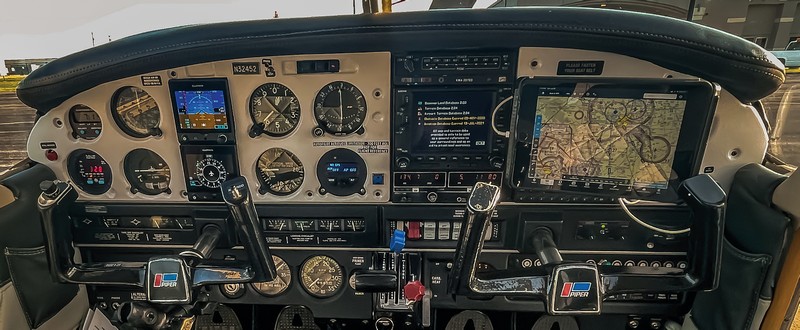
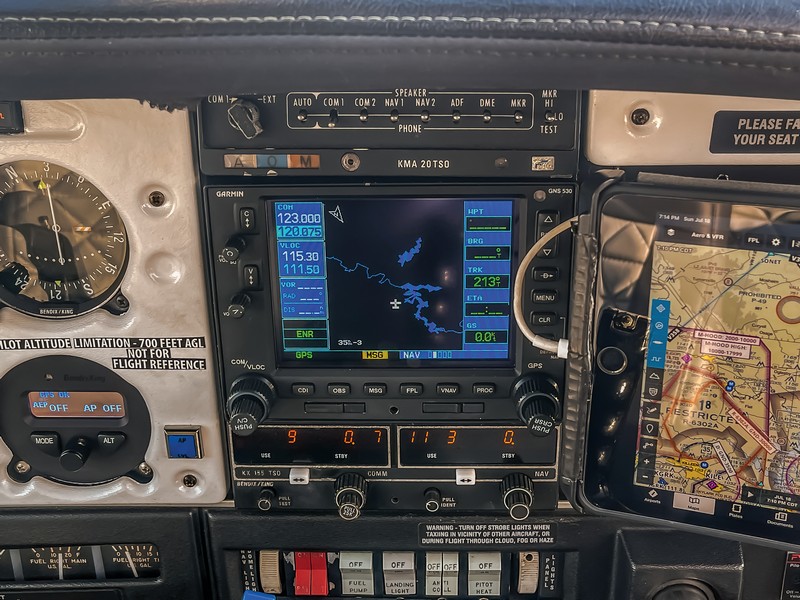
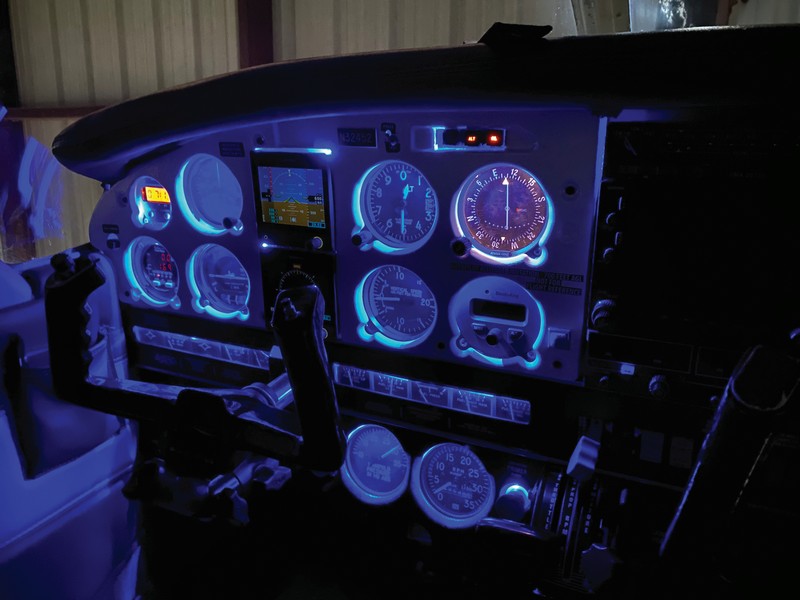
Alcock said he “grew up on a glass panel,” so he added even more glass to the plane he bought, which had plenty already. “When I bought the plane, it had the Garmin 530 WAAS, it had the KX-155 navcom, the GTX-327 transponder, and the KMA 20 audio panel,” he said. “The avionics stack to the right was in the airplane when I bought it.
“What I’ve done is installed the G5s, almost immediately after I bought it. I’ve got the magnetometer and GAD-29. We just in stalled the BendixKing AeroCruze 100 autopilot. I removed the old autopilot, which was just a basic wing-leveler. It was a good autopilot, but it was an old analog. I’ve removed my vacuum system, so the airplane no longer has a vacuum system.”
He gained about 30 pounds from that, he said. He also uses an iPad, and he said he uses it a lot. “It’s basically my moving map in my ADS-B,” he said. “I have ForeFlight and I’ll hook up my Fore Flight Sentry (ADS-B receiver) and pull up weather and traffic.”
The Paint Job
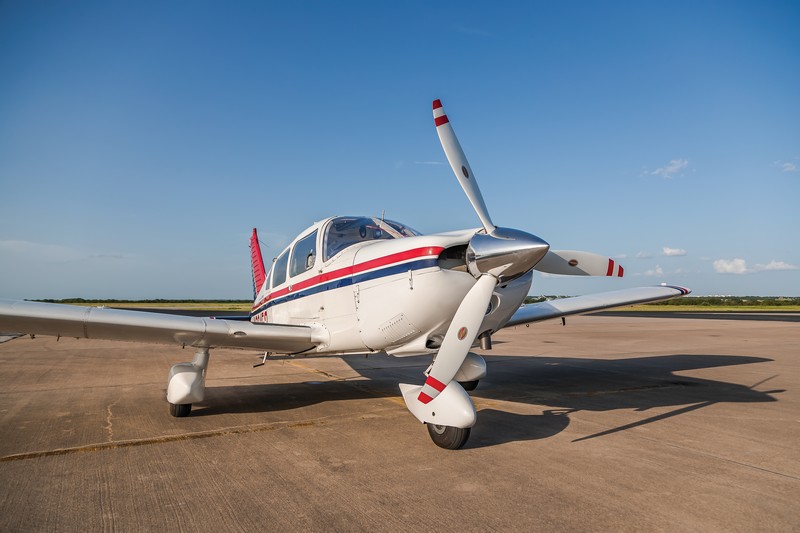
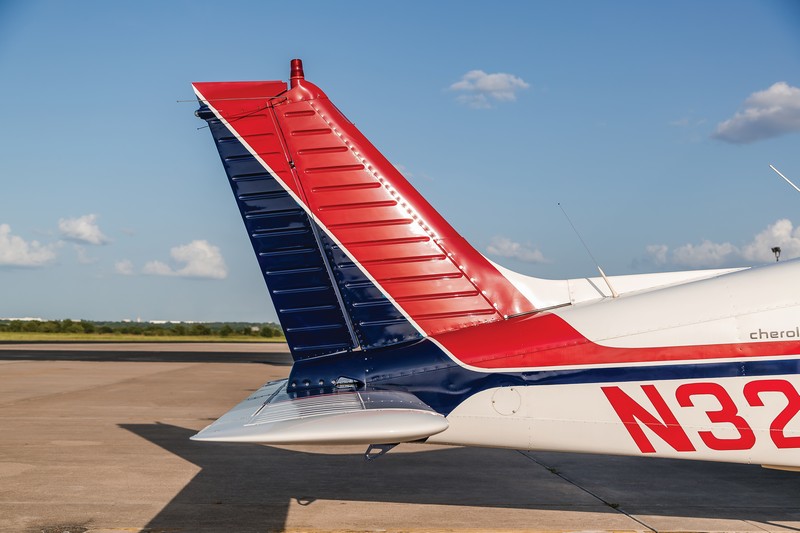
Alcock said he likes to “live in this century,” so he’s been slowly updating his 1974 plane to look like it’s newer. That didn’t mean a whole-plane paint job — “It’s a metric ton of money to repaint an airplane; it’s almost half the value of the plane to repaint it” — but he at least wanted to change the colors of the stripes. “The stripes were red and blue, but it was a baby blue and a much lighter shade of red, very 1970,” Alcock said, so he told his A&P “I want a dark blue and I want a fire engine red. He said that was gonna look funny. But later he said I was right.”
The plane doesn’t look almost 50 years old — in its pictures, anyway. “If you get up close, it looks its age,” he said.
Other Upgrades
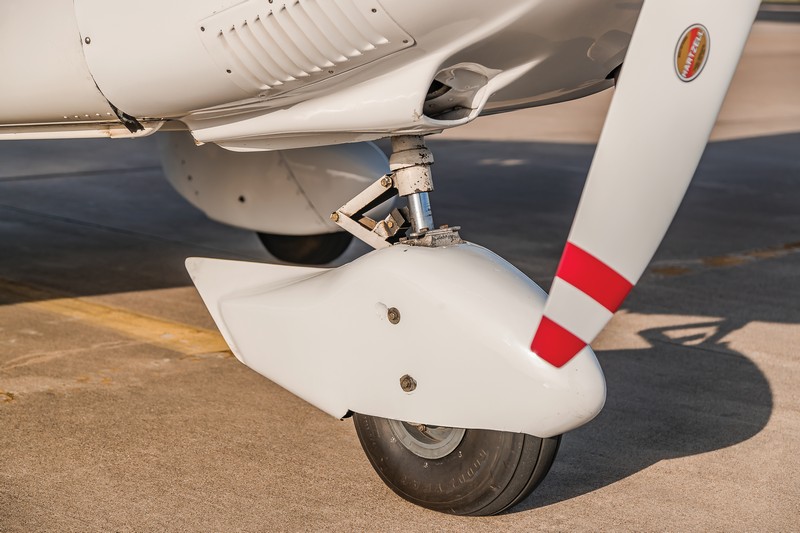
The prop is not original, and it’s not the original color. “It’s a scimitar Hartzell prop,” Alcock said. “I like white. It was gray with white tips, and it didn’t match the plane at all.” There have been numerous other speed mods and STCs. The wheel fairings are actually for a Dakota, he said. “They got them approved in the late ’90s or early 2000s, even though they’re for a different plane.”
You’ll also see an interesting photo of the panel at night. Yes, those are blue LEDs. “I was trying to reduce electrical load in the aircraft and switch to LEDs,” Alcock said. “So I went out on a limb and thought, ‘What if I put in blue bulbs instead of white? What would it look like?’ And I really like it. I have to take some bulbs out because it’s actually too bright.”

It Is Nose-Heavy
If you’re thinking about a Pathfinder or are new to one, here’s what you need to know first, according to Alcock. First and foremost, it’s not a 140 — you need to be prepared to practice flying this model before you buy one.
“In comparison to other PA-28s without the six-cylinder engine, it is very nose-heavy. Also it will require a high performance endorsement,” he said, noting he had no 235 or 236 experience when he bought the plane, but his insurance checkout flight went fine, in part because he had high-performance experience in other planes already. “It’s also a constant-speed prop, so you’re going to have to have some knowledge on that.”
Alcock teaches students in a 140 and said, “it is super-easy to fly a Cherokee 140. It’s not very nose-heavy at all. But the 235 has a six-cylinder engine hanging off the nose. Even with the bigger stabilator in the back, which they use to compensate for the engine, it’s heavy.”
He also suggested practicing simulated emergency engine-out and “see how fast you fall out of the sky. With the Hershey-bar wing and the heavy nose, you’re coming down pretty quickly.”
Do Your Research
The journey to your next plane is going to go through many phases. Alcock is happy with where he arrived. He suggests you have an open mind during the process. “We found a 235, I believe it was a ’73 Charger, but we found out that it had a had a lien on it from two owners prior, and the lien holder was dead, so that turned into a nightmare,” he said. “So through research over time, I found this 235, and I’m happy with it.” Alcock flies planes for the Army, so that’s an opinion worth hearing.