How a Small Flying Club Created a Big Aviation Community
By Stephen Mayeux and John Rees
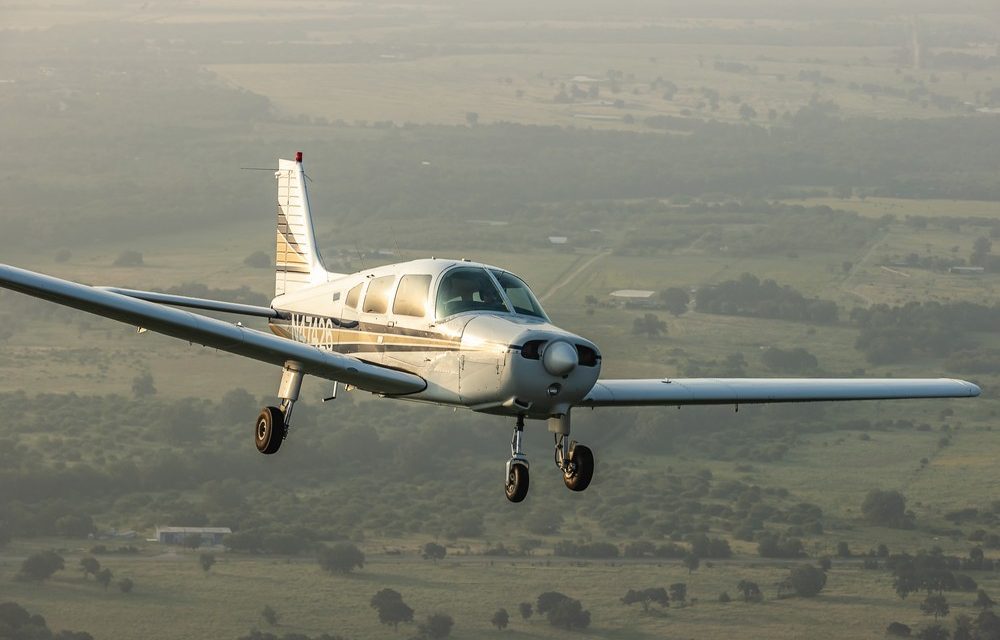
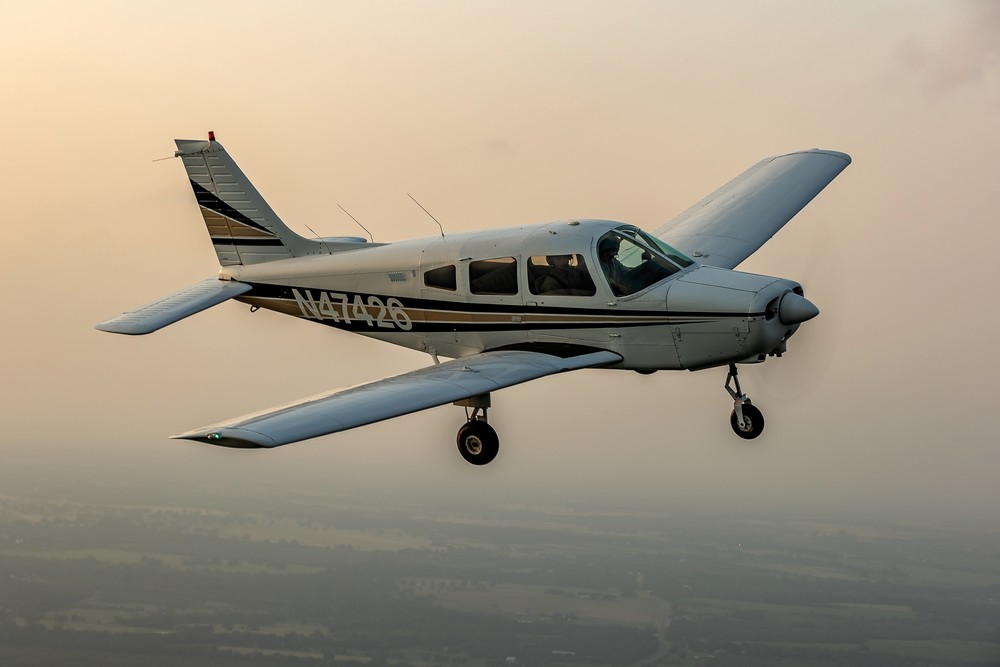
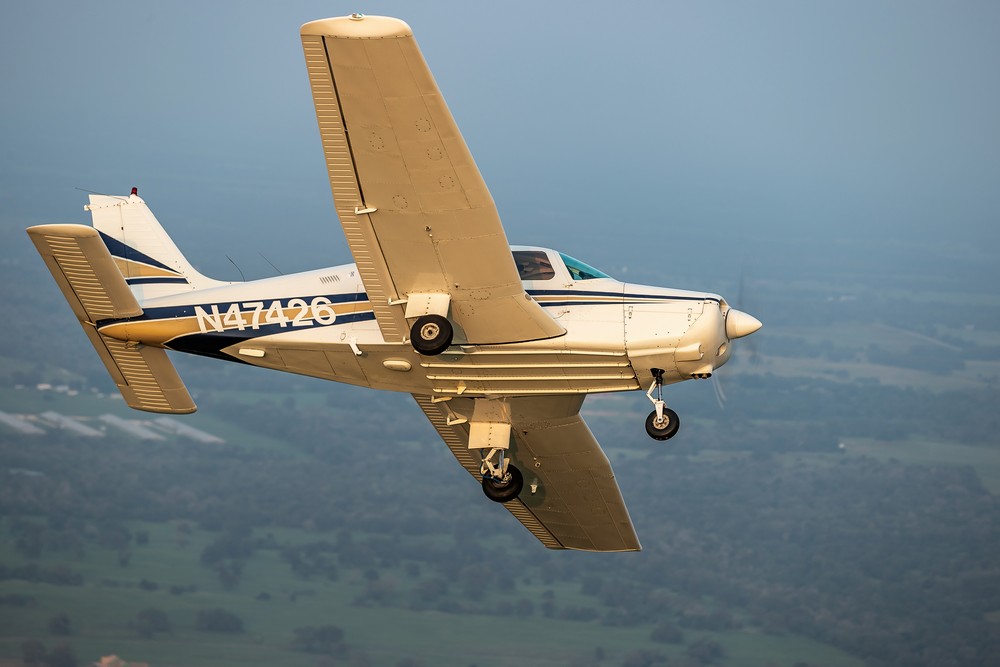
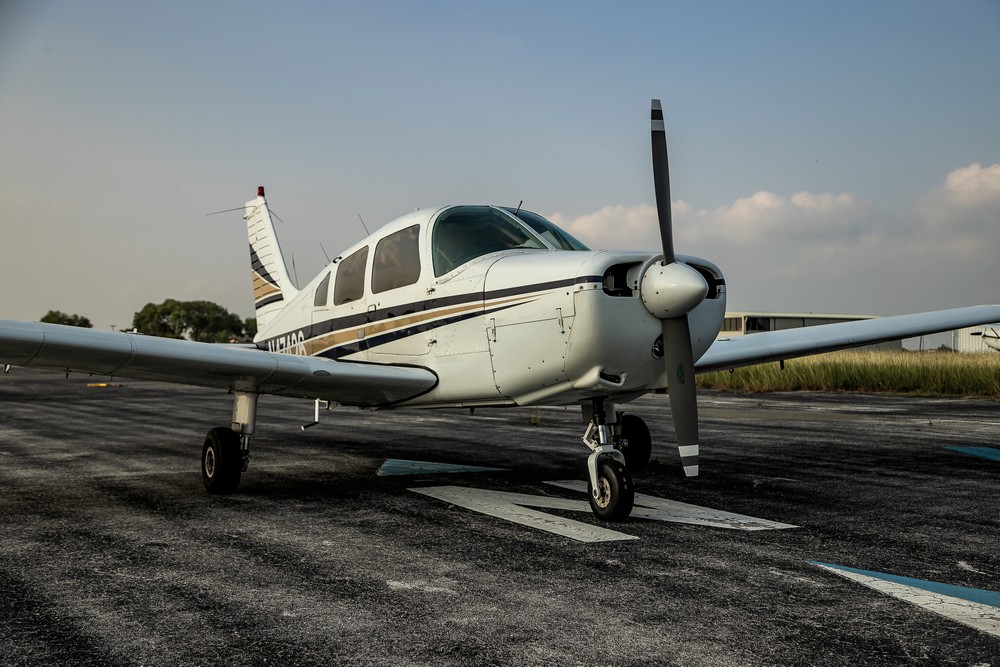
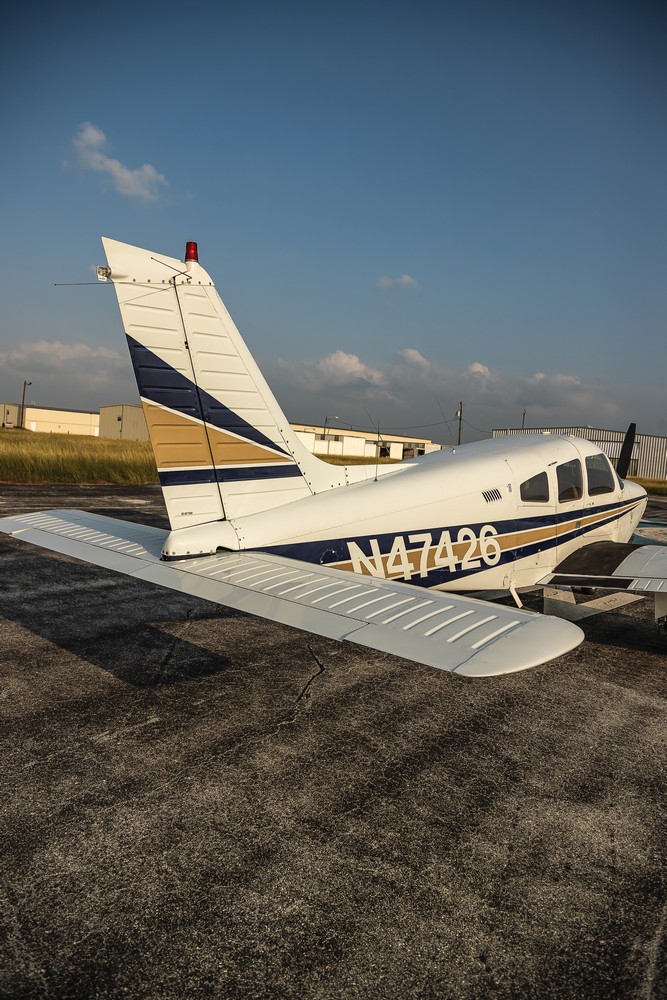
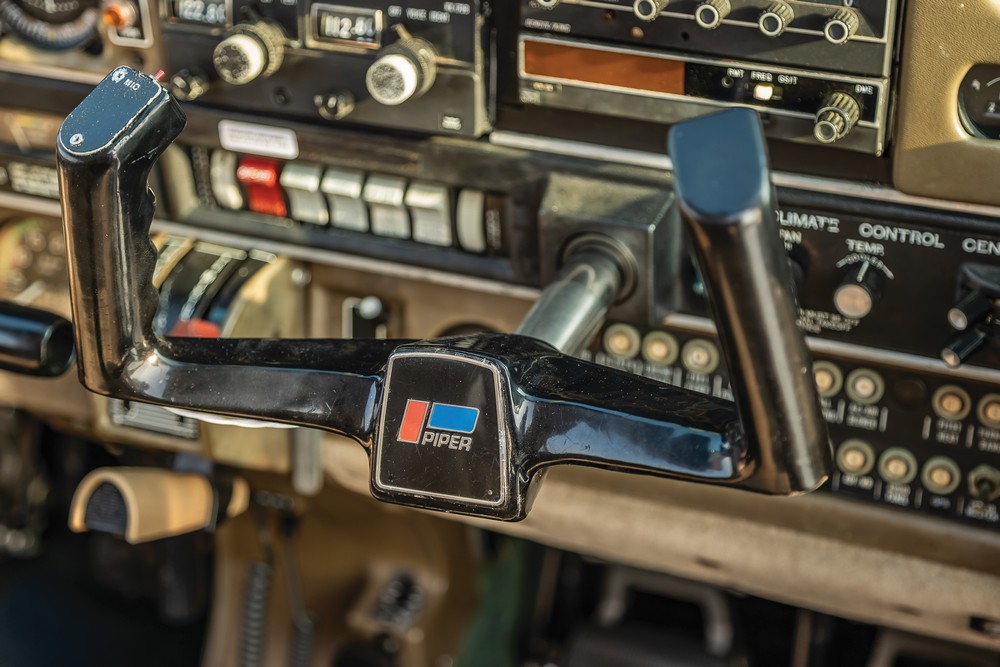
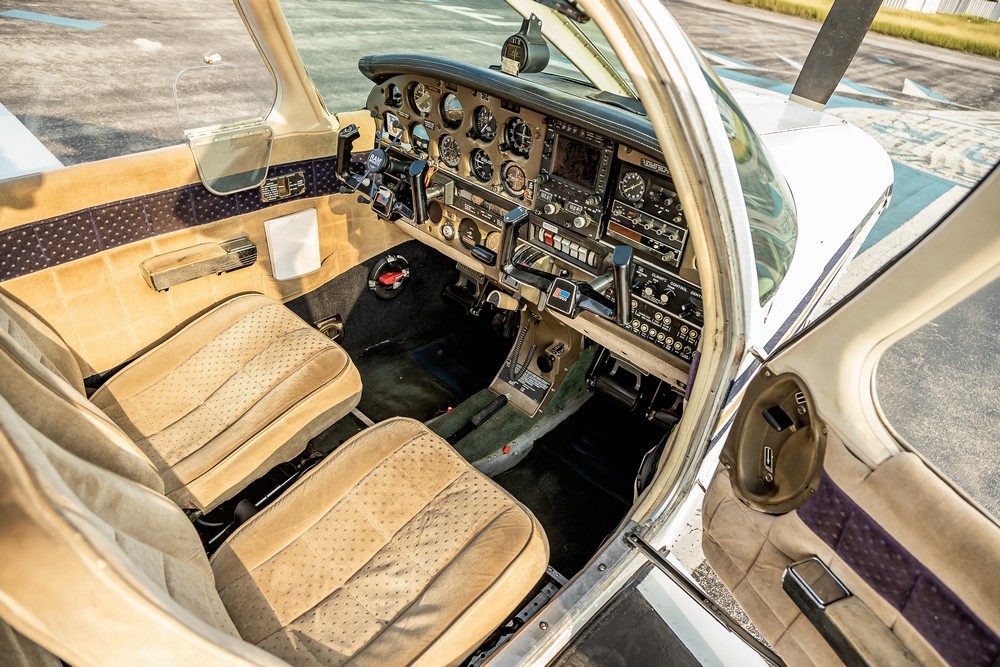
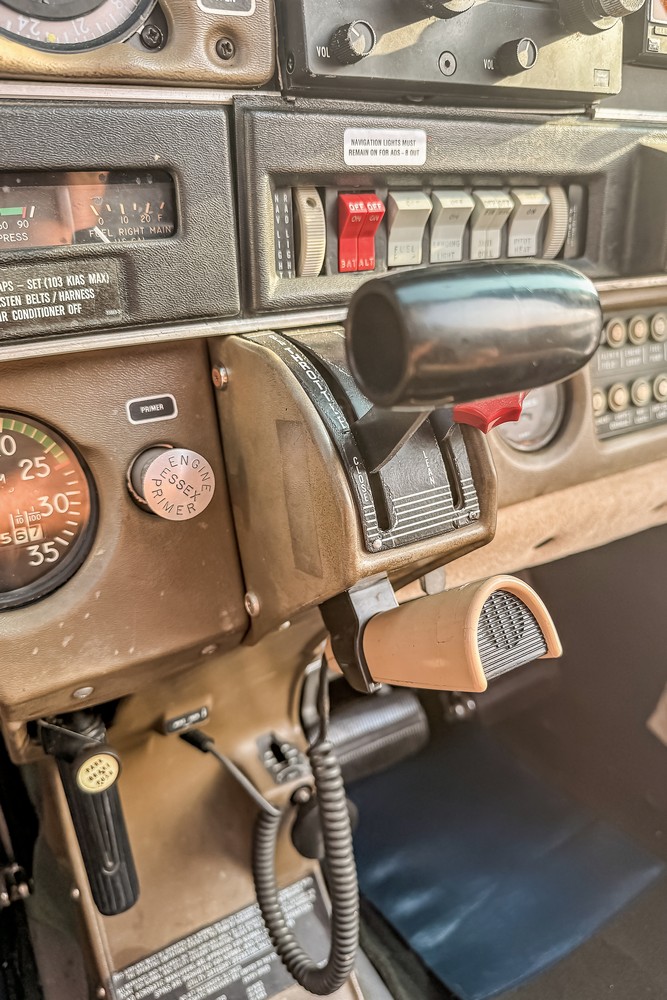
Photos of the 1977 PA-28-161 (Warrior II) by Jack Fleetwood (www.JackFleetwood.com).
On the second Saturday of every month, the Lockhart Flying Club hosts a fly-in breakfast. By the time the coffee is brewing and the pancake griddles are hot at Lockhart Municipal Airport, airplanes are already taxiing in and the clubhouse is filling up.
A student pilot is talking about cross-country planning. A young family is watching airplanes take off and land. Kids wander in and out of the simulator room trying to perfect that next landing. Club members are chatting around the coffee pot discussing future club ideas or planning the next trip.
It looks casual, and that’s exactly the point.
That idea has turned a small-town Texas flying club just outside of Austin into the busiest aviation community at the airport, with roughly 50 active members, a growing social scene, multiple aircraft, monthly events, and a waiting list of people who simply want to be around aviation.
And perhaps most importantly, it has shown that a successful flying club doesn’t require wealthy members, brand-new aircraft, or a large airport. It requires creating an aviation culture, smart operations and a commitment to keeping aviation accessible.
Start with Community, Not Airplanes
Many clubs begin with a group of pilots splitting ownership costs. The Lockhart Flying Club evolved differently.
The club discovered early on that the real value was not only cheaper flying. It was creating a reason for people to stay connected to aviation.
Some members fly every week. Others are inactive pilots who simply miss the airport environment. Some are building hours toward careers. Others are retired and finally have time to fly again. Several joined before they even had their certificates.
That diversity became a strength instead of a challenge.
Monthly pancake breakfasts, movie nights, safety seminars, group fly-outs, hangar cookouts, and informal hangar flying turned the airport from a place people visited into a place they belonged.
The club even created a low-cost social membership option for inactive pilots who wanted access to events, the clubhouse, the simulator, and the community without needing to fly the airplanes.
The move to drive membership surprised a lot of people at first. Instead of asking, “How do we maximize airplane use?” the club asked, “How do we keep people engaged in aviation?” The result has been stronger retention, better volunteer participation, and a healthier culture overall.
Keeping Flying Within Reach
The biggest barrier to general aviation is not lack of interest but rather cost. For a lot of people, and increasingly for younger pilots, flying simply feels out of reach. A flying club can change that, but only through deliberate choices about how it operates.
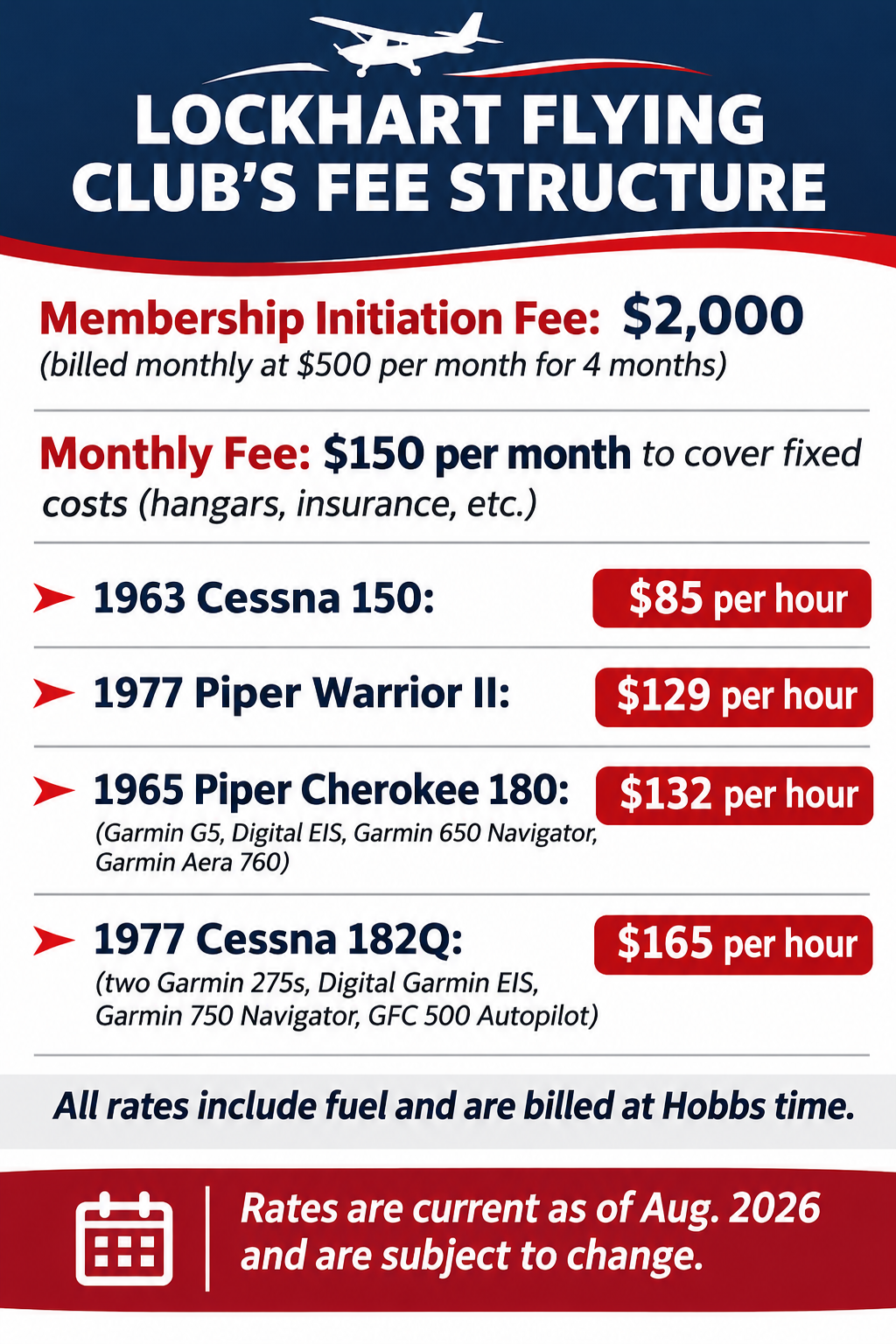
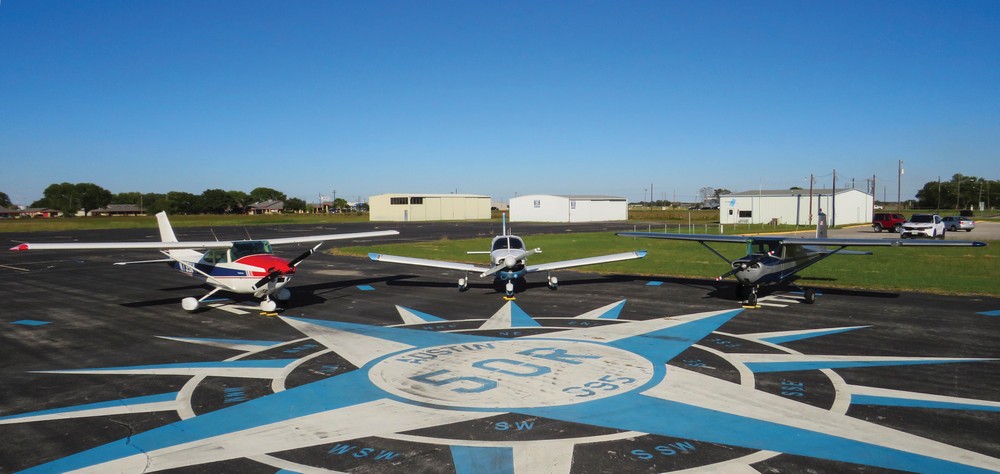
The Lockhart Flying Club runs a practical fleet, with each airplane matched to a different kind of flying. The club’s Cessna 150 keeps time building and primary training affordable. Its Piper Warrior II handles local flying and flight training, along with a Piper Cherokee 180 for more serious utility trips. And the crown jewel of the club’s fleet, a technologically advanced Cessna 182Q, with modern avionics and autopilot, gives members a capable cross-country airplane without the cost of owning one outright.
Hourly rates stay well below what comparable rentals cost in most flight schools in the area. And members feel a sense of ownership and pride in the airplanes because they collectively maintain the operation, changing behavior. Members clean the aircraft after flights. They volunteer for committees. They mentor newer pilots. The airplanes stop feeling like rentals and start feeling like shared cherished belongings.
Build a Clubhouse that People Want to Use
One of the most important decisions the club made had nothing to do with airplanes. It invested in space. What began as a simple airport hangar grew into a clubhouse with lounge space, flight simulators, Wi-Fi, worktables, coffee, and room for events. A loft area overlooking the airport is still to come.
The clubhouse became the heartbeat of the organization. A pilot who stops by just for a minute often stays two hours — long enough that someone at home wonders if the airplane went missing. A new member meets people right away. Families feel welcome. Student pilots get exposure to experienced aviators simply by being around them.
Too many airports unintentionally isolate people. The Lockhart Flying Club did the opposite, designing recurring events that lower the barrier to showing up. Monthly pancake breakfasts, fly-outs to nearby airports, safety presentations, and club movie nights give people a reason to come back.
Transparency Builds Trust
Flying clubs tend to fail for predictable reasons. Communication breaks down. Finances get murky. Rules get enforced unevenly. Scheduling the aircraft becomes a source of friction. And the people running things burn out.
The Lockhart Flying Club tackled these problems early by making transparency a priority. Members understand how hourly rates are calculated. Fuel surcharges are explained openly. Insurance costs, maintenance reserves, and hangar expenses are all visible. Board discussions happen out in the open, and regularly. That kind of openness builds buy-in, even when the decisions are hard.
Flying Clubs Are the Future of General Aviation
Aircraft ownership costs are rising. Insurance remains difficult. Hangar shortages are common. Flight training keeps getting more expensive nationwide. Flying clubs may be one of general aviation’s best answers to those pressures — not because they make flying free, but because they make flying sustainable.
The Lockhart Flying Club has shown that affordability alone is not enough. The clubs that thrive are the ones that build community alongside access.
Pilots want more than Hobbs time. They want friendship and mentorship. They want shared experiences, a sense of purpose, accessibility, and a place to belong. The airplanes simply become the vehicle that brings people together.
And on any given day in Lockhart, the “Barbecue Capital of Texas,” that idea is thriving and paving the way for the future of general aviation.
1977 Piper PA-28-161 (Warrior II) Performance & Specifications
The Performance & Specifications can only be seen by paid members who are logged in.Have a website login already? Log in and start reading now.
Never created a website login before? Find your Customer Number (it’s on your mailing label) and register here.
JOIN HERE
Still have questions? Contact us here.
| Performance | Value |
|---|---|
| Top Speed | 125 kts |
| Cruise Info – Optimum at 9,000 ft. | |
| Speed | 121 kts |
| Range | 580 sm |
| Endurance | 4.8 hrs. |
| Cruise Info – Economy at 9,000 ft. | |
| Speed | 97 kts |
| Range | 620 nm |
| Endurance | 6.4 hrs. |
| Stall, Clean | 50 kts |
| Stall, Flaps | 44 kts |
| Take-off Roll | 900 ft. |
| Take-off 50 ft. | 1,750 ft. |
| Climb Best Rate | 710 fpm |
| Speed, Best ROC | 79 kts |
| Speed, Best Angle | 63 kts |
| Approach Speed, Clean | 70 kts |
| Approach Speed, Flaps | 63 kts |
| Landing, 50 ft. | 1,150 ft. |
| Landing Roll | 580 ft. |
| Service Ceiling | 13,000 ft. |
All specs and performance numbers are drawn from
official sources, often the aircraft flight manual or the
manufacturer’s website. Every vintage airplane is different;
do not use these specs to plan a flight.
| Specifications | Value |
|---|---|
| Engine | Lycoming O-320-D2A |
| Horsepower | 160 |
| Displacement | 319.8 cu. in. |
| Min. Octane Fuel | 100LL |
| No. Cylinders | 4 |
| TBO | 2,000 hrs. |
| Propeller | 74DM6-0-60 |
| Type | SENSENICH |
| Prop Diameter | 74 in. |
| Landing Gear | Fixed/Tri |
| Mains | 6.00 x 6 |
| Nose Tire | 5.00 x 5 |
| Gross Wt. | 2,325 lbs. |
| Ave. Empty Wt. | 1,391 lbs. |
| Ave. Useful Load | 1,119 lbs. |
| Baggage Capacity | 200 lbs. |
| Total Fuel, Std. | 50 gals. |
| Usable Fuel | 48 gals. |
| Wingspan | 35 ft. |
| Length | 23 ft. 9.6 in. |
| Height | 7 ft. 3.6 in. |
| Wing Area | 170 sq. ft. |
| Wing Loading | 13.7 lbs./sq. ft. |
| Power Loading | 14.5 lbs./hp |
| Doors | 1 |
| Seats | 4 |
| Cabin Width | 42 in. |
| Cabin Height | 49 in. |