By Michelle Adserias
Martin Kemp carried a latent hope, one that just needed the right circumstances to become a reality. He wanted to learn to fly since he was a child. “My parents flew gliders in Germany before I was born,” Martin explained. “My mum started first.” When they returned to the United Kingdom just before Martin was born, they gave up flying. However, they spoke of their airborne adventures so fondly, Martin also wanted to learn to fly but it was cost-prohibitive in England.
It wasn’t until he and his wife, Cassandra, visited Las Vegas many years later that his hopes were reignited. “My wife bought me a ride-along with Sky Combat Ace and I ended up flying an aerobatic monoplane; the Extra EA-300. It was an amazing reconnection with flying, but no one expected I would be able to continue.”


Martin was 40 years old at that time. He didn’t foresee getting a job as a product manager with Foreflight, just as they entered into an Alliance with Jeppesen. Nor did he anticipate he would be required to get his PPC — or that Foreflight would offer a stipend to help with flight school costs. Suddenly, his seemingly impossible dream of flying was within reach. Martin wasted no time getting started.
He began his training in 2017 at Austin Bergstrom International Airport (KAUS) in Austin, Texas. It took him a year to complete his initial certification in a Cessna 172. He found the cockpit environment made it cumbersome learning to communicate with air traffic control. To hone his skills during a three-month hiatus from physical training using PilotEdge coupled with a flight simulator, he learned to handle everything from flight clearance through landing without step-by-step direction from his instructor.

From a PA-28 to a PA-32
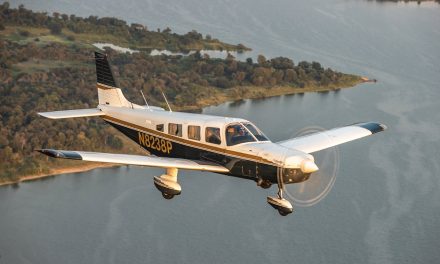
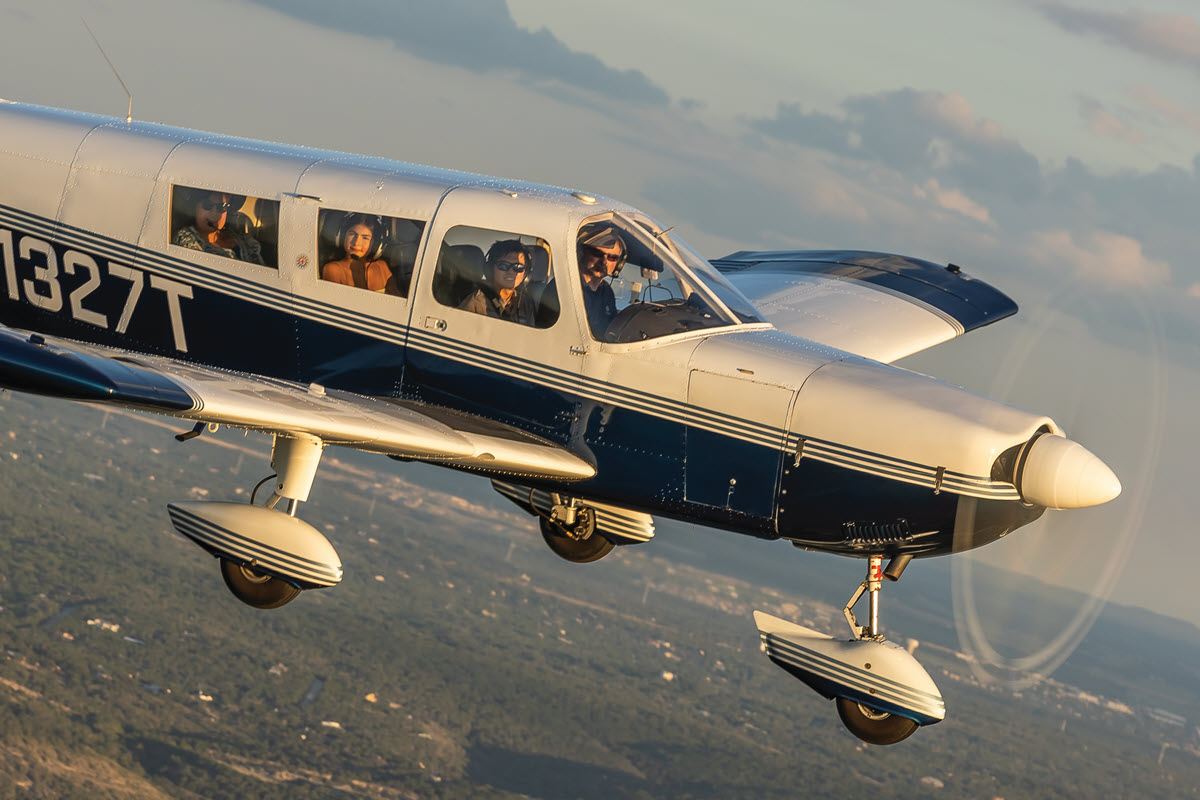
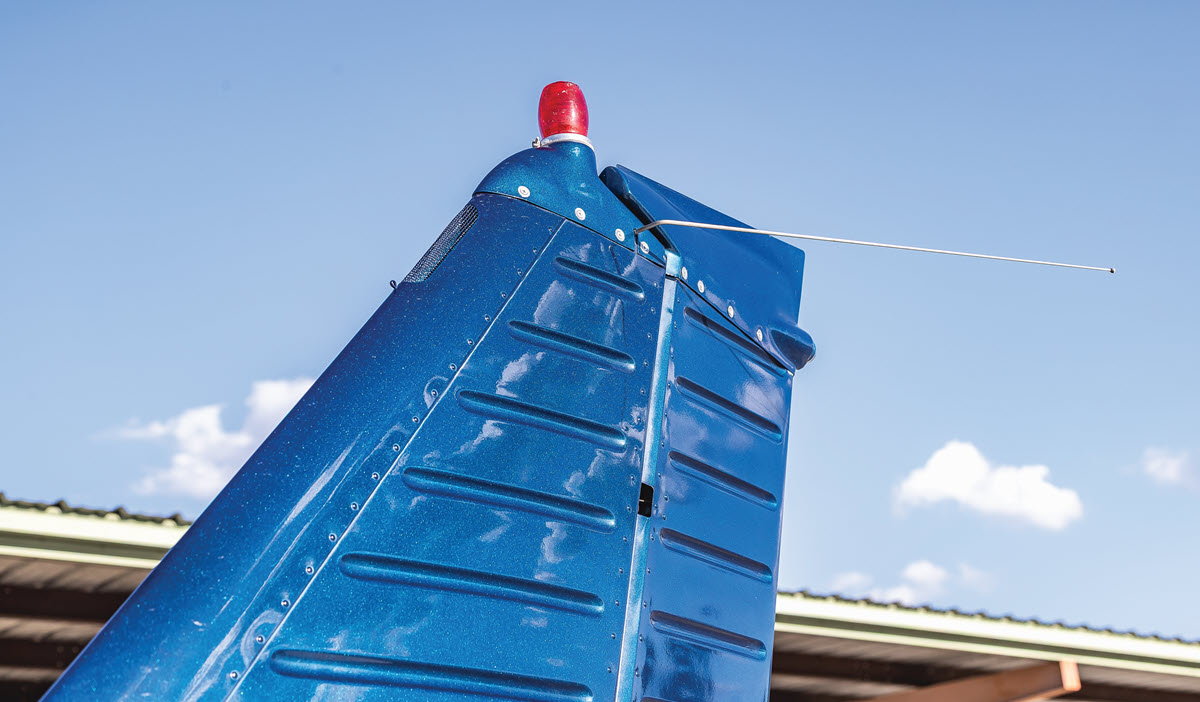
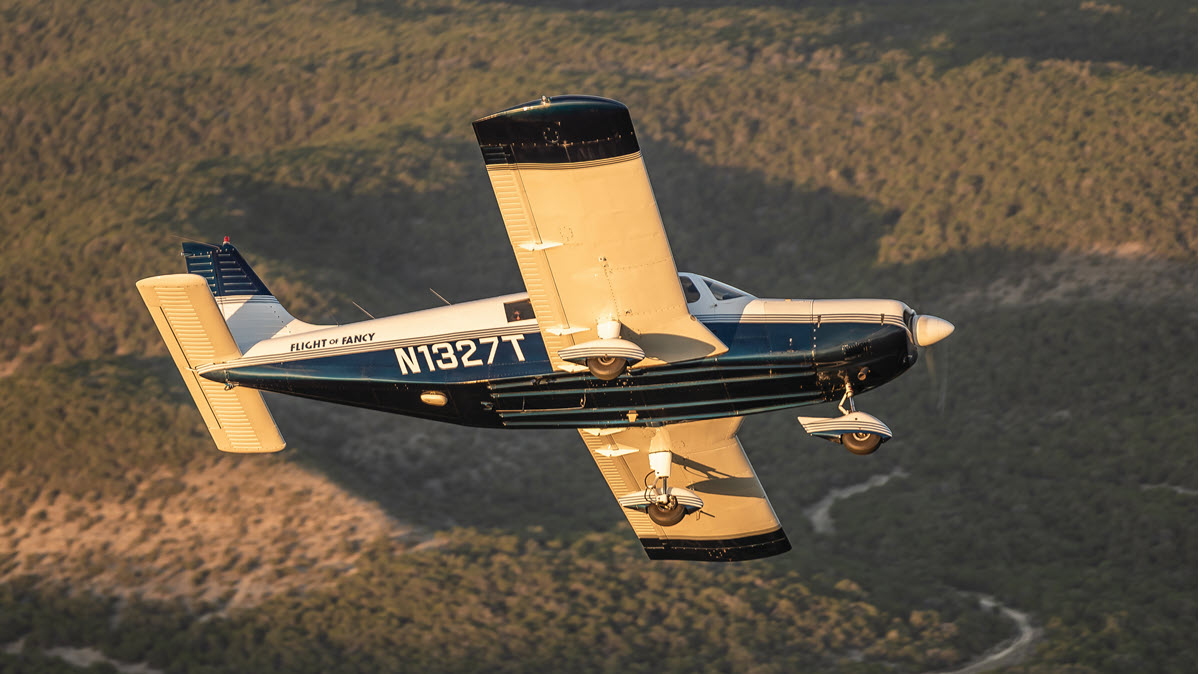
Initially, Martin leased a Piper Warrior and went on to complete his instrument certification in 2020. It was an excellent choice when the children were smaller and their family outings were closer to home. But the kids kept growing and the family wanted to fly to destinations further from home. They decided to make an upgrade when they purchased and settled on N1327T, a 1972 Piper Cherokee Six.
The Cherokee Six offers more space for passengers and a greater useful load to help the family fulfill their expanding mission. “We call the rear seats ‘business class’ and love the extra legroom it provides… I love the docility of the plane, especially when taking friends up for the first time. It’s a comfortable ride (so smooth some passengers fall asleep) and they can get their first time at the controls in a plane that maneuvers gracefully.”
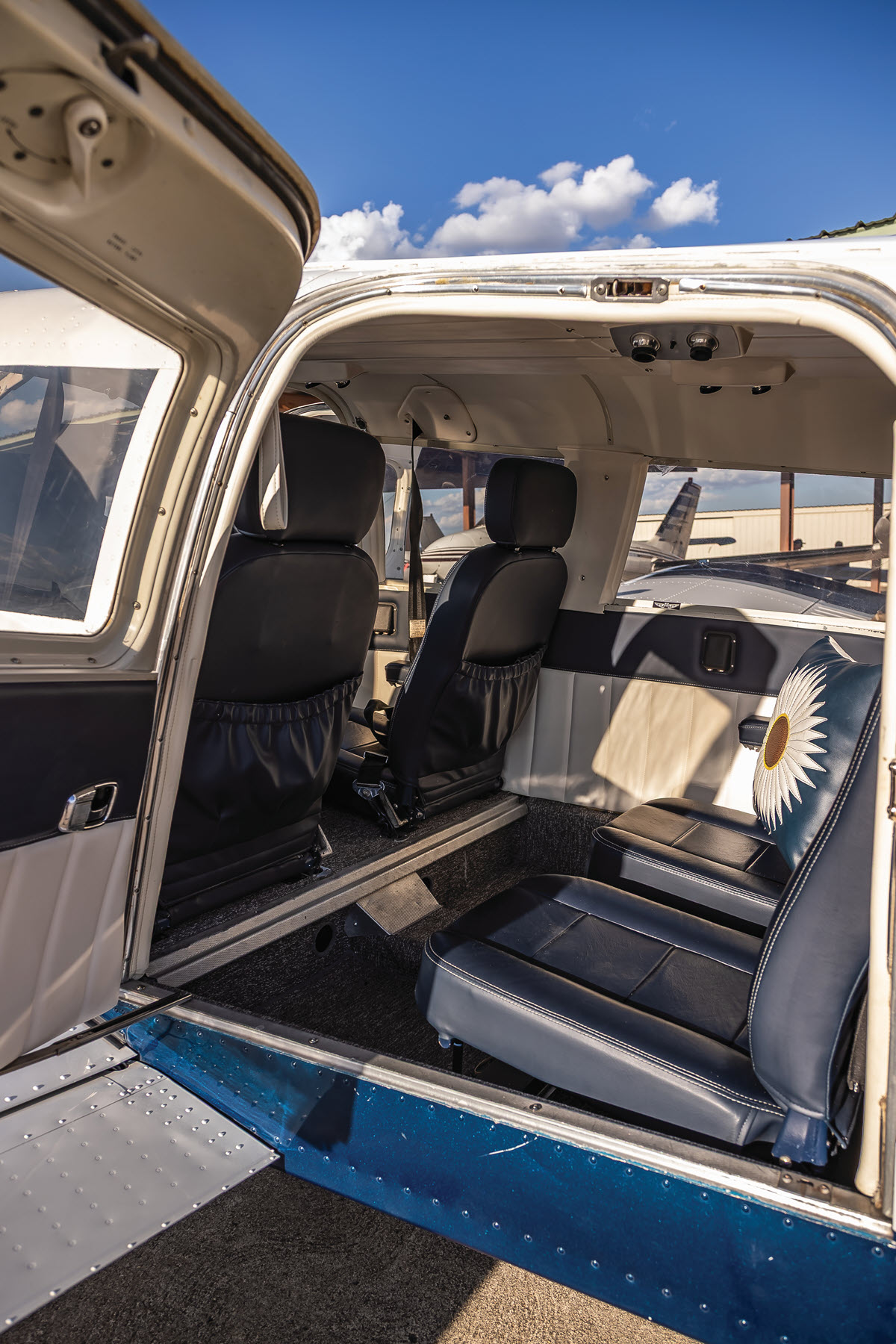
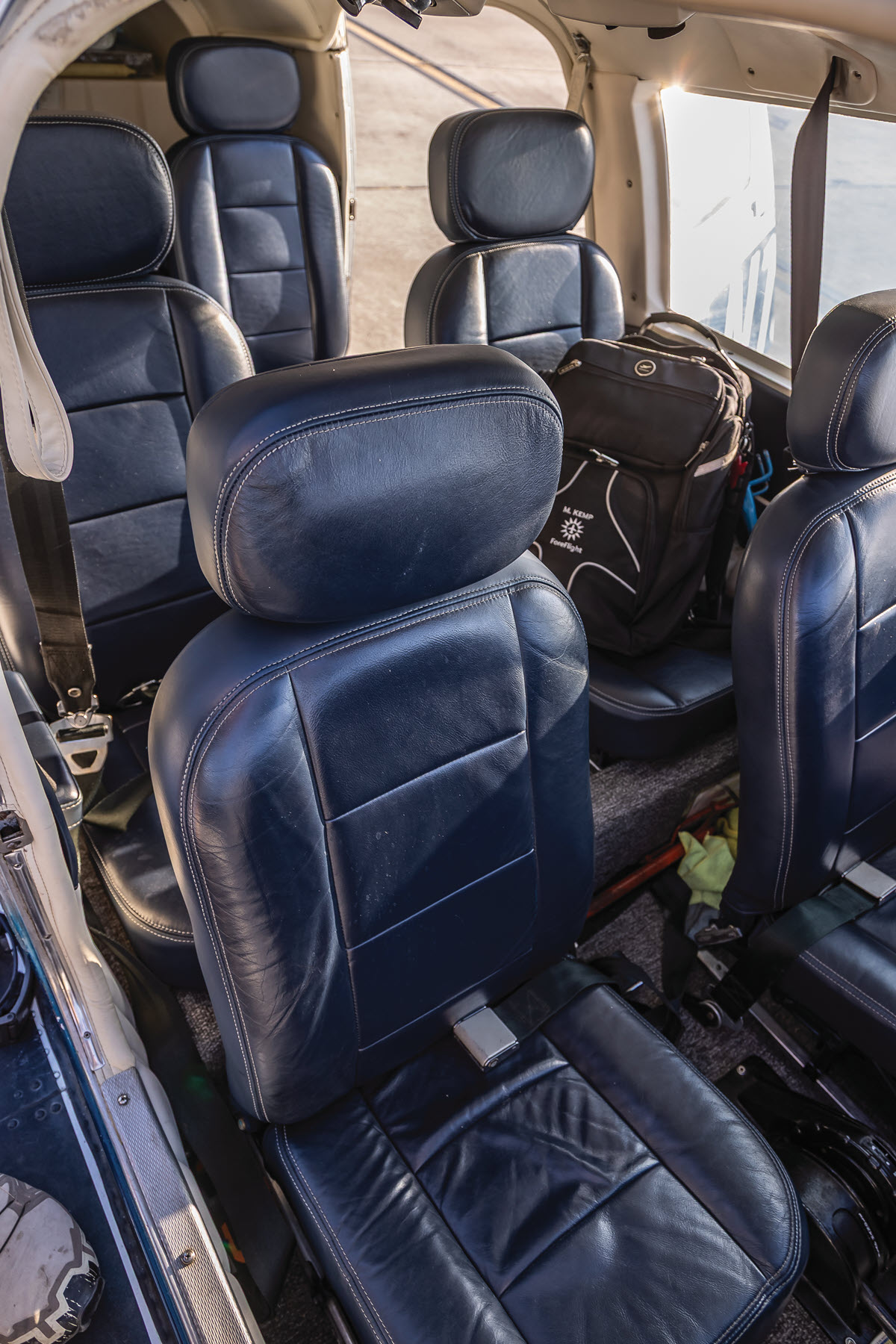
It’s not just roomier for passengers. There’s more space for luggage, too. Plus, a rear door makes loading and unloading people and their belongings very convenient.
Martin’s biggest complaint is one many pilots flying in warm-weather places have in common, no matter the make and model of the aircraft. No air-conditioning. Being able to cruise at higher altitudes does minimize this problem, however.
Then there’s a practical shortcoming on the interior of the plane. Not enough places for pilot and passengers to stow their beverages. As Martin put it, “It’s no Honda Odyssey with 17 cupholders.”
Upgrades and Maintenance
Martin hasn’t had to invest much in N1327T since purchasing it from a former college professor in 2023. They had known each other in the UK and reconnected when they both moved to the United States. Martin was interested in the Cherokee from the first time he saw it. He requested first right of refusal if ever the professor decided to sell, which he did several months after he retired.
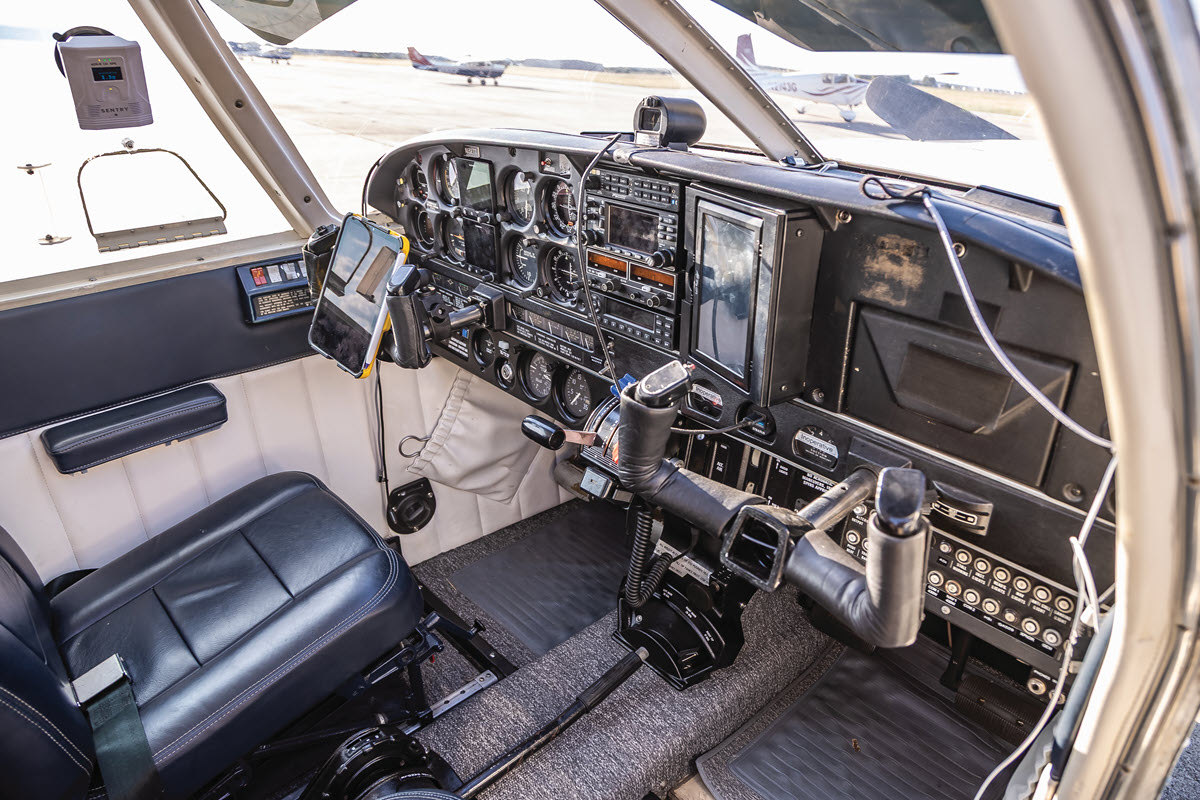
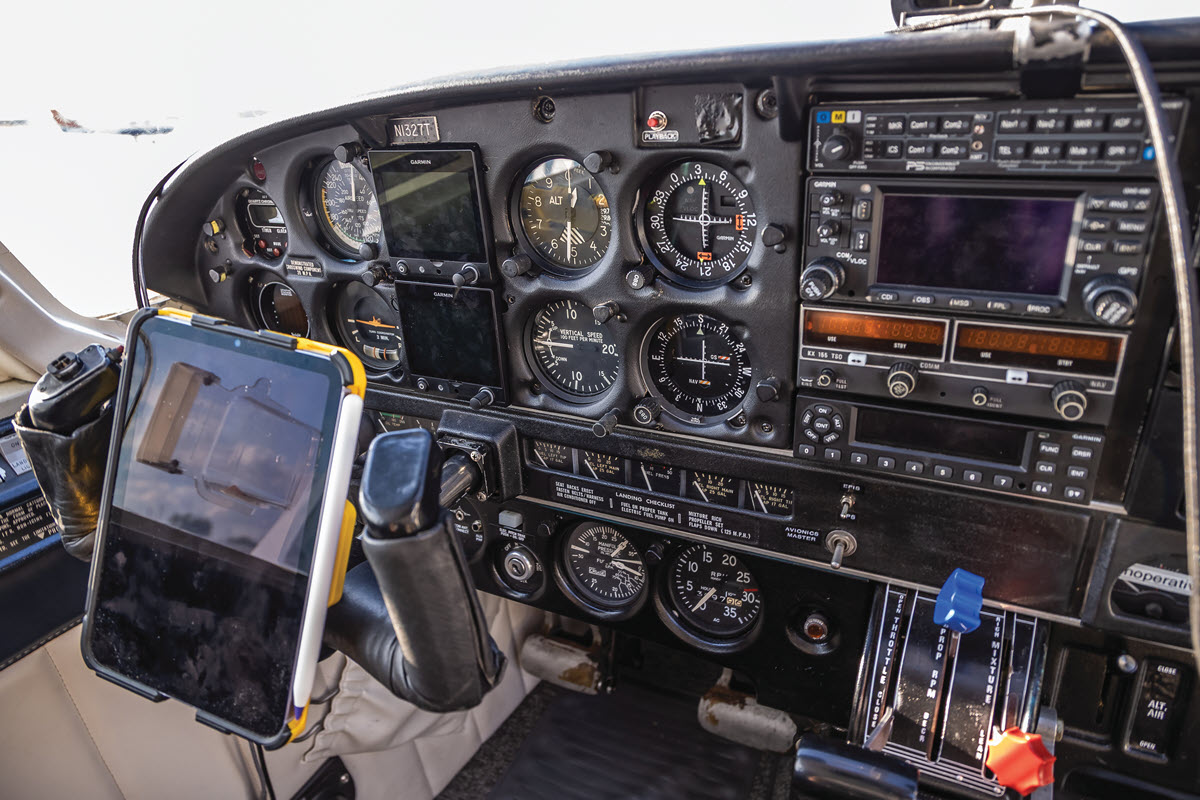
The airplane was in excellent condition when Martin purchased it. The interior and exterior were upgraded in 2018. The engine and propeller were overhauled and the avionics updated in 2019, with two Garmin G5s, a GNS-430, and a TruTrack autopilot.
One upgrade Martin will be making soon is replacing the current Insight engine monitor with a CGR-30P and CGR- 30C from Electronics International. He purchased them at EAA AirVenture this year and is waiting for them to arrive so they can be installed.
“I’d like to get a better view of the EGT and CHT values, along with a recording of the engine progress so I can use a service like Savvy Aviation to ensure the engine is running well. I also want to have a view of the tach, manifold pressure, fuel, and other gauges in my eyesight rather than having to look down below the yoke.”
There are only two ongoing maintenance issues that Martin finds challenging. The first is the wing spar AD (airworthiness directive) that impacts the Cherokee. Doing the calculations to determine when they need to be inspected and addressed can be challenging. Fortunately, Martin’s shop, Gafford Aero in San Marcos, Texas, helps him stay on top of this issue.
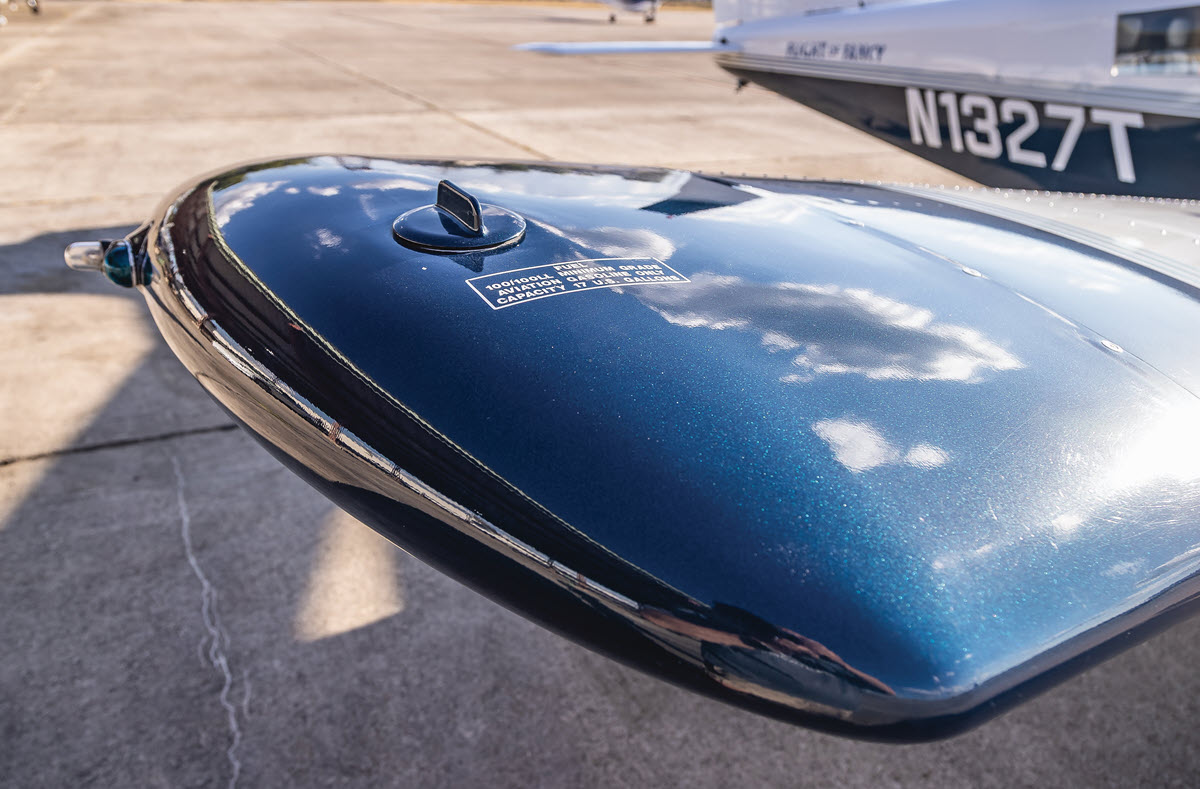
The other big challenge is draining the sump to check for fuel impurities. Martin typically recruits one of the kids to crawl under the plane’s belly, where the sump is located, and do the work.
There was one mystery that took some investigation to resolve. Occasionally, and apparently without explanation, the plane would suffer from overspeed on the propeller. After the governor was checked twice, to no avail, Martin had the propeller checked. When the A&P removed the prop and turned it to empty the oil, a cap fell into the bucket. It was an engine cap that should have been removed when the Lycoming engine was overhauled. Martin commented, “I suspect it had been an issue since then.”
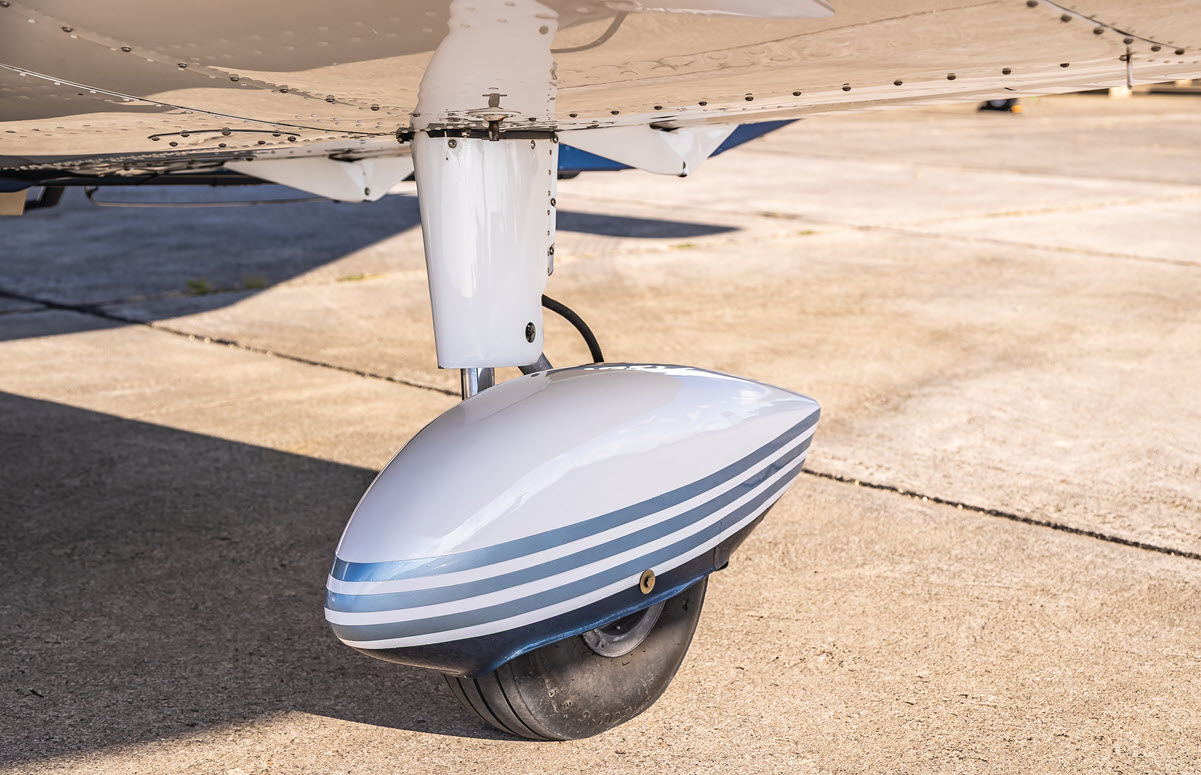
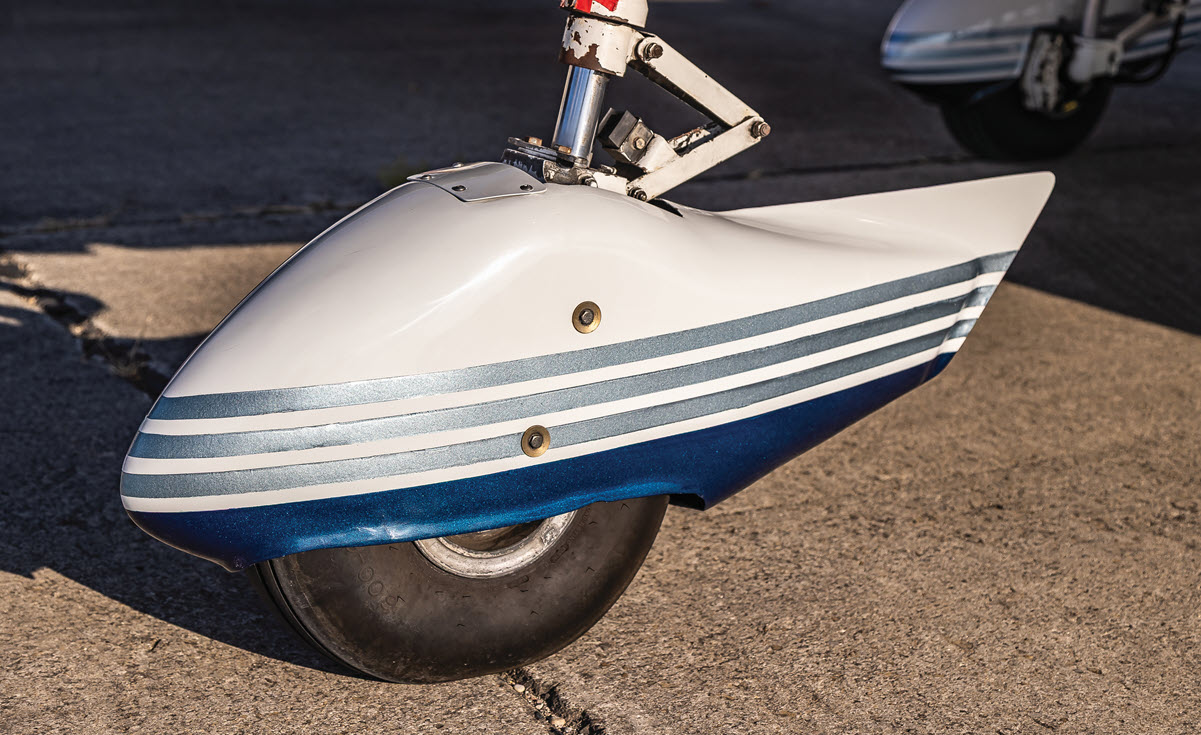
While Martin doesn’t have any immediate plans to further upgrade his Cherokee Six, he would like to take measures to protect it from the hot summer sun. To that end, he purchased some covers from Bruce’s Custom Covers at EAA since hangar space is hard to find. Long-term, Martin and Cassandra hope to build a hangar home in the future to resolve their storage challenge.
Staying on Mission
During his spare time, Martin enjoys teaching the aviation badge to members of his son’s Scouting America troop. A teacher at heart, he enjoys introducing the participants to the aviation world and watching their reactions to, what is for many, their first flight. But Martin’s best memories are from flights he’s taken with his family.
“My wife has always been supportive of my desire to fly and is looking forward to flying to some destinations further afield.” Martin’s first flight after completing his certification was taking his family to visit his in-laws in Meacham, Texas. They flew into Texas Jet, Inc. (KFTW) and were impressed by the welcome they received. It has since become a favorite family destination.
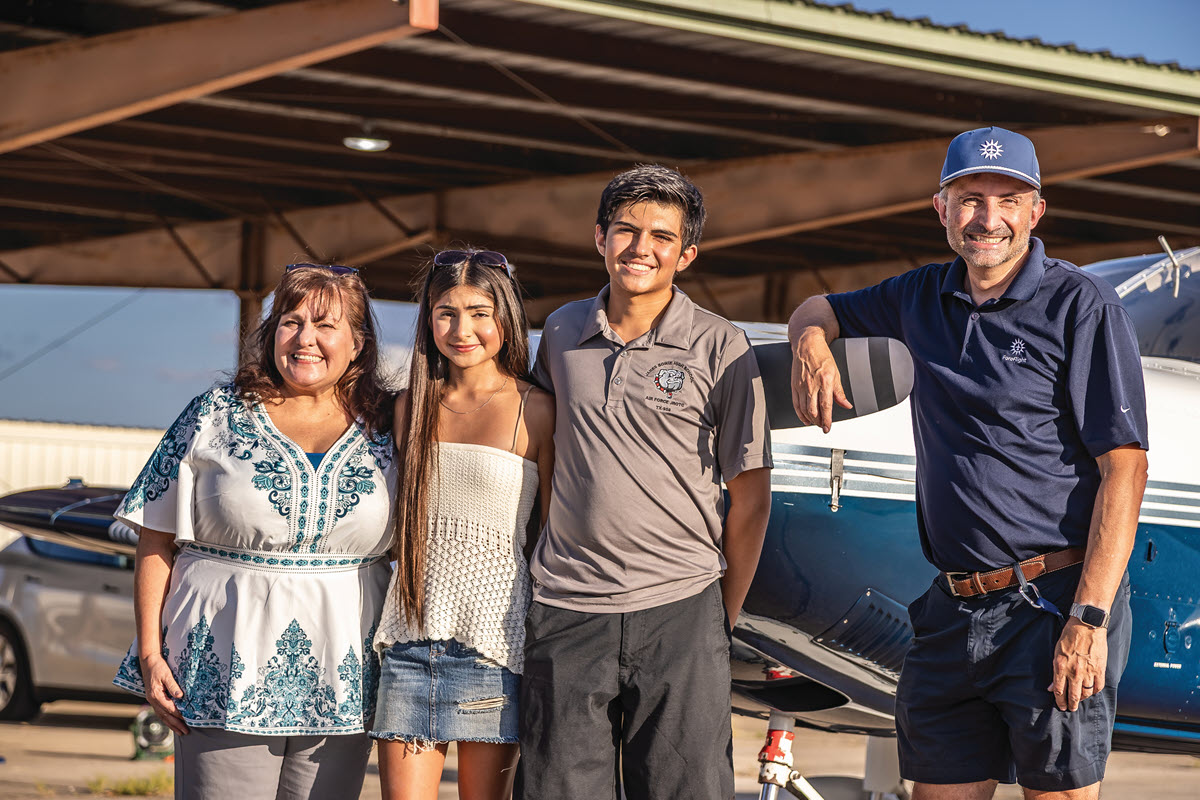
Once, just for kicks, the family did a Top Gear-style race. Cassandra drove the car, and Martin and his daughter flew to the same destination. Because those flying were delayed by the trip to the airport and the pre-flight check, everyone arrived at the same time, “but some of us had big smiles on our faces.”
But their flight to the 2025 EAA AirVenture stands out as Martin’s favorite memory. They met some wonderful people on the airport stops along the way and enjoyed the camaraderie among pilots. They arrived in time for the night airshow. “I love fireworks but this show ruined any other fireworks show for me,” Cassandra said.
Keeping N1327T in the skies takes about 14-15 gallons per hour (at 65%). With all expenses factored in, it costs Martin about $140 per hour to fly his plane. But judging from his closing comments, it’s worth it. “Although it’s a lot of work, being able to fly with such freedom is a reminder of the incredible opportunity we have in this country. We love to be able to share it with family and friends.”
The specifications and performance stats for this plane can be seen only by paid members who are logged in.Have a website login already? Log in and start reading now.
Never created a website login before? Find your Customer Number (it’s on your mailing label) and register here.
JOIN HERE
Still have questions? Contact us here.