SPONSORED CONTENT | PRESENTED BY AWESOME PRODUCTS/BOSS
By Don Meyns, Owner, Awesome Products Corp.
One thing I have learned from working with aircraft cleaning is that the spots that matter most are rarely the ones you notice first from across the ramp. A Piper can look great at a glance while flap wells, the belly, landing gear, leading edges, the propeller, and acrylic surfaces are quietly collecting very different kinds of contamination. That is why I encourage owners to think beyond a general wash. The better question is: what is on this surface, what is the surface made of, and what is the gentlest effective way to clean it?
We have all seen how a small cleaning job turns into a stubborn one when it gets put off. Bugs that would have wiped away after a flight dry hard on the leading edge and can cause a paint chip when removed. A faint exhaust streak becomes a greasy film. Dirt settles into seams, around fasteners, and into places a wash mitt never really reaches.
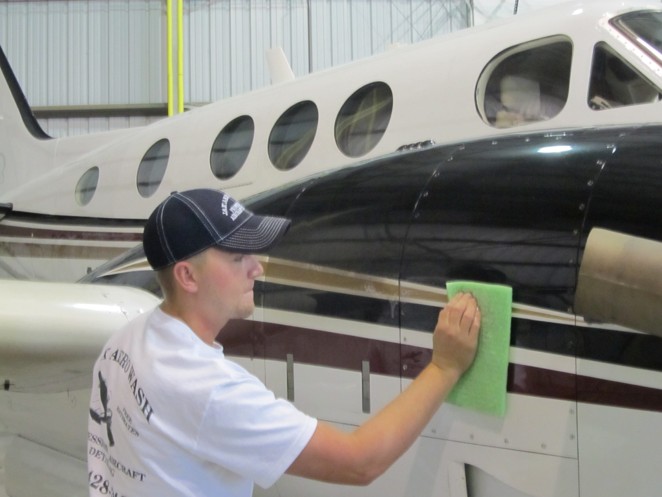
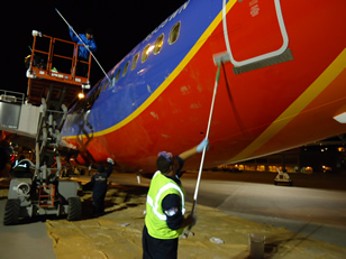
I have spent a lot of time looking at how aircraft surfaces get dirty and how people try to clean them, and one lesson comes up again and again: deal with contamination early to avoid time consuming and costly repairs. A quick wipe down with a BOSS Aircraft Cleaning Pad upon landing is an easy way to prevent problems. Our pad holders attach to a pole to clean high or hard to reach areas without needing a ladder.
The most successful aircraft owners and operators often share a common philosophy: address small issues before they become large ones. It’s not simply about keeping an aircraft clean; it’s about protecting an investment through proactive care.
That practical problem is what led us to create BOSS Aircraft Cleaning Pads back in 1996. They are reusable and made from non-abrasive Awesome Fibers, with no abrasive particles or chemical additives embedded in the pad. The fibers themselves provide the cleaning action. For many routine jobs, I recommend starting simply with aircraft wash soap and water, then moving to a stronger aircraft-approved cleaner only when the contamination actually calls for it. If you have a Dri-Wash finish, just put some of their recommended cleaner on the pad; you will find you will not need to use much. Cleaning an airplane should not be a contest to see how hard you can scrub. The goal is to remove what does not belong there while being as kind as possible to the surface underneath.
“The best cleaning job is the one that removes contamination without creating extra work for you or extra wear on the airplane.”
1. Flap Wells and Areas Behind Pipes and Wiring
Flap wells, recesses, seams, and areas around or behind exposed pipes and wiring can hold more than ordinary dust. Oil mist, grime, moisture, and residue can settle where a broad wash mitt never reaches. Because these areas are partially hidden, buildup can stay there long after the rest of the airplane looks clean.
I tell owners to treat these spaces as a separate part of the wash instead of expecting the main wash to take care of them. Get close enough to see what is actually there, work only in areas you can safely access, and use a pad or our flap well cleaning brushes that can conform around irregular shapes without aggressive pressure. While you are there, look for staining, residue trails, chipped coatings, or anything else that seems different from the last time you cleaned the airplane. Cleaning should never replace maintenance, but it can give you a much better view of the airplane you are maintaining.
2. The Belly: Oil, Grease, Exhaust Residue, and Grime
The belly is where a Piper tends to collect the evidence of flying: oil film, exhaust residue, grease, dirt, and whatever else the airflow carries aft. The challenge is that these contaminants are not all the same. A dusty film may lift easily, while oily residue can hold dirt against the surface and make repeated wiping less effective.
Instead of attacking the whole belly at once, I prefer working in manageable sections. Loosen the contamination, wipe it away, rinse the pad when it becomes loaded, and then move to the next area. That keeps you from simply redistributing dirty residue across the fuselage. If you encounter a fresh or unusual oil streak, do not just clean it and forget it. Cleaning can remove the evidence, but it cannot tell you why the oil is there; if the source is not obvious, that is worth a closer look by your mechanic.
3. Leading Edges, Bug-Prone Surfaces, and the Propeller
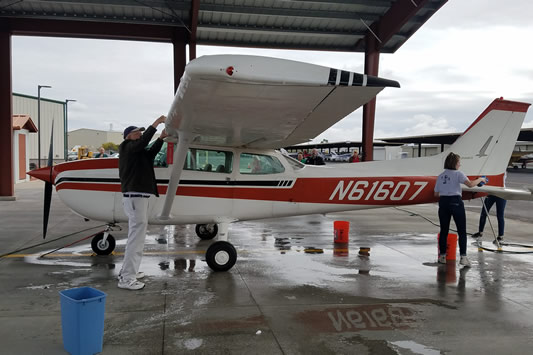
Leading edges get most of the attention during bug season, but do not stop at the wings and cowling. Struts, air inlets, the spinner, and the propeller can all collect bug residue and grime. These are high-visibility areas, but they are also surfaces where dried contamination can tempt an owner to use more pressure than the finish needs. I’m a big believer in dealing with bug residue before it hardens. Soften it with an aircraft wash soap, give it ten to 15 seconds, and wipe rather than grind at the surface. A small post-flight cleanup can save a much tougher job later.
The propeller deserves special care. With the engine shut down and the aircraft secured, clean only in accordance with the propeller manufacturer’s guidance, and use the opportunity to look closely at the blades and spinner. If you notice a nick, unusual erosion, staining, or damage, cleaning is not the fix – that is something to have evaluated appropriately. The point is not just to make the prop shine. It is to clean it without masking what the surface may be telling you.
4. Landing Gear and Other Tight-Access Areas
Landing gear is exposed to a different mix of contamination than the cabin windows or upper wing: runway grime, brake dust, oil, dirt, and debris collect around wheels, struts, fairings, and tight recesses. These areas are awkward to reach, which is exactly why they deserve their own cleaning pass.
I like to separate the dirty jobs from the delicate ones. Do not take a pad that has just been used around the wheels or belly and move directly to a window or polished surface. Rinse pads thoroughly and use a clean pad when moving to a more sensitive area. Around the gear, work deliberately rather than spraying cleaner indiscriminately into components. BOSS Aircraft Cleaning Pads and Flap Well Cleaning Brushes contain no abrasive particles and are intended for aircraft metals, painted surfaces, composites, and other finishes. They are designed to be rinsed and reused, so keeping the pad clean during the job matters just as much as cleaning it afterward.
5. Windows, Acrylics, and Other Sensitive Surfaces
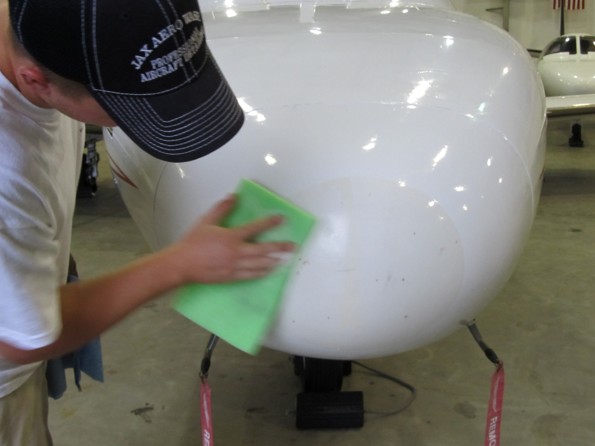
Windows and acrylics are where cleaning techniques become immediately visible. Fine scratches, haze, and marks that may be barely noticeable on painted metal can be obvious when you are looking through a windshield in bright sunlight. That is why I treat transparent surfaces as their own cleaning job, not simply the last part of washing the airplane.
BOSS Aircraft Cleaning Pads are non-abrasive and are intended for canopies, plastics, glass, graphics, paint, composites, metals, and sensitive coatings. They can be used with aircraft wash soap and water on finishes including clear coat, wax, ceramic finishes, PermaGuard, and unfinished aluminum. Just as important, keep contamination from other areas away from these surfaces. A pad carrying grit from the belly or landing gear can defeat the purpose of using a gentle material. Start clean, stay clean, and always follow the aircraft and product manufacturer’s recommendations for the specific acrylic, coating, or finish you are working on.
Bonus: Cleaning as Part of Corrosion Prevention
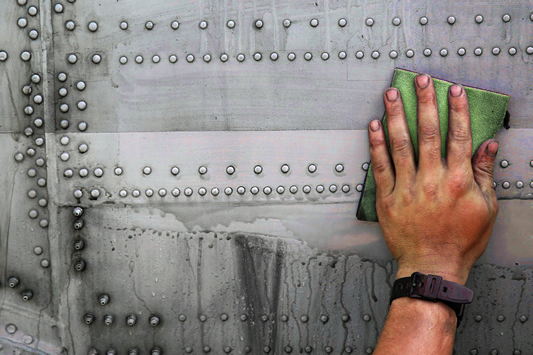
There is one more reason I encourage regular cleaning, and it has very little to do with how the airplane looks on the ramp: corrosion prevention and early detection. Cleaning is not a substitute for inspection, approved corrosion treatment, or the guidance in your Piper maintenance manual. What it does is remove contaminants that you do not want to sit on the aircraft and expose the surface underneath so you can actually see it.
Bug residue, smoke and salt residue, oil, dirt, grime, exhaust residue, and industrial fallout can all remain on aircraft surfaces after a flight or while the airplane is parked. The sooner that contamination is removed, the less opportunity it has to remain trapped against coatings, seams, fasteners, and exposed materials. Consistent cleaning is far more useful than waiting until the airplane is visibly dirty.
The inspection benefit is just as important. When you clean a wing root, flap well, belly, propeller, or landing-gear area, you are inches away from surfaces you may normally view from several feet away. That is when staining, paint chips, residue trails, coating changes, or early surface changes become easier to notice. If something looks unusual, clean enough to see it clearly, then let the appropriate mechanic determine what it means.
Technique: Make Every Cleaning Pass Count
- Identify the surface and the contamination first. Paint, acrylic, unfinished aluminum, composites, graphics, and coatings should not automatically be treated the same way.
- Separate dirty work from delicate work. Use a clean pad for windows and acrylics, and rinse or change pads after working on the belly, wheels, landing gear, or other heavily soiled areas.
- Work in small sections. Give the soap or approved cleaner time to loosen the contamination, use controlled pressure, and rinse the pad as it loads up.
- Do not carry grit from one surface to another. The cleaning material can only remain gentle if it stays clean while you work. Rinse them out!
- Finish with a visual check. Look at leading edges, the propeller, seams, the belly, gear, and finishes for anything new or unusual that deserves attention.
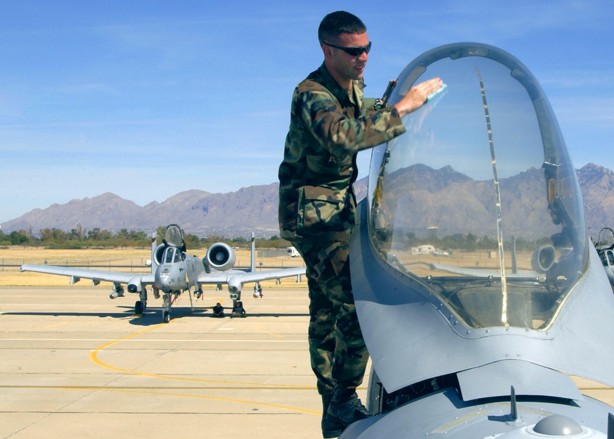
My rule of thumb is simple: know the surface, keep the pad clean, use only as much chemistry and pressure as the job requires, and pay attention to what the cleaning process reveals. These same BOSS Aircraft Cleaning Pads are used to clean Blue Angels aircraft, demonstrating their use on specialized aircraft finishes. Whether you’re cleaning a Piper or a military aircraft, the same principle applies: use the right material for the surface and avoid unnecessary abrasion.
About Awesome Products/BOSS Since 1996
Awesome Products Corp. is the company behind BOSS Aircraft Cleaning Pads, reusable, non-abrasive pads made with Awesome Fibers for aircraft-cleaning applications. The pads are designed to improve cleaning efficiency without relying on abrasive particles or chemical additives embedded in the pad, and they can be rinsed and reused over and over again.
BOSS Aircraft Cleaning Pads comply with the specifications set forth in Technical Order 1.1.691 for products approved to clean U.S. Air Force aircraft. Awesome Products/BOSS also states that the pads meet or exceed U.S. military standards for corrosion protection and have been used on finishes ranging from high-gloss and camouflage coatings to tactical, low-observable, and stealth coatings.
Learn more or contact Awesome Products/BOSS:
BossProducts.net | 904-280-1499
130 Corridor Rd. #485, Ponte Vedra Beach, FL 32004

BossProducts.net