The Piper Twin Comanche
By John Bielamowicz and Jake Ellzey
Owner’s Perspective: Two Careers and Two Twin Comanches
We come to aviation from different directions, but we ended up in the same airplane.
John is a commercial real estate broker who originally pursued aviation as a career. In the post-9/11 world, while starting a family and facing a dearth of pilot opportunities, he pivoted into business.
Jake is a member of Congress and a career aviator. He served for 20 years in the U.S. Navy, flying the F-14, F/A- 18, and Super Hornet, later serving as Air Boss aboard the USS Ronald Reagan, and eventually flying for the commercial airlines.
Despite these different paths, we share the same passion for flying and for the Piper Twin Comanche.
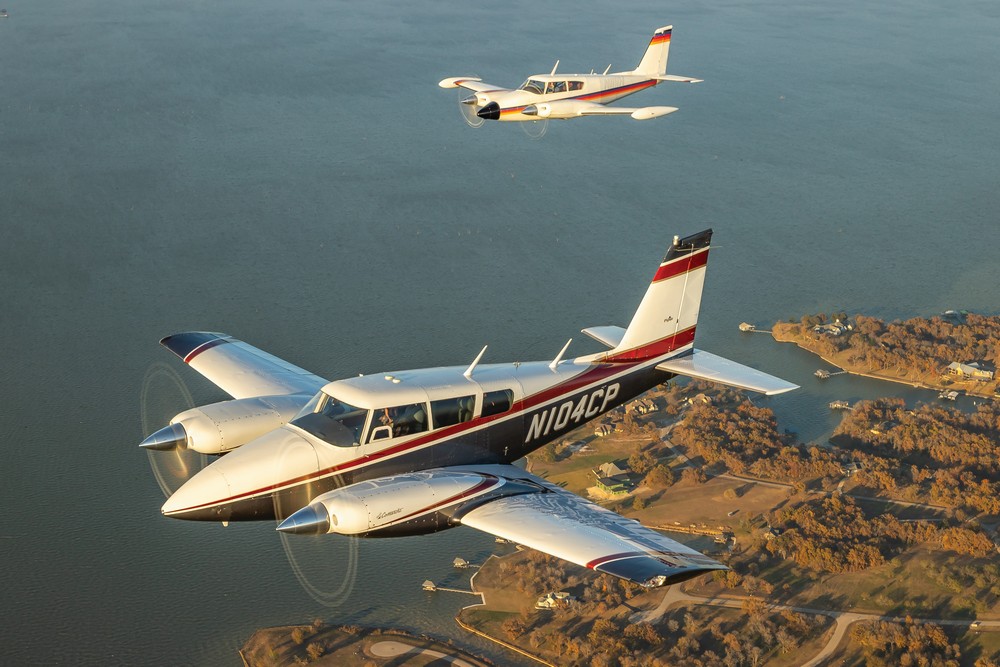
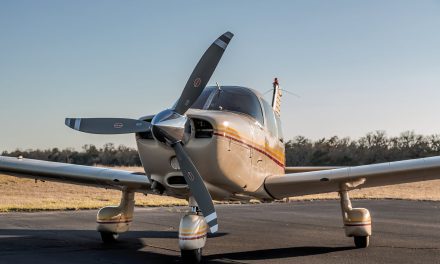
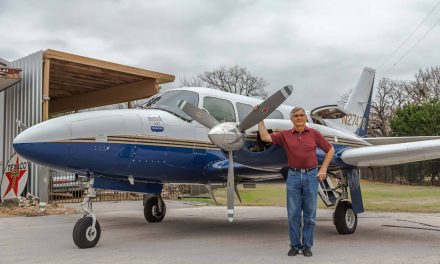
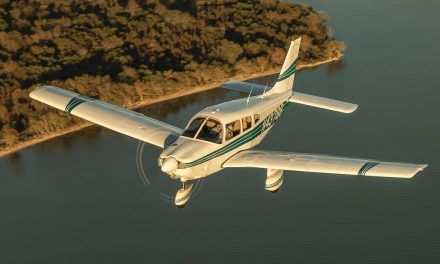
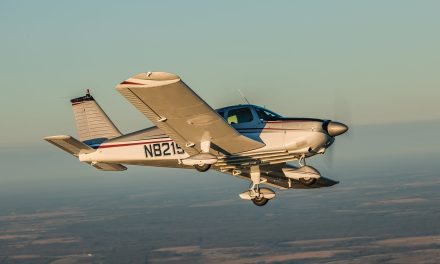
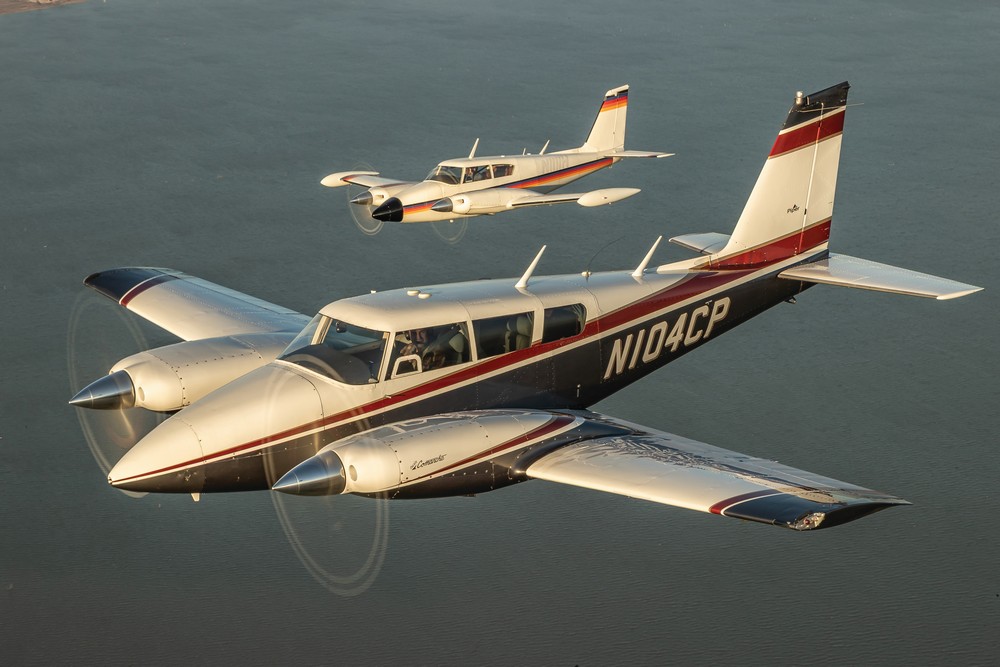
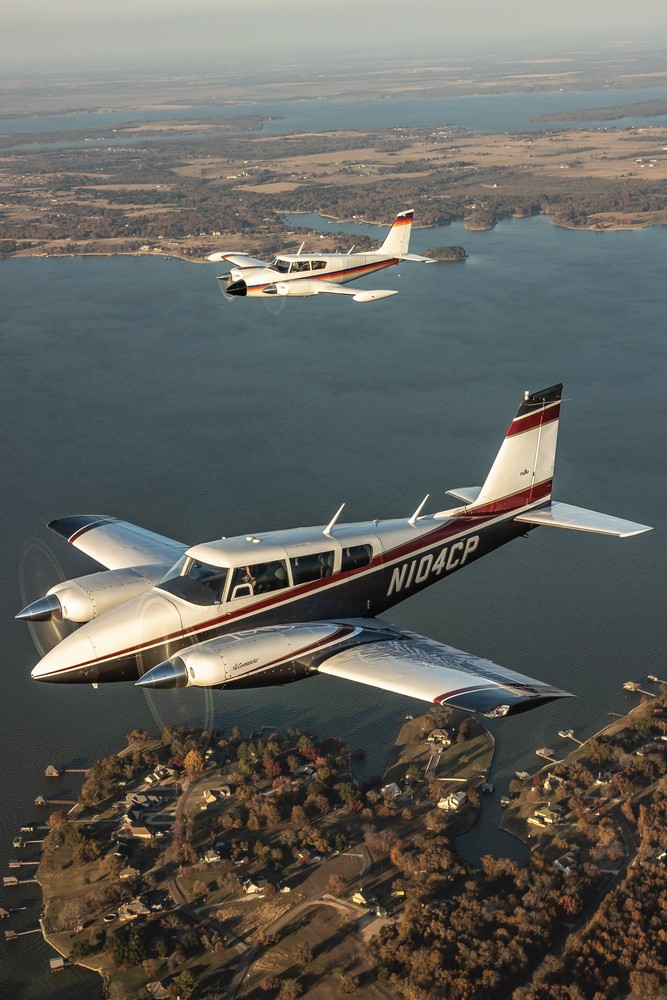
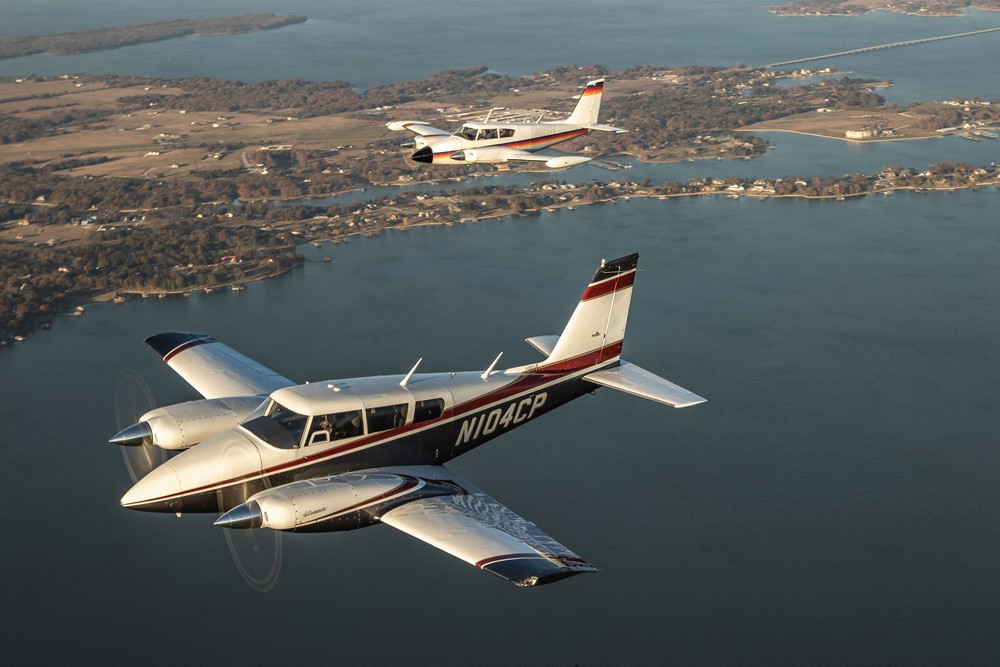
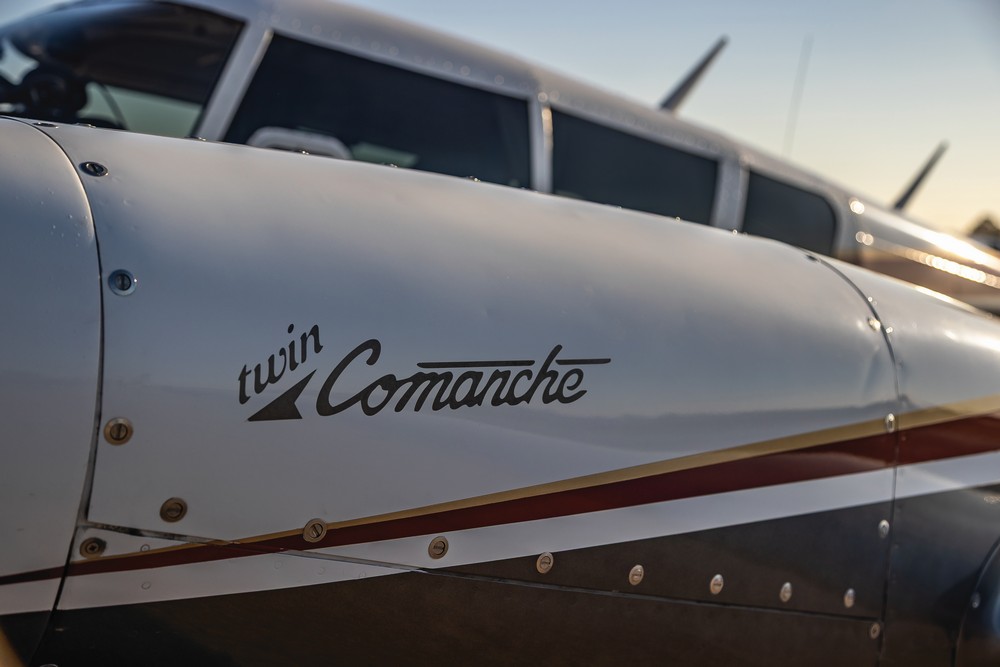
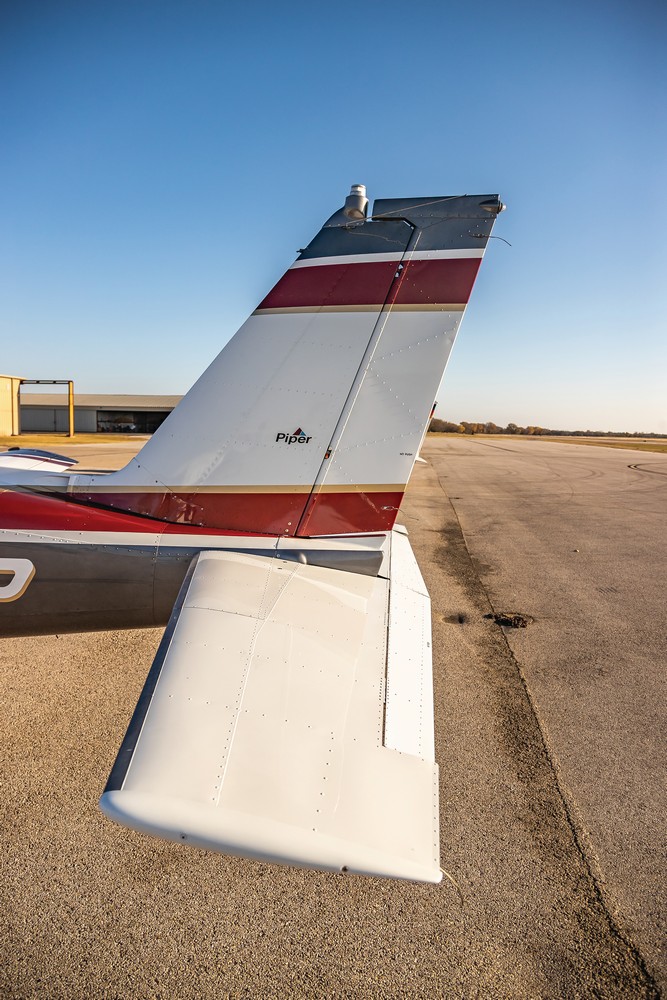
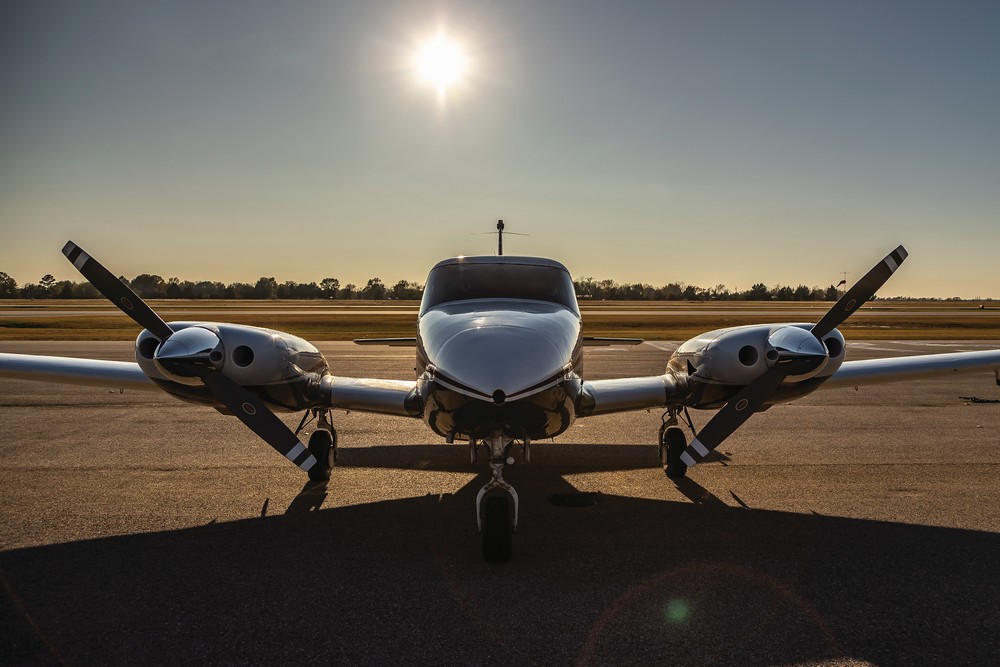
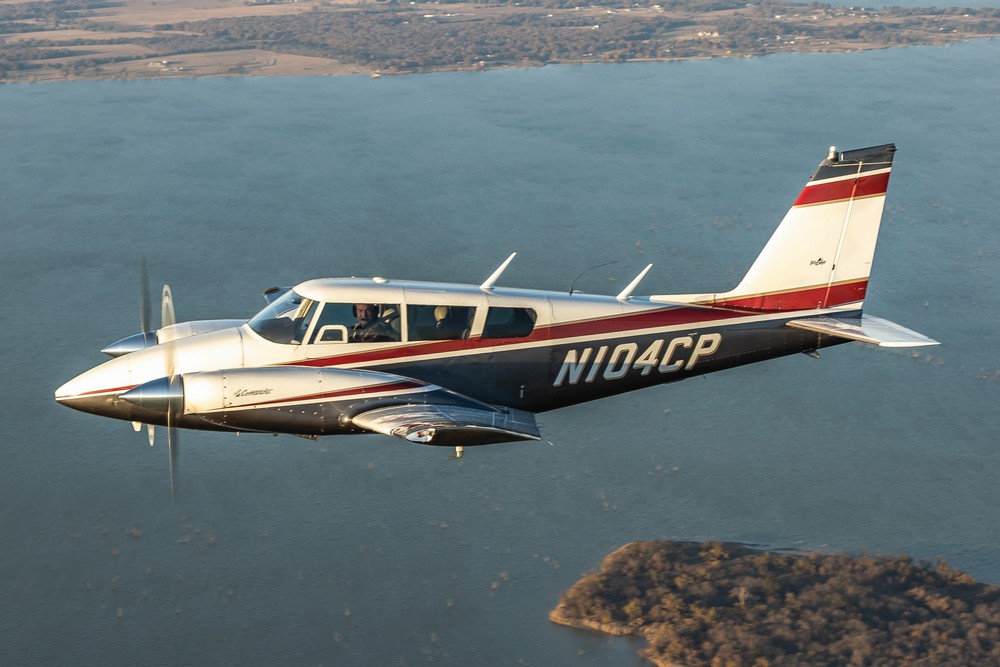
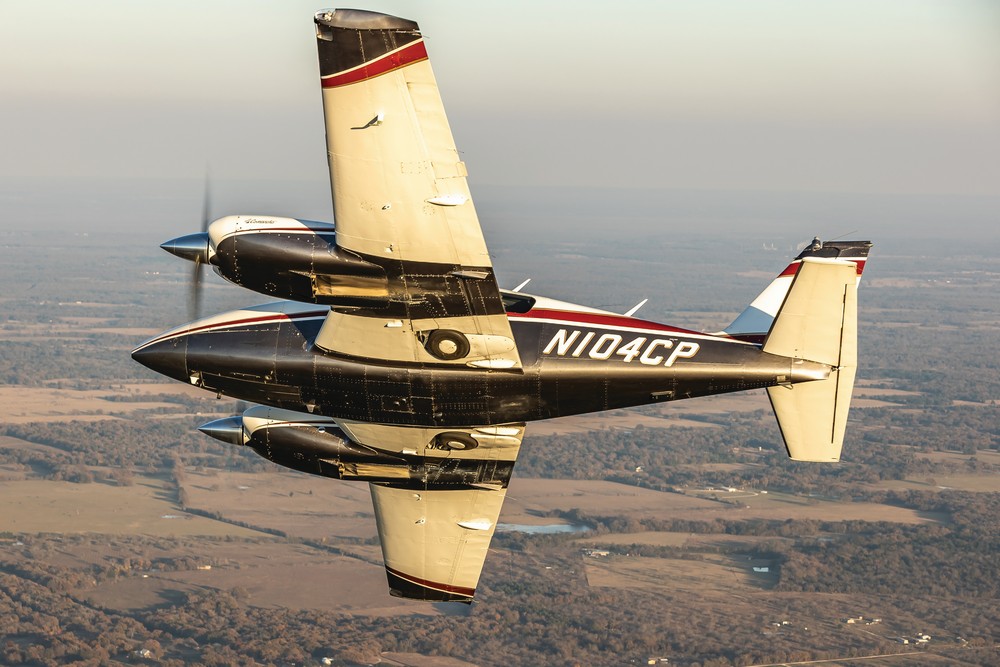
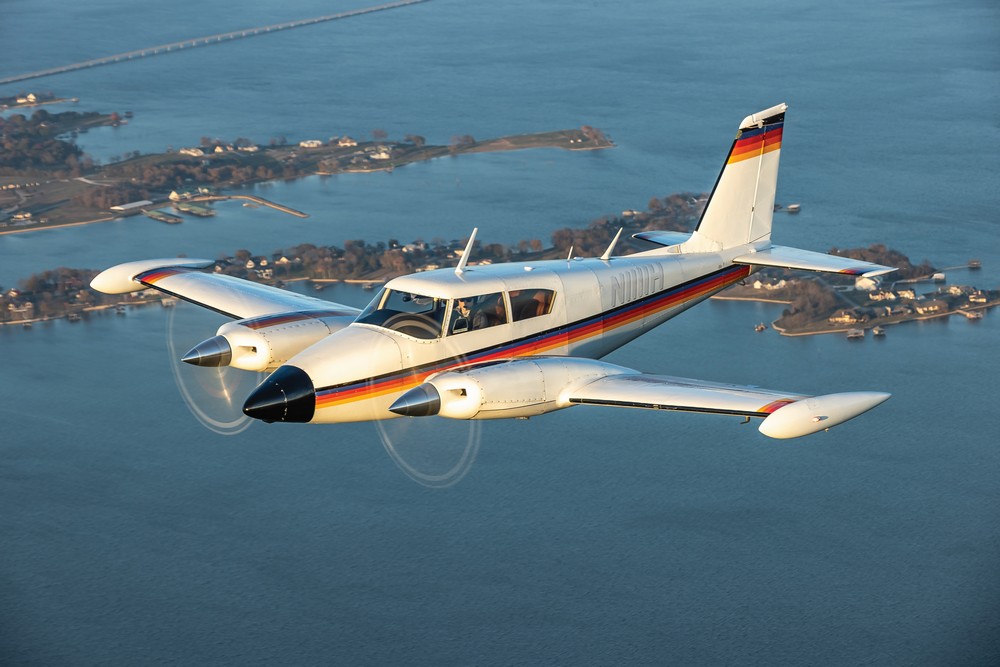
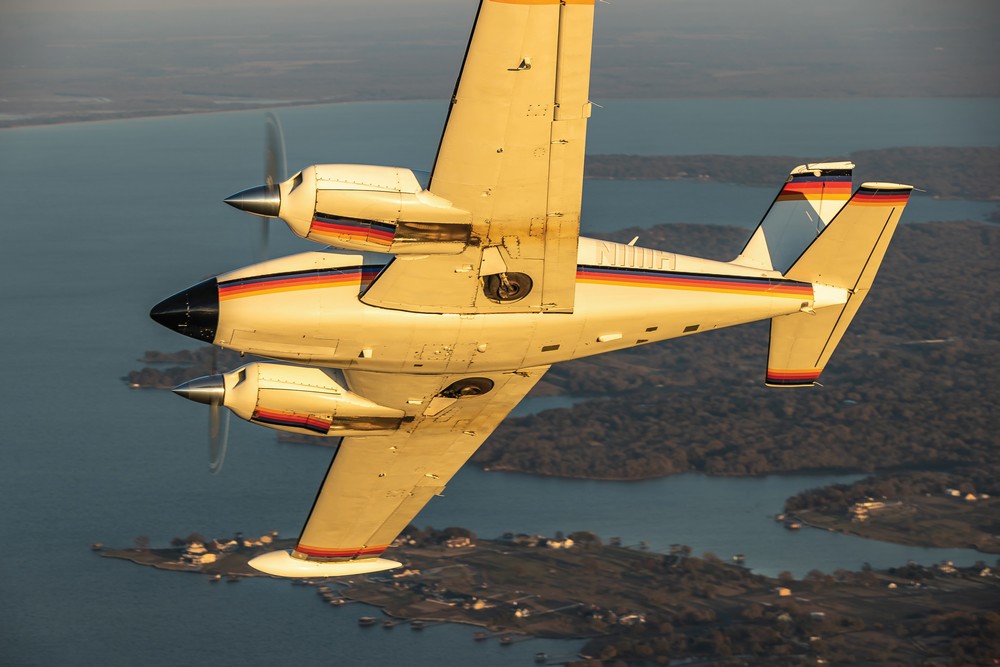
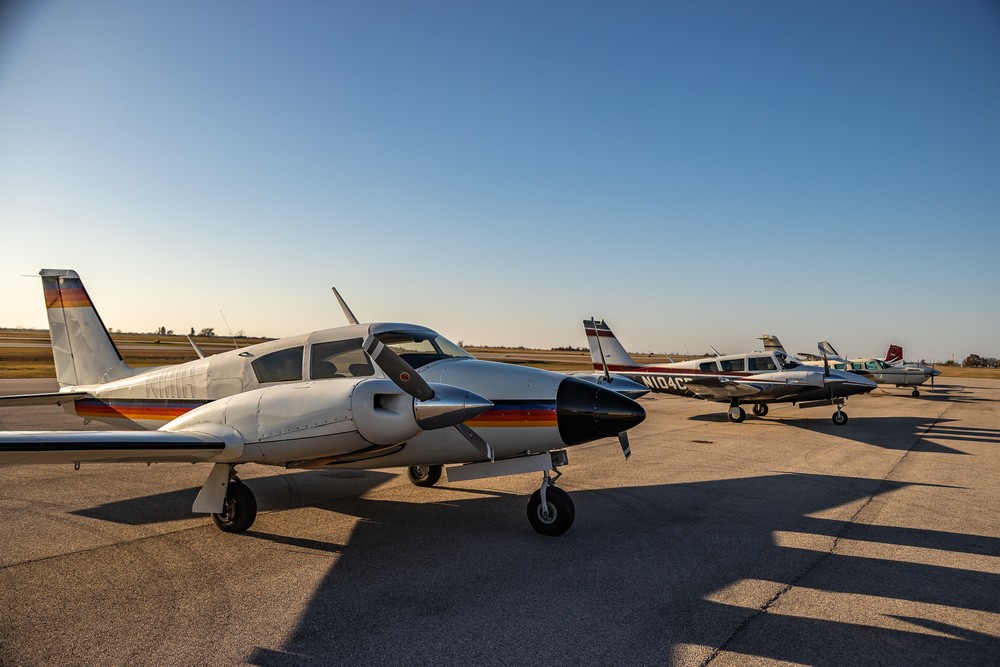
John Beilamowicz and Jake Ellzey flying their 1964 Twin Comanche (PA-30; N1111H) and 1966 Twin Comanche B (PA-30; N104CP). Photos courtesy of Jack Fleetwood (www.jackfleetwood.com)
Two Twins
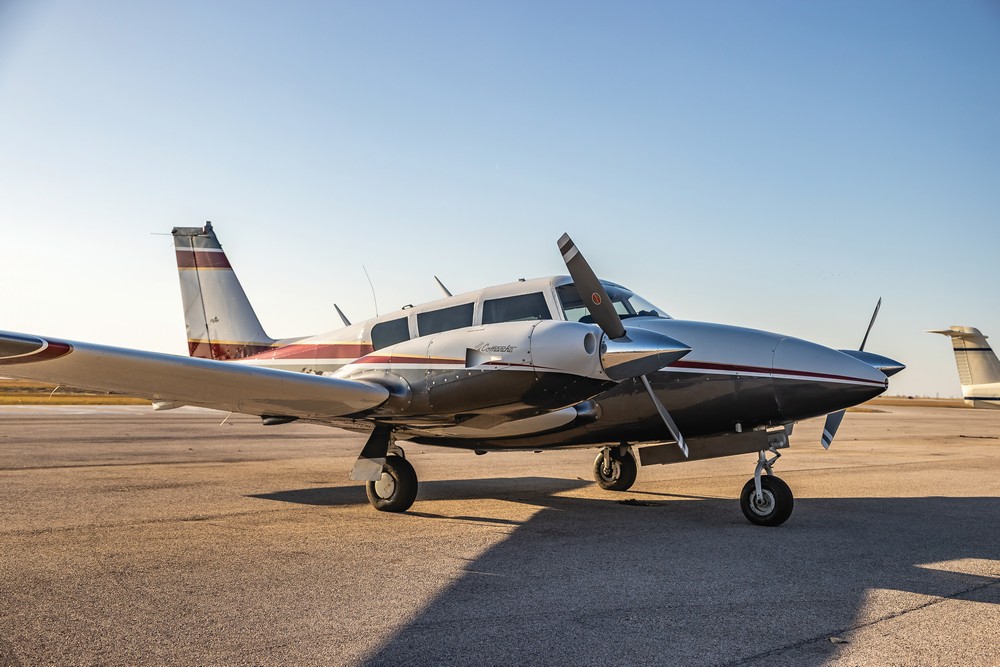
We own and operate two of them: N104CP, a 1966 Twin Comanche B, and N1111H, a 1964 model. What keeps drawing us back to this airplane is simple: decent cruise speed (fast), cheap to fly, haul just about anything you can fit inside, and do it with style — this plane is gorgeous! The Twin Comanche manages to deliver all of these characteristics with ease.
Another reason we operate a pair of Twin Comanches is dispatch reliability. Having two airplanes gives us something that feels a lot like turbine-level dispatch reliability, but at a fraction of the cost. We give up raw speed (we are not living in the 200-knot world of turboprops), but the trade is more than worth it. We can step into a capable, redundant flying machine that will cruise close to 200 miles per hour while burning around 16 gallons per hour, which is almost car-like fuel economy. For the kind of flying we do, that balance of reliability, efficiency, and capability is hard to beat.
A Little TLC
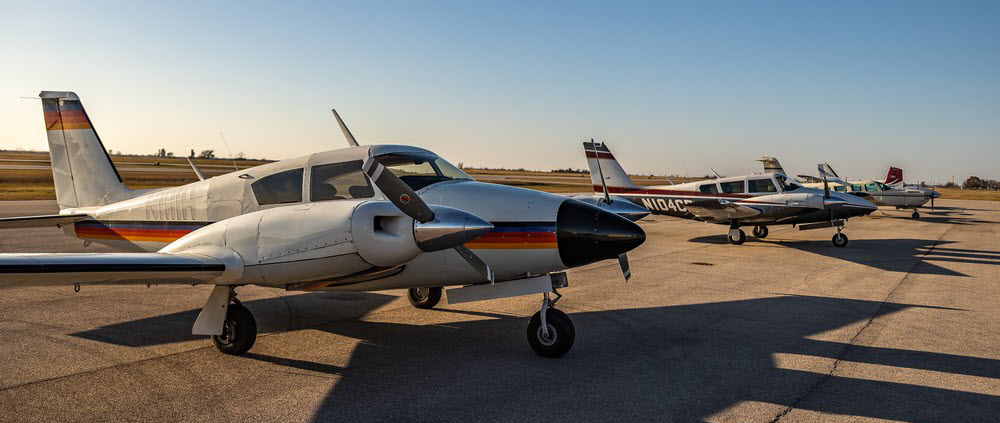
N104CP had been exceptionally well cared for by its previous owner, who is also an airline pilot. We did not find it through a listing. We found it by calling the owner directly and convincing him to let us become the next caretakers of the airplane until it is time for someone else to take that role. That mindset matters to us. We do not see ourselves as owners so much as stewards of a well-built machine with a long life ahead of it.
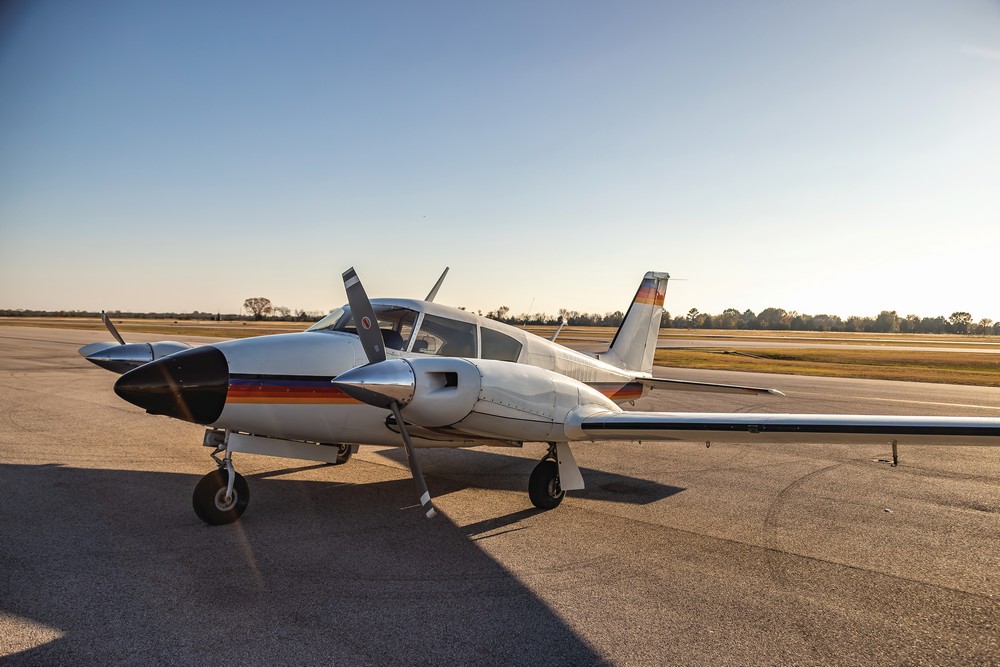
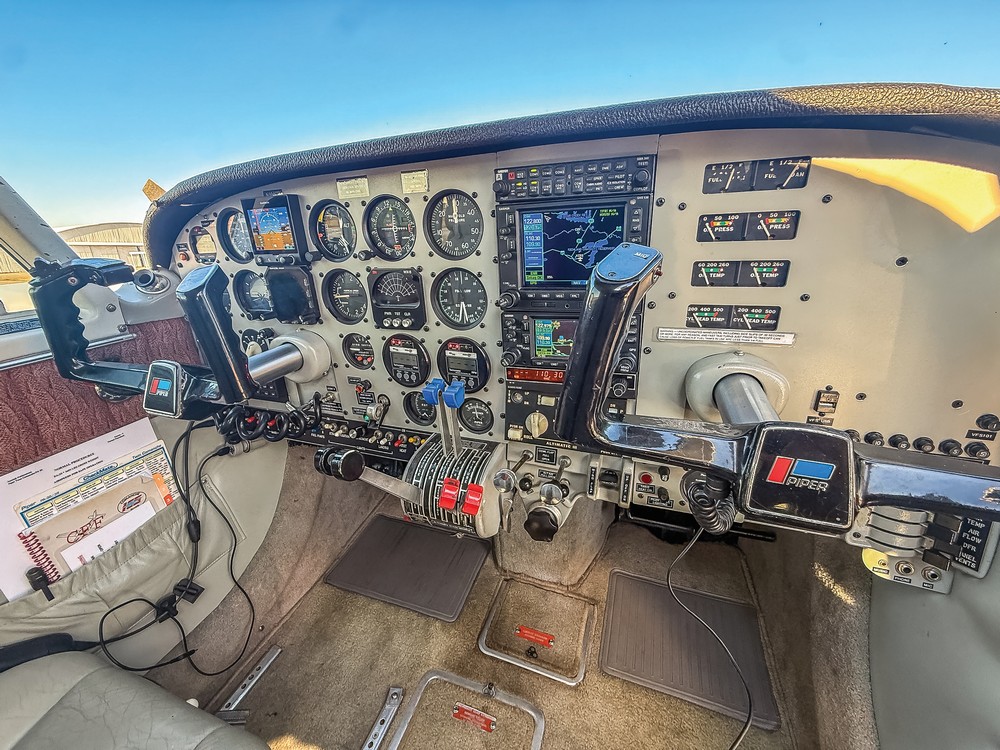
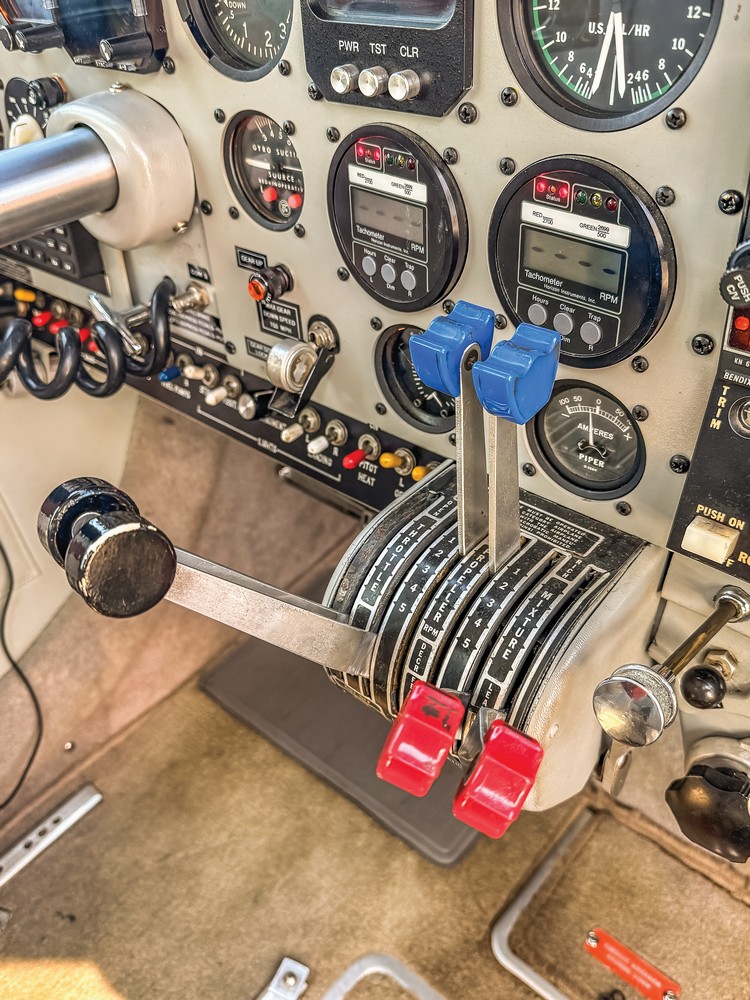
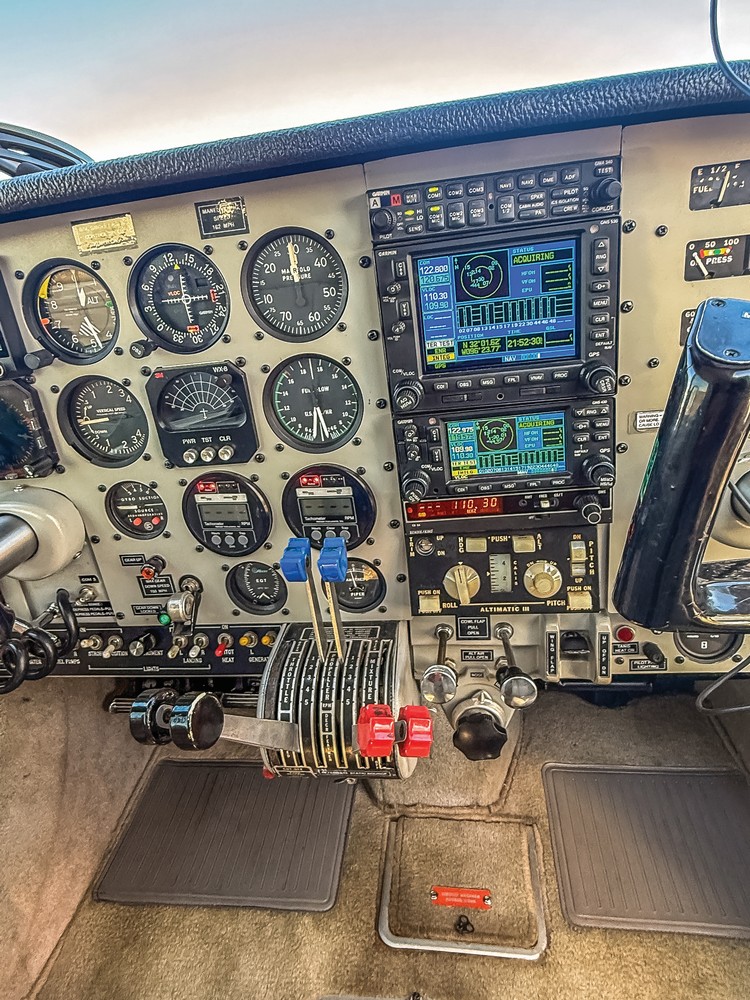
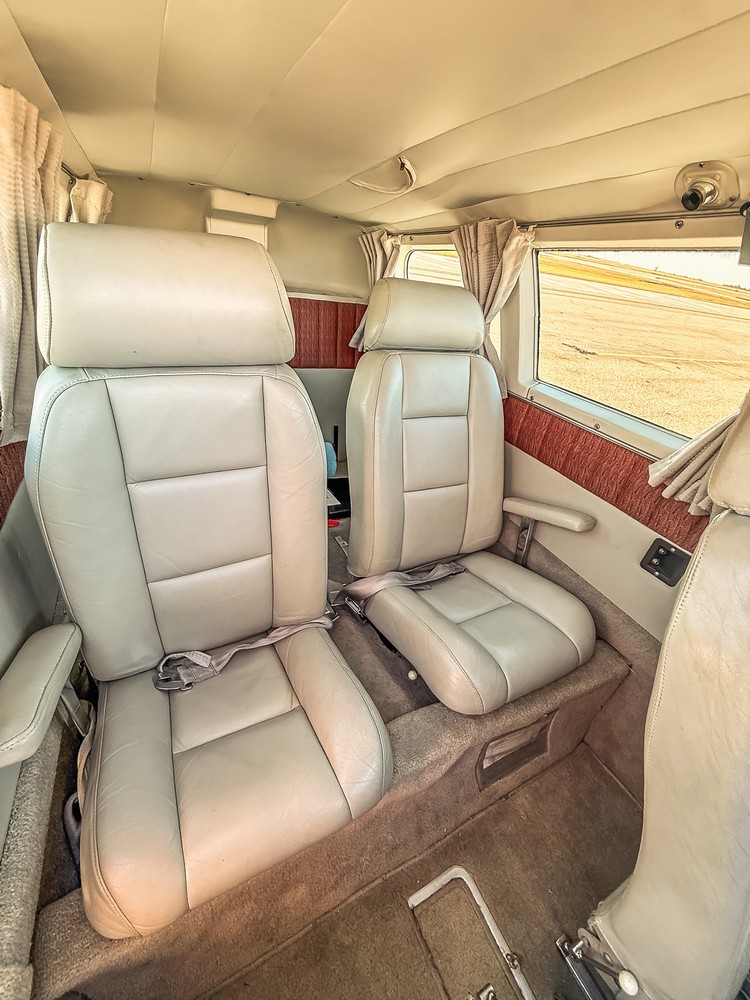
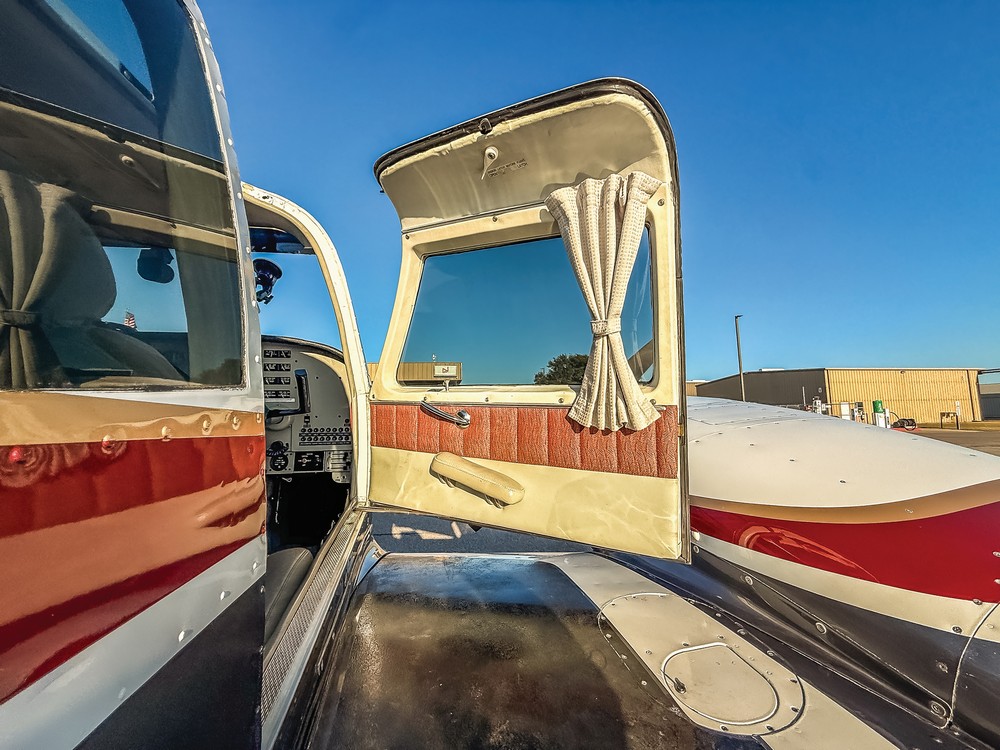
N1111H followed a very different path. It sat for a period of time, but that turned into an opportunity. We completely gutted the airplane and rebuilt it with a full avionics suite and interior overhaul. We changed the back bench seat to the split B model. That was tough, but it will fit skis laid down through the middle seats now. It carries a full Garmin suite with a G500, GFC 500, GTN 750Xi, and GTN 650Xi. The interior was modeled after a 1964 Porsche 356. We are extremely happy with the result.
That airplane is a testament to how well the Twin Comanche was originally designed and built. With an involved owner and a good local mechanic, even a tired example can be brought fully back into shape. What you cannot do is simply hand someone the keys, say, “let me know when it is done,” and expect to avoid going broke. Owner involvement matters.
Modifications
As far as modifications go, one of the best upgrades any Twin Comanche can have is shoulder harnesses. Another is the counter-rotating conversion, if you can find one, which eliminates the critical engine. That said, a well-cared-for turbocharged Twin Comanche can significantly expand your options for hot and high operations. For us, based in north central Texas, the normally aspirated airplanes serve us incredibly well and are easy to feed.
Of course, there are compromises. It is not the easiest airplane to load and unload, especially with family and passengers. And landing a Twin Comanche is not simple.
Having owned and flown a 260B and now owning both of these Twin Comanches, we finally understand why everyone seems to have a different opinion on how to land them. Each airplane has its own personality, differences in center of gravity, aerodynamic modifications, and how those elements interact with each other all play a role.
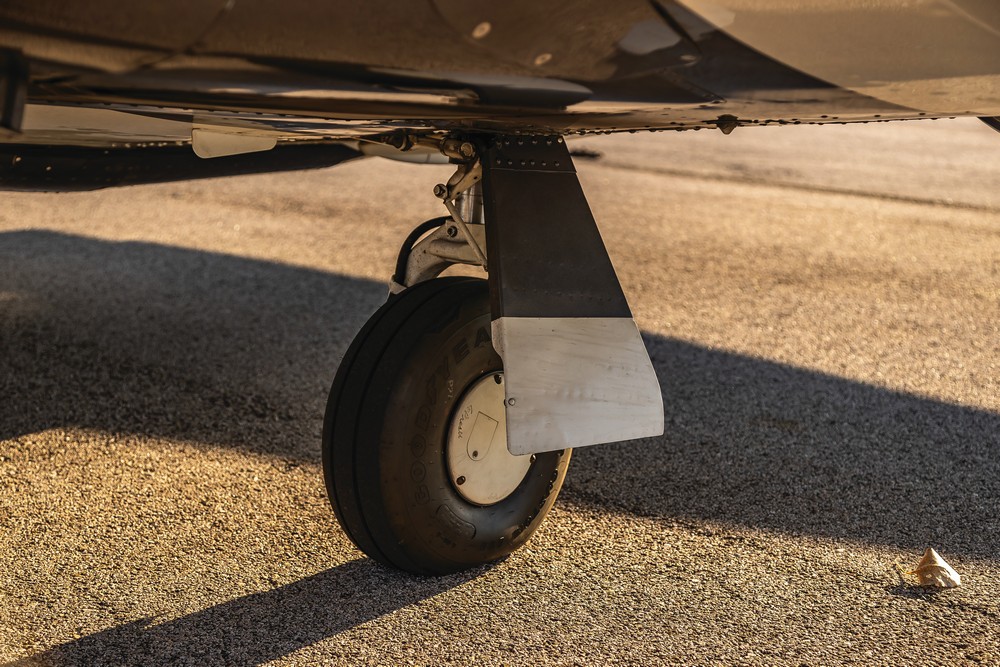
N1111H prefers to land with no flaps. Mind the airspeed, get it close to the runway, add a little back pressure, and expect a greaser. N104CP prefers flaps and a bit of ballast in the back to behave the same way.
Take into consideration different seating heights, different yokes, even differences like small versus large nosewheels, and the tendency to wheelbarrow, and the sight picture and muscle memory change. All of those factors explain the wide range of opinions about how these airplanes should be flown. Having lived with both, we can confidently say that most of those disagreeing opinions are probably not wrong; people are just talking about how to land their plane from their experience.
When we factor in insurance, hangar costs, maintenance, and fuel, our operating costs work out to roughly 300 dollars per hour, depending on how much we fly. The more owner-assisted maintenance we do, the lower that number becomes. So far, we have avoided the five-figure repair bills that can quickly overwhelm owners, and we intend to keep it that way.
Making it Count
As for memories, there are many. Family trips, selfies with our kids in the front seats, Angel Flight patients getting where they need to go, and even something as simple as flying in formation for a photo shoot. It is hard to pick a favorite.
Both of us have flown Angel Flight missions, and we agree without hesitation that they represent some of the most rewarding flying of our careers. Helping patients get where they need to go without dealing with the airlines, schedules, or added stress brings aviation back to its core purpose. Those flights are a reminder of why we started flying in the first place.
But the truth is we do not fly the Twin Comanche for the memories already made. We fly it for the memories still ahead, and for the privilege of being its caretakers until it is time to pass that responsibility on to the next ones.
Have a website login already? Log in and start reading now.
Never created a website login before? Find your Customer Number (it’s on your mailing label) and register here.
JOIN HERE
Still have questions? Contact us here.