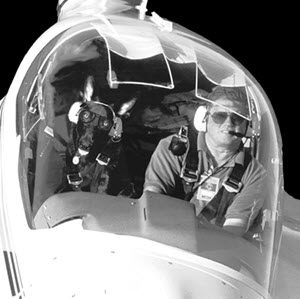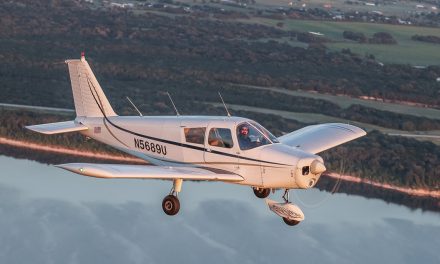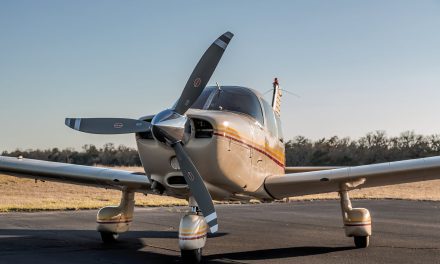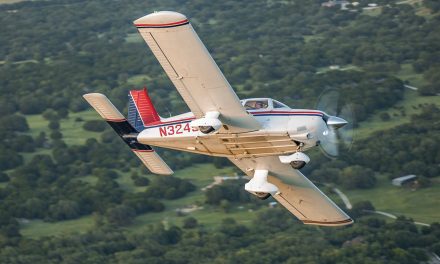
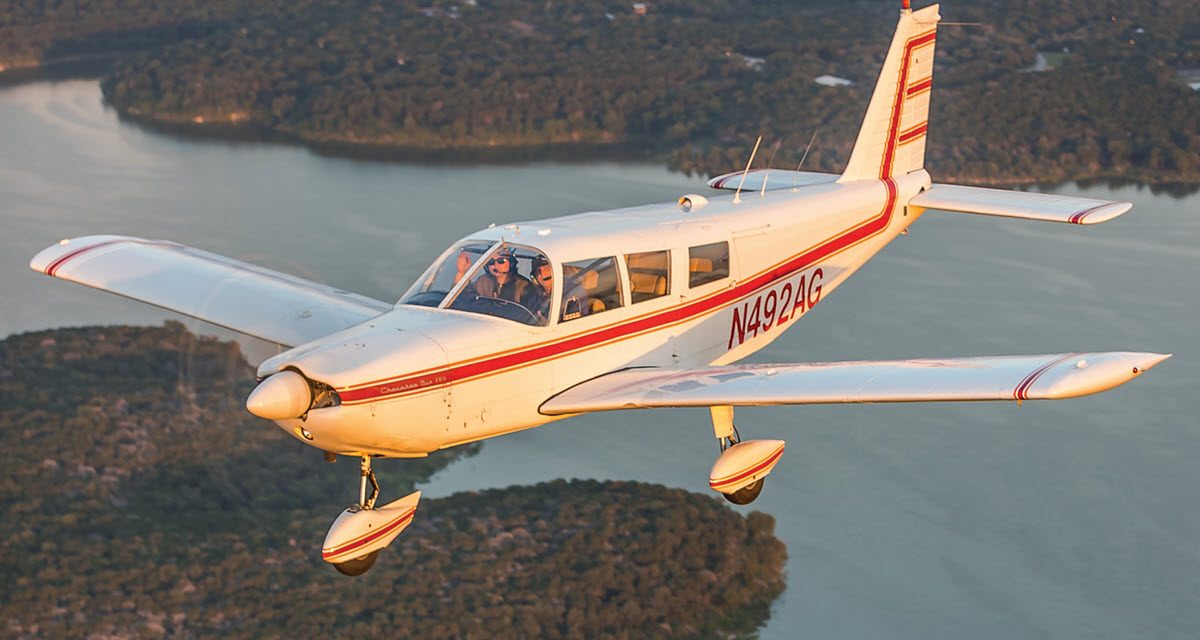
Photos of this 1967 PA-32-300 by Jack Fleetwood (https://jackfleetwood.com/).
The plane is owned by Scott Bounds and his son, Lee.
If John Thorpe and Fred Weick’s basic Cherokee design was a good idea in the 1960s, the stretched Cherokee Six was a pure stroke of genius.
The PA-32 Cherokee Six was queen of the company’s fixed gear line in the 1960s, with room for six, a choice of power and a rugged airframe designed for the boonies. In 1966, when Piper lengthened and powered-up the basic Cherokee design to create the six-seat, PA-32 Cherokee Six, the company had created a franchise that would last for three full decades.
Discounting some interruptions in production, the basic Cherokee Six design has served right through to the present day, albeit in significantly modified form. Ten years after its conception, the Six 300 became the retractable Lance. Two years later, it adopted turbocharging and a T-tail, and two years after that, the airplane was fitted with the semi-tapered Warrior wing and the horizontal stabilizer was lowered to its former position. There were tweaks and updates after that until its discontinuation as the PA-32R-301T Turbo Saratoga SP in 1985.
Here are 15 things to know about the Cherokee Six.
1. The Basics: Facts and Figures
Two engine choices were offered on the original Six. The first was fitted with a 260 hp, carbureted 0-540- E4B5 Lycoming — the less thirsty of the two, more efficient, and with a slightly greater useful load. The second was with a 300 hp (injected version of the same engine) an IO-540-K1A5, that burns more fuel but provides better performance in the process. Both engines are rated for 2,000 hours between major overhauls, though the injected 300-hp mill costs significantly more to overhaul or replace with a remanufactured engine.
The first Sixes, both 260s and 300s, were certified for a max gross weight of 3,400 pounds, but the 260 has an empty weight about 70 to 100 pounds less, so that much more weight allowance is available for payload or fuel. Even with a full load of avionics, you can plan on lifting nearly 1,600 pounds of fuel, people and baggage with either airplane. Top all four tanks — that’s right, four tanks — with 84 gallons of petrol, and payload is only reduced to 1,096 pounds, enough for six full-size people and minimum baggage.
Having delivered a dozen or more Sixes across country (or even an ocean several times), including one single-seat PA-32-300, I can tell you the room is impressive, and it’s hard to exceed the weight limit unless your cargo is very dense. Generally speaking, if you can get it inside the airplane, you probably can fly with it.
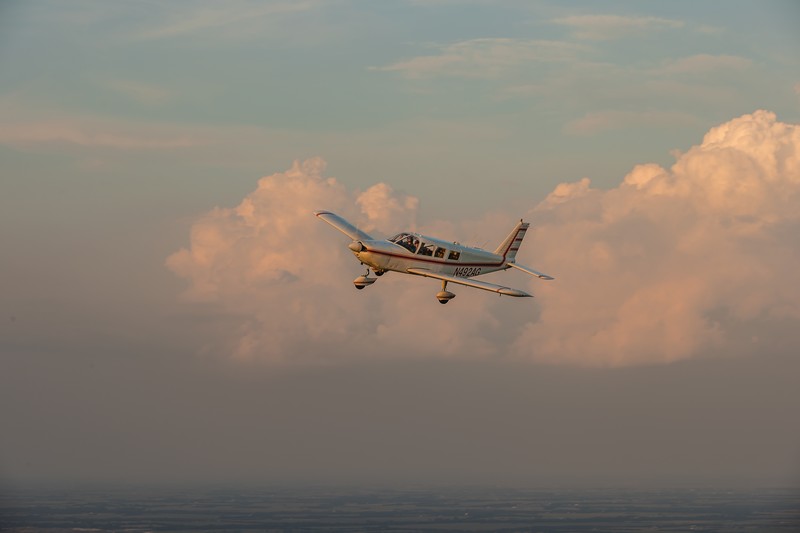
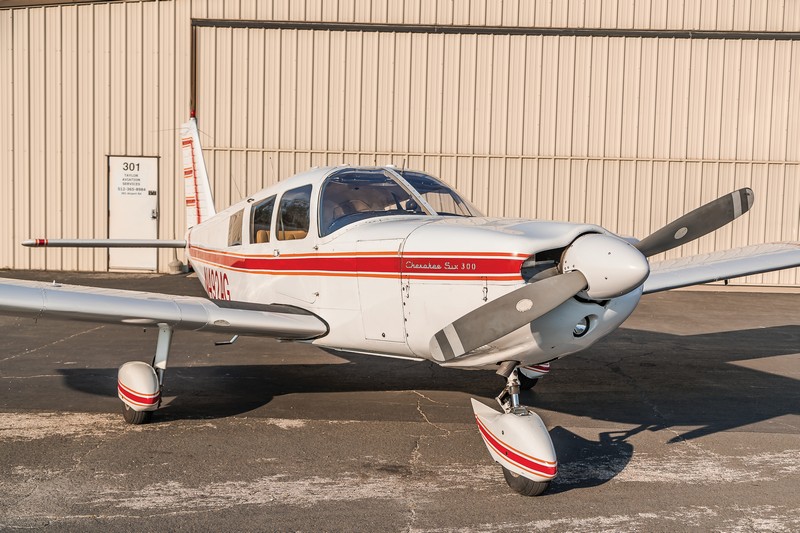
As you might imagine, requiring 300 hp to push 3,400 pounds of airplane through the sky can result in something of a struggle. Power-to-weight ratio is 11.3 pounds/hp, and combined with the drag from three wheels left hanging in the wind, the Six 300 isn’t particularly quick coming off the ground at gross, especially at high density altitude.
Cruise performance is reasonable at optimum altitude. Push everything to the wall at 7,000 feet (with a leaned mixture), and the airplane will manage about 145 knots and burn 16.0 gph in the process. Perhaps for this very reason, Cherokee Six pilots try not to be in too big a hurry. If you’re willing to settle for 130 knots, you can do it on 13 gph.
Topping the tanks with 84 gallons of avgas provides the big Six with good endurance. At a burn rate of 15/16 gph, the airplane can linger aloft for five hours plus and cover nearly 700 nm in the process.
2. It Features a ’Quick Change Interior’
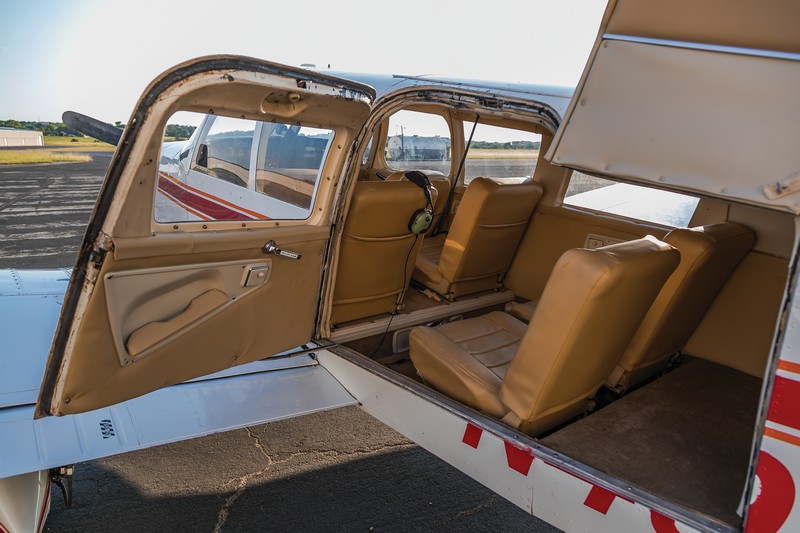
Piper used to brag about its quick-change interior — all passenger to all cargo, for example — on the model PA-32-260 and -300. To illustrate the point, Piper produced a sequential magazine ad that showed four workmen loading an upright, Baldwin piano into the back of a Cherokee Six through the aft left cargo doors.
3. The 260 Can Carry Its Own Weight
The six-seat Piper single was introduced in 1965 as the Cherokee Six 260, and it featured an unusual talent. The Six 260 had the ability to carry nearly its own empty weight in useful load. At 3,400 pounds gross, that first 260 featured an empty weight of 1,706 pounds, so useful checked in at an amazing 1,694 pounds. This made the big Piper the first single capable of lifting such a huge load. The Cessna 206 surpassed the Piper’s record a year later, but for a short time the Six 260 was the weight-lifting champ.
4. It Was Designed to Compete with the Cessna 206
Cessna discovered a ready market for a flying station wagon in 1963, and Piper jumped in for its share of that market two years later. With a fuselage four feet longer and seven inches wider than the standard PA-28 Cherokee, the Six offered comparatively cavernous cabin space and an unusually good useful load.
5. There are two baggage areas
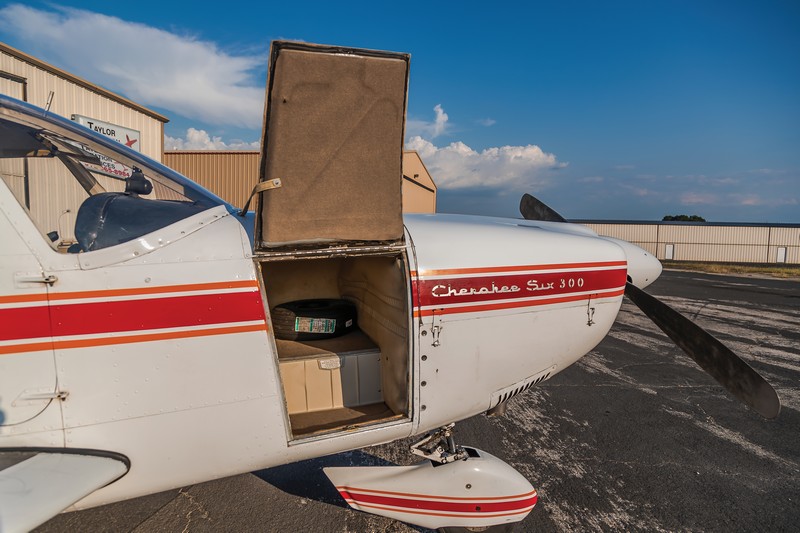
One 22-cubic-foot compartment sits behind the rear seats and another eight-cubic-foot storage area rests between the engine firewall and cabin, sometimes referred to as the “frunk” (front trunk).
The latter makes a good sound-buffer and an efficient use of the nose extension necessary to balance the CG. Here, at last, said buyers back in the mid-’60s, was an airplane that allowed you to fill all the seats, top all the tanks, load some baggage, and fly away.
The rest of this article can be seen only by paid members who are logged in.Have a website login already? Log in and start reading now.
Never created a website login before? Find your Customer Number (it’s on your mailing label) and register here.
JOIN HERE
Still have questions? Contact us here.